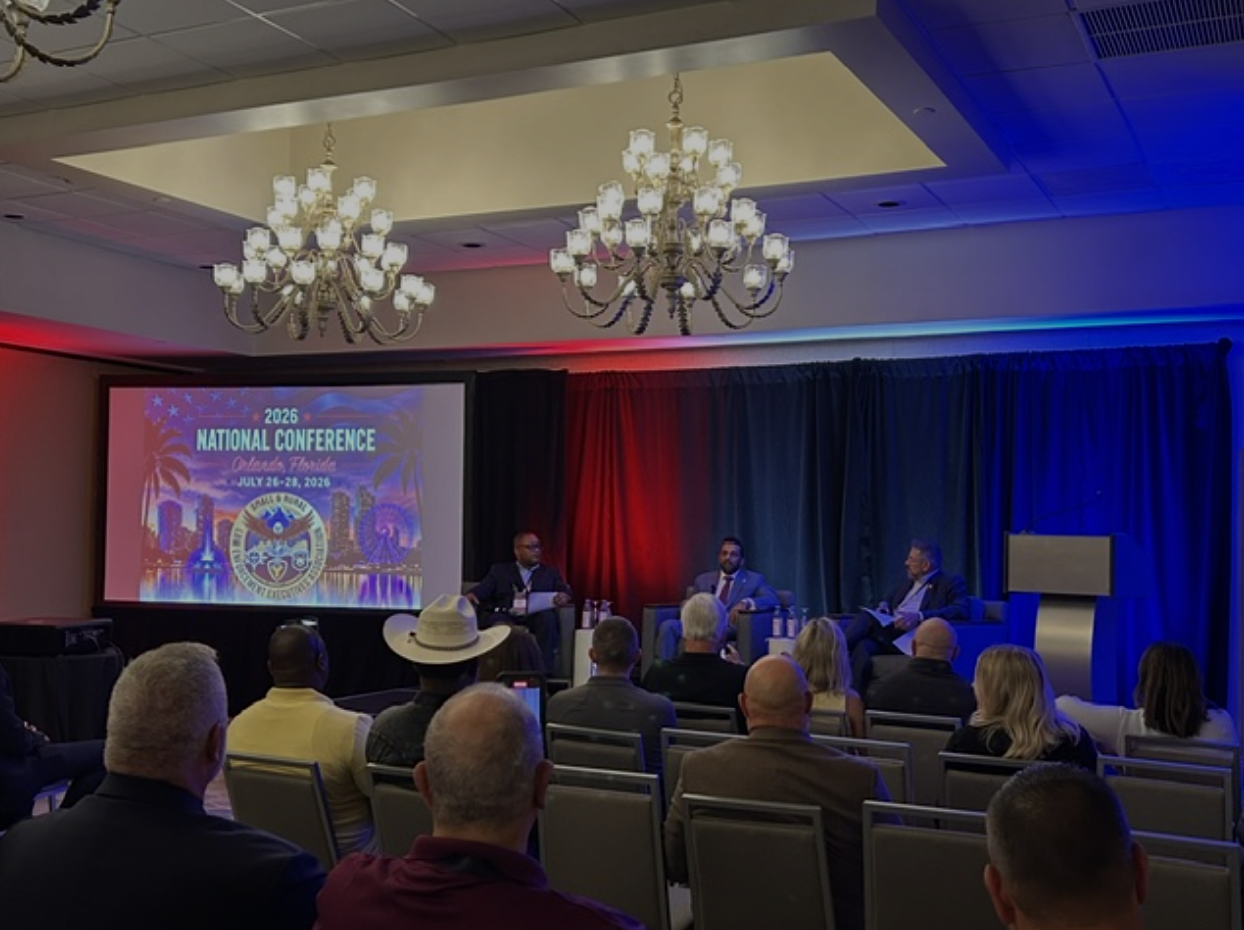
CLIPr Proudly Sponsors SRLEEA Conference in Orlando
At SRLEEA, FBI Director Patel called AI essential for agencies of every size. See how CLIPr is helping small and rural departments do more with less.


If you run scheduling for a US police department or sheriff's office, the problem never pauses: 24/7 coverage under minimum staffing, overtime rules, court dates, and leave requests, usually in a spreadsheet never built for it.
This guide compares core duty-roster scheduling only. Seven current systems made the list, alphabetically:
The list is alphabetical. Numbering is navigation, not a score; the fit-based shortlists near the end hold the buying guidance.
There is no universal winner here, so the real pick is your process: use the shift-rule worksheet below, then require a configured demo on your own rules before you commit.
Search results for police scheduling mix at least four different buying jobs, and vendors rarely draw the line for you. Before any product comparison makes sense, the categories need to be visibly distinct.
| Category | Primary job | Typical records and functions | Relationship to this list |
|---|---|---|---|
| Core duty-roster scheduling | Put qualified personnel into 24/7 agency coverage under operational and labor rules | Rotations, assignments, minimum staffing, bids, leave, trades, open shifts, recalls, qualifications, notifications | The seven products in this guide all qualify here |
| Off-duty detail management | Administer secondary employment or paid details | External job intake, eligibility and distribution, invoicing, collection, payment, employer and customer records | Separate adjacent lane, not interchangeable with the core seven |
| Timekeeping and payroll | Record payable time and calculate or transmit pay data | Timecards, pay codes, accruals, approvals, payroll calculation or export | An integration or module to evaluate, not assumed to be the same system |
| Generic employee scheduler | Schedule ordinary shifts across many industries | Templates, availability, open shifts, swaps, basic labor controls | Consider only after police-specific rules are demonstrated |
| Personal shift calendar | Help one officer view a rotation | Personal calendar, reminders, family sharing | Outside agency procurement intent |
Core duty-roster scheduling is the category this guide compares.
The Fair Labor Standards Act (FLSA) section 7(k) is a work-period framework for qualifying public-agency law enforcement employees.
The US Department of Labor's fact sheet on FLSA for police and firefighters sets work periods of 7 to 28 days, with overtime due past 171 hours in a 28-day period and proportionally fewer for shorter ones.
Section 7(k) is a legal framework, not a software badge. A product can track hours and configure overtime without proving your agency's exact setup:
Treat every labor claim the same way: your payroll team, labor counsel, human resources (HR), and the bargaining-agreement owner approve the configured rules, not a vendor demo.
For a small agency, overtime rules are operational rules, not just payroll settings. A single court appearance, sick call, training day, holdover, or callback can push one officer past the agency's adopted threshold while leaving few qualified replacements. Require the demo to reproduce your actual 7(k) work period where applicable, CBA or MOU terms, state wage rules, comp time, callback pay, court pay, approval limits, and voluntary-versus-mandatory overtime order.
Fatigue management needs its own written policy test. Ask the vendor to demonstrate minimum rest between shifts, consecutive-hour and consecutive-day limits, off-duty work conflicts, warning and override behavior, supervisor approvals, and an exportable record of every exception. The software should enforce or flag the policy your agency approves; it should not define that policy for you.
Two category gates decided who made the list at all. CLIPr is not scored on these scheduling-only gates because it is a report-drafting layer, not a scheduler.
A product had to be currently marketed as a deployable system on its own live first-party pages. Prelaunch products, redirected brands without clear standalone status, and products represented only by an old app listing did not qualify.
A product had to show current first-party evidence for 24/7 duty-roster scheduling plus at least minimum staffing or rules-based coverage, employee requests, and agency-wide schedule administration. Off-duty specialists and generic schedulers sit in the adjacent-tools section instead.
Every claim leans on current first-party product, security, integration, pricing, and app pages, plus government and procurement sources for legal context. App-store comments appear only as attributed demo-test prompts, never as verdicts.
Where public evidence for a capability was not located, the tables say "not established publicly." That is not a no; it is a demo question to make the vendor answer with evidence.
The comparison uses five practical criteria that an agency can verify in a configured demo:
There is no numeric score, by design: eligibility is a gate, and the rest depends on rules a publisher's weighted total cannot know. Selection also sits inside broader governance, which the guide to technology and policing covers.
Document your shift rules before the first demo. The worksheet two sections down exists for exactly that.
The at-a-glance table below compares all seven on the fields that decide procurement. The "main item to verify" column matters as much as any capability cell.
| Product | Evidence-backed fit | Court workflow | Labor and rule posture | Mobile | Payroll and timekeeping | Price status | Main item to verify |
|---|---|---|---|---|---|---|---|
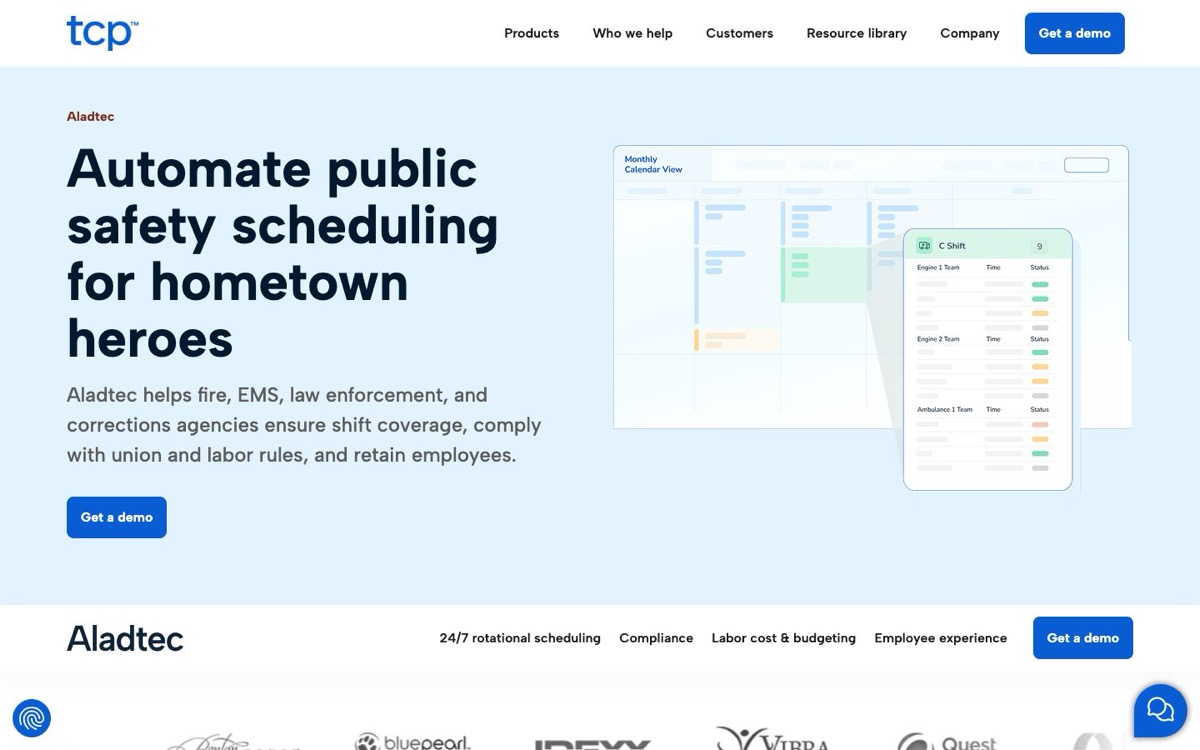 Aladtec by TCP Software
|
Configurable 24/7 scheduling with structured shift bidding | Not established publicly | Overtime, fatigue, labor controls; 7(k) not established publicly | iOS, Android, plus web | Reporting and payroll; TCP timekeeping combination | Public amount not located | June 2026 bidding and Aladtec-specific connectors |
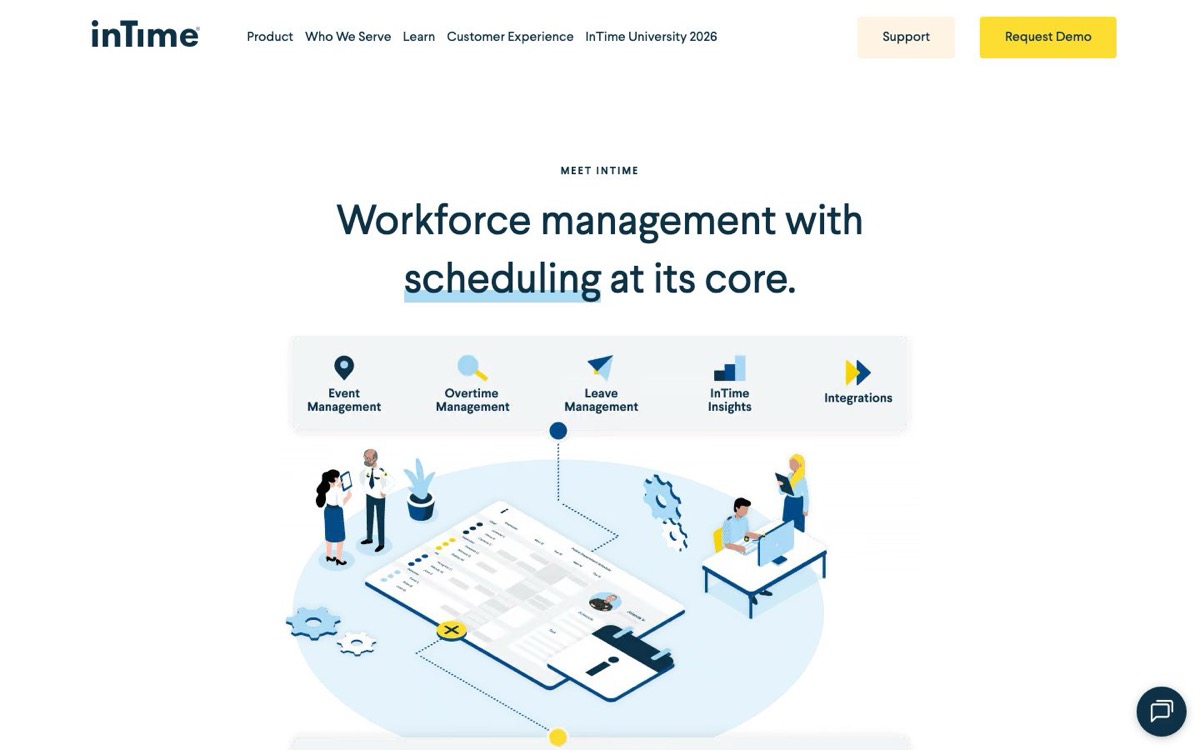 InTime
|
Court and subpoena workflows plus broader workforce modules | Dedicated court and subpoena module established | Rule-based overtime established; 7(k) detail not established publicly | iOS, Android, plus web | Optional timekeeping module with payroll export | Custom; public amount not located | Module entitlements and audit-history export |
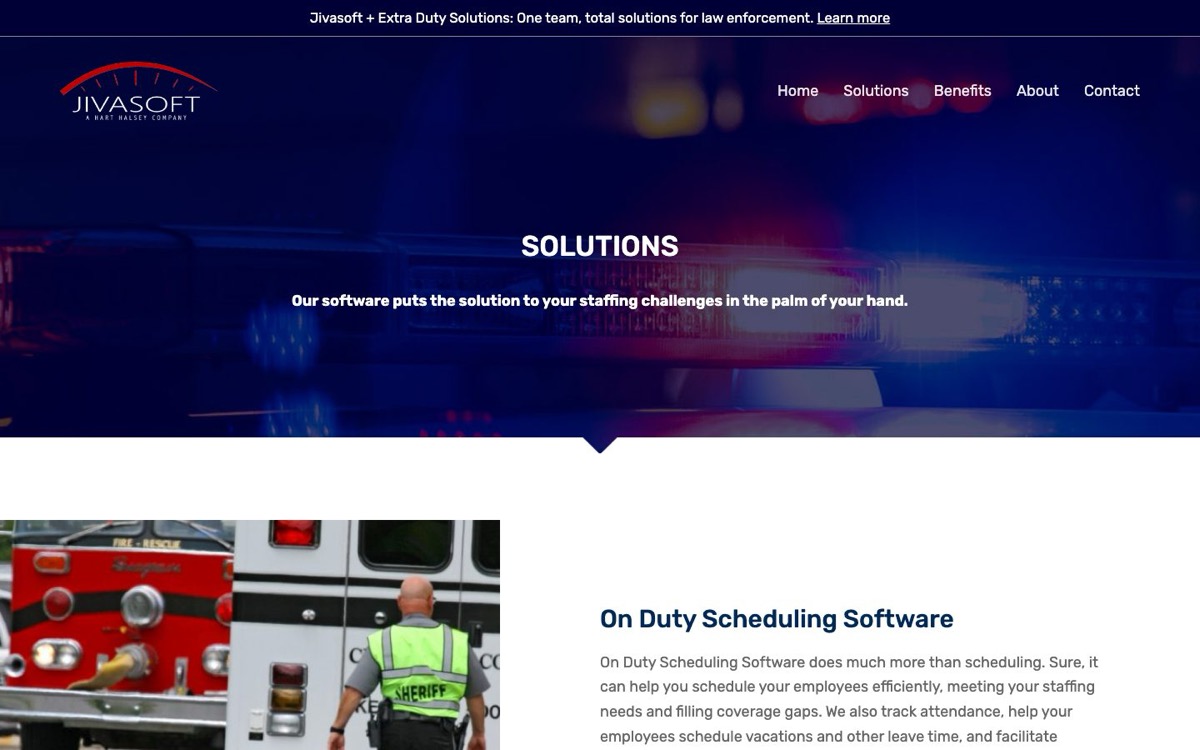 Jivasoft On Duty
|
Paired on-duty and off-duty workflows; cloud or self-hosted | Not established publicly | Overtime and comp time established; 7(k) not established publicly | Connected-device web; native On Duty apps not established publicly | Timecards and payroll export | Public amount not located | Core shift bidding, assurance report, native apps |
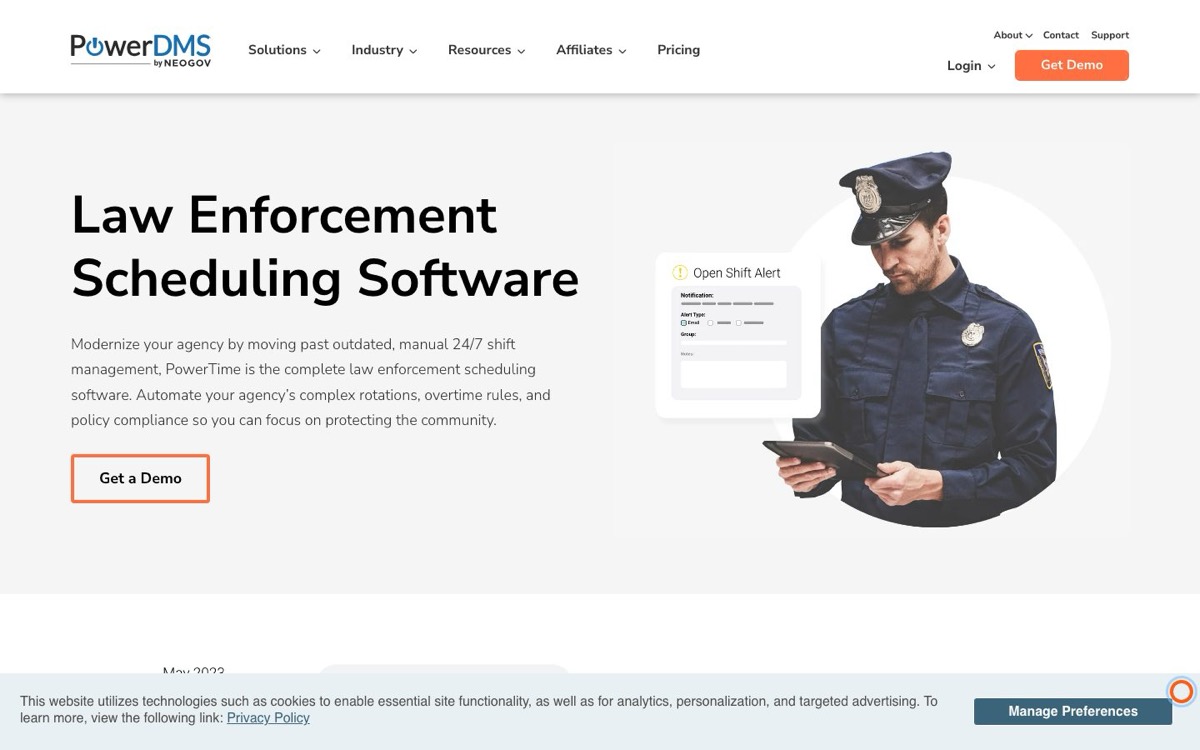 PowerTime by PowerDMS
|
PowerDMS/NEOGOV environment with CBA and FLSA-oriented configuration | Court entries mentioned; dedicated workflow not established publicly | Vendor states FLSA tracking; agency 7(k) must be validated | iOS and Android, still branded PlanIt | Timesheets and payroll CSV export | Public amount not located | Exact 7(k), CBA, court rules plus current security scope |
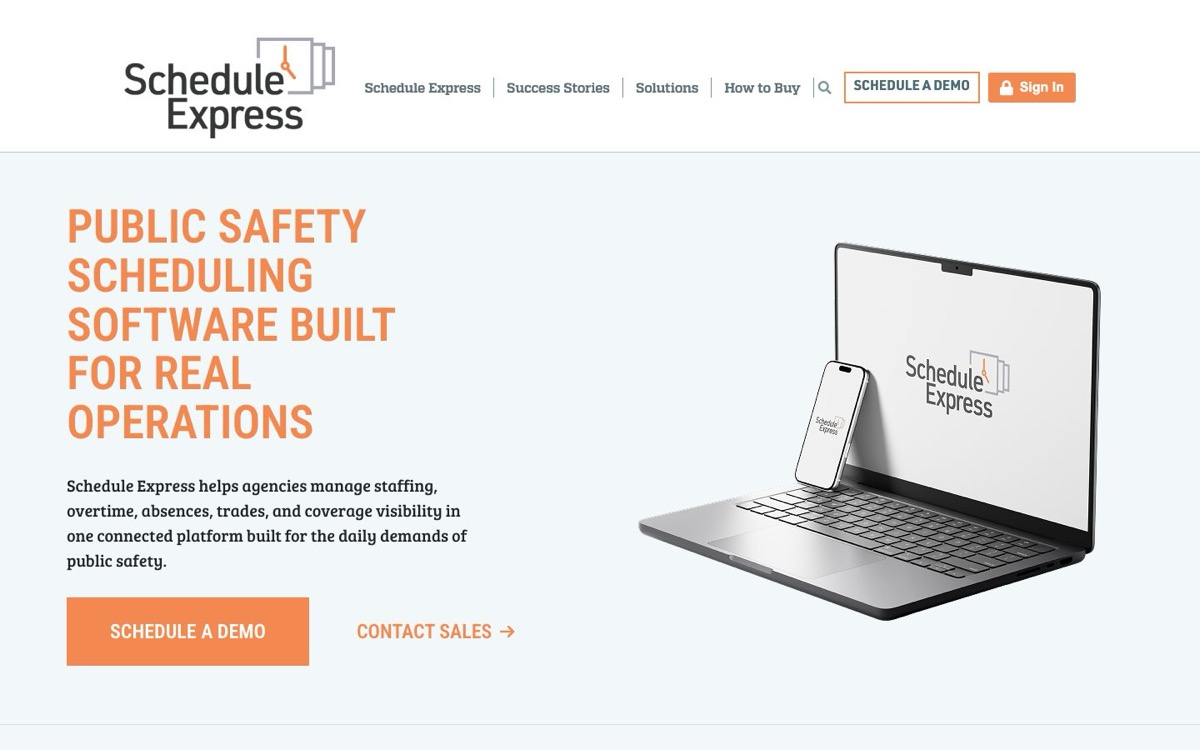 Schedule Express
|
Deep CBA and MOU configuration with cooperative purchasing paths | Court-unit scheduling shown for jail; police workflow not established publicly | Overtime lists and rules established; 7(k) detail not established publicly | iOS and Android | Payroll and time-bank tracking; integration catalog not located | Public amount not located; Texas DIR posts discounts, not base dollars | Integration catalog and current assurance scope |
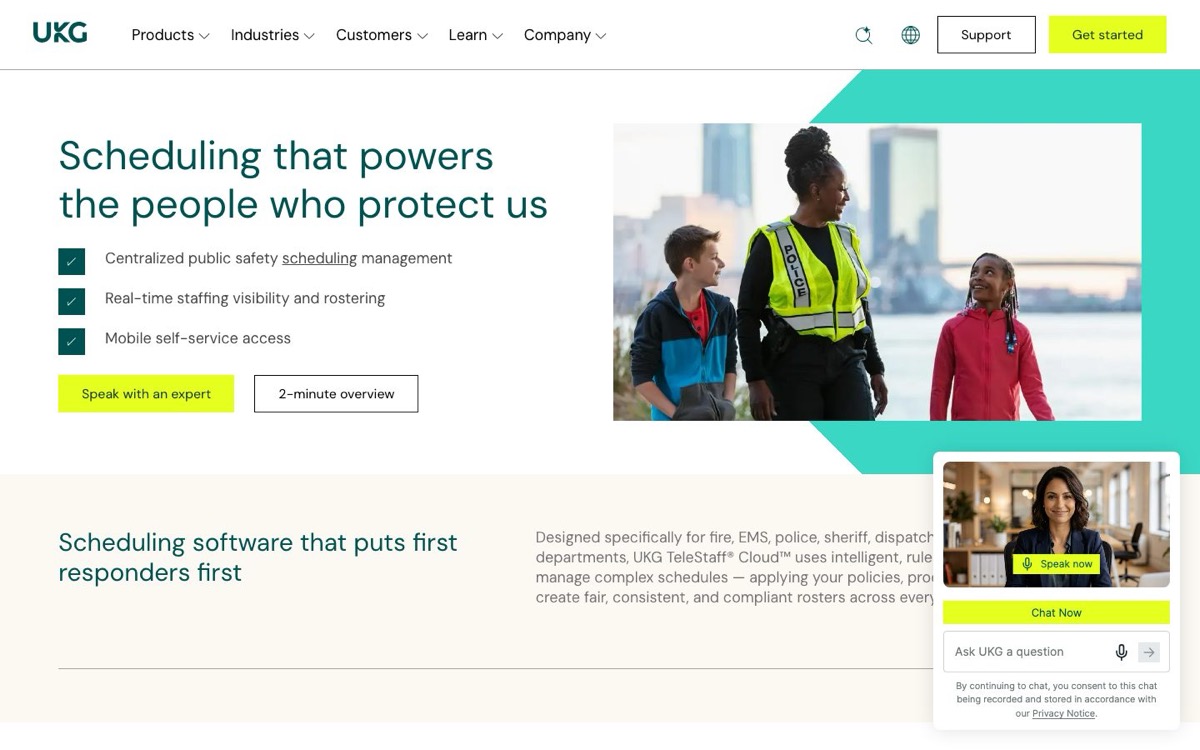 UKG TeleStaff Cloud
|
Larger or complex agencies aligning with the wider UKG enterprise stack | Not established publicly | Hours, fatigue, labor-rule tracking established; 7(k) detail not established publicly | HTML5 browser self-service; native app not located | CAD, RMS, payroll connections via file and API patterns | Base amount not located; optional SMS rates are separate | Exact integrations, audit fields, and order-form terms |
 Vector Scheduling
|
Callback automation, qualification-aware coverage, Vector training | Not established publicly | Overtime and labor rules established; 7(k) detail not established publicly | iOS and Android | Time and attendance plus payroll exports at feature-list level | Public amount not located | iOS release currency and product-scoped security assurance |
Rows are alphabetical; numbering is navigation, not a rank.
One evidence fact worth calling out: InTime is the only product here with a dedicated court and subpoena module on current public pages. That is not a quality score, and it still needs a live demonstration against your own court system and cancellation workflow.
A few acronyms show up throughout this guide, so here they are in one place:
A SOC 3 is a public general-use summary; the detailed SOC 2 report behind it is what your review actually needs.
The price column shows the same thing for all seven: no standard public dollar amount was located on current sales and pricing pages. That is normal here, and it makes the requirements worksheet below your primary negotiating asset.
A configured demo beats a feature page when every vendor runs the same test. Keep this as one lean, agency-owned worksheet.
Record five fields for each requirement:
Run it across six groups
Coverage and qualifications; rotations and bids; labor, leave, and exceptions; mobile notifications; payroll and audit; and security, implementation, pricing, and exit.
Ottawa County, Michigan's 2025 sheriff scheduling RFP asks vendors to address schedule types, callouts, trades, bids, mobile, SSO, role controls, audit trails, security, retention, migration, training, support, and full pricing.
It also demands integration answers by method, frequency, ownership, and cost.
One county's requirements are not universal, but they are a far better starting skeleton than a vendor's feature page.
Require every shortlisted vendor to run these scenarios in a configured demo, in order, on your data shapes:
The worksheet and demo script are scheduler-specific. They do not evaluate CLIPr or any other adjacent system.
The seven options below are listed alphabetically; the right shortlist depends on the agency's rules, systems, and implementation constraints. Each card ends with a Procurement considerations checklist: items to verify for any option here, not strikes against that vendor.
TCP Software's public-safety scheduling product for fire, emergency medical services (EMS), law enforcement, and corrections, built around configurable 24/7 rotations.
Agencies seeking configurable rotations, qualification tracking, union and labor rules, mobile self-service, and newly documented simultaneous and interval shift bidding.
Current Aladtec pages establish configurable 24/7 rotations, minimum staffing, qualifications, trades, and open-shift pickup, with labor and fatigue safeguards.
A June 2026 TCP article adds reusable bid profiles with qualification filtering, seniority ordering, and award notifications. Court workflows and 7(k) calculation detail are not established publicly.
Pricing status: Public amount not located on the reviewed sales pages. Request itemized costs for modules, the timekeeping combination, messaging, integrations, migration, training, support, and renewal.
Confirm the June 2026 bidding release is included in your quote, and that each integration is supported by product, version, direction, and fee. The TCP-wide catalog does not prove Aladtec support for every connector. Get migration method, acceptance criteria, and SLA in writing.
Sources: Current TCP and Aladtec first-party product, security, and app pages.
A cloud public-safety workforce platform with scheduling at the core and optional timekeeping, court and subpoena, shift bidding, training, and asset modules.
Agencies for which court and subpoena scheduling, and connections to payroll, RMS, CAD, and HR systems, are central shortlist requirements.
Current InTime pages establish configurable pattern templates including Pitman, minimum staffing, rule-based overtime, leave and schedule-change requests, optional bidding with preference and seniority sequencing, and certification tracking.
The dedicated court module describes electronic subpoena acceptance, court notifications, witness availability, and court reporting, all vendor-reported. Explicit CBA and MOU configuration detail and 7(k) calculation support are not established publicly.
An optional timekeeping module connects schedules to timesheets, pay codes, approvals, and payroll export, and InTime names web-service connections to systems such as PeopleSoft, Munis, Tyler, ADP, and SAP.
Pricing status: Custom, based on agency size, modules, and training. Public amount not located.
Validate module entitlements, the connection to your actual court system, CBA and 7(k) rule configuration, named integration details by version and direction, migration and parallel-payroll support, and audit-history export, which is not established publicly in complete detail.
Sources: Current InTime first-party product, court, trust, and US app pages.
Jivasoft's core On Duty duty-roster product, sold alongside a separate Xtra Duty product for off-duty detail administration, with cloud or self-hosted deployment.
Agencies that want to evaluate core roster scheduling alongside a related off-duty workflow, or that need a genuine cloud-versus-self-hosted conversation.
Current pages establish 24/7 scheduling, hourly minimum staffing, leave and swaps, overtime and comp time, certification expiry, custom staffing rules, and internal audit trails, over connected-device web access.
Native On Duty app listings, core shift bidding, court workflows, and 7(k) detail are not established publicly.
One boundary to keep straight: Xtra Duty covers detail jobs, awarding, conflicts, invoicing, collection, and payment. Those are Xtra Duty functions, not On Duty roster features, unless the combined package is what the vendor proposes.
Jivasoft lists cooperative purchasing references, though some contract language centers off-duty services, so verify what is actually awarded.
Pricing status: Public amount not located.
Ask for current security assurance reports, named connectors beyond payroll export, native app plans, migration method, and SLA terms. If self-hosting, add your own infrastructure, patching, and backup responsibilities to the total cost.
Sources: Current Jivasoft first-party product, solutions, and cooperative-contract pages.
The current PowerDMS public-safety scheduling product, formerly called PlanIt Schedule, from PowerDMS by NEOGOV.
Agencies already using PowerDMS or NEOGOV products, or agencies prioritizing explicit CBA, seniority, and FLSA-oriented configuration, rules-based emergency recall, audit history, and payroll export.
Current pages establish 8-, 10-, and 12-hour and Pitman schedules, minimum staffing and rest rules, shift bidding, CBA and overtime-rule configuration, leave and swaps, open shifts and recalls, and qualified-officer selection.
Timesheets and payroll CSV export carry a vendor-stated permanent audit trail. Court entries and reporting are mentioned, but a dedicated current police court workflow is not established publicly.
One naming note: the current iOS and Android apps remain branded PlanIt Schedule and are published under PowerDMS and NEOGOV. Same product, older app name, not two systems.
PowerDMS publishes organization-wide security governance rather than a current PowerTime-scoped assurance report, so request product-specific scope.
Pricing status: Public amount not located.
Treat FLSA-oriented marketing as marketing. Test your exact 7(k) work period, CBA terms, court and subpoena handling, pay codes, and comp time in a configured demo, and get connector details plus current security scope in the proposal.
Sources: Current PowerDMS first-party product, law-enforcement, and US app pages.
A SafeCities/Informer Systems public-safety workforce scheduling platform covering law enforcement, jail, fire, EMS, and 911 operations.
Agencies needing deep CBA and MOU rule configuration, annual and periodic bidding, minimum staffing and qualification coverage, and public cooperative-purchase routes.
Current pages establish unlimited rotations, CBA and MOU configuration, bidding, minimum staffing, voluntary and mandatory overtime lists, leave and trades, and skills and role coverage.
Court-unit scheduling appears under the jail use case; a dedicated police court and subpoena workflow is not established publicly, and neither is 7(k) calculation detail.
Current iOS and Android apps are listed, though store notes indicate some supervisory functions are split across app versions, so confirm which build supports each supervisor task. Payroll and time-bank tracking are established, but a named integration catalog was not located.
Pricing status: Public amount not located.
The active Texas Department of Information Resources (DIR) contract DIR-CPO-5431 shows discount percentages from the manufacturer's suggested retail price (MSRP), not a base dollar amount, and one state contract is not universal pricing.
Request the integration catalog, current security assurance scope, supervisor app parity, and SLA terms as direct evidence, and confirm cooperative-contract eligibility for your state before building the budget around it.
Sources: Current Schedule Express first-party product and US app pages plus the Texas DIR contract record.
UKG's public-safety scheduling platform for police, sheriff, fire, EMS, dispatch, and corrections, sitting inside the wider UKG human capital management (HCM) environment.
Larger or operationally complex agencies aligning scheduling with UKG or enterprise payroll, CAD, RMS, SSO, and integration requirements.
Current pages establish static, rotating, and daily schedules, roster alarms and minimum staffing, qualified vacancy fill with multi-channel notification, skills and certifications, bidding, and union, department, and HR rules, plus an extra-duty add-on, over browser-based HTML5 self-service.
A TeleStaff-specific US native app listing was not located, and court workflows and 7(k) calculation detail are not established publicly.
UKG's technical profile and cloud guidelines describe TLS encryption, secure file transfer (SFTP), APIs, Security Assertion Markup Language (SAML) single sign-on, and annual SOC 1 and SOC 2 audits, with document age and scope subject to current verification.
Pricing status: Base public amount not located. UKG publishes optional SMS message-block rates separately; that is messaging pricing, not TeleStaff subscription pricing.
Verify exact integrations and custom integration fees, audit fields and export, support portal access and SLA, native-app expectations versus browser reality, and which cloud-guideline clauses apply to your tenant and order form.
Sources: Current UKG first-party product, technical, cloud-guideline, and support pages.
Vector Solutions' public-safety workforce scheduling product, formerly associated with CrewSense branding, connected to Vector's broader training and readiness environment.
Agencies prioritizing callback workflows, employee communications, qualification-aware staffing, and recent minimum-staffing and bidding enhancements, especially where Vector training products are already in use.
Current pages establish flexible shifts, union and labor rules, trades, callbacks and open-shift responses, hourly minimum staffing, eligibility classifications and certifications, and overtime rules, with API access but no named connector catalog.
A January 2026 vendor update states deployment, hourly minimum staffing, and shift-bidding enhancements are available now, vendor-reported. Court workflows and 7(k) detail are not established publicly.
The visible iOS version date in research was old, so verify current release support; support runs through Vector's central support page.
Pricing status: Public amount not located.
The only public security evidence located was Vector's published 2021 SOC 2 attestation announcement, company-wide and now several years old, too broad for a current product claim.
Treat product-scoped assurance as not established publicly, and request current reports, named connectors, migration and SLA detail, and full audit scope.
Sources: Current Vector first-party product, feature, and US app pages plus the 2021 press release.
Several products show up in police scheduling searches without belonging in the core comparison.
Off-duty specialists such as PowerDetails, RollKall, Jobs4Blue, and Jivasoft's Xtra Duty manage external jobs, eligibility, billing, and payment. That is real work, just a different job than the agency duty roster.
Publication-day rechecks still matter, because brands redirect and prelaunch pages sit next to deployable systems in the same search results.
The rule for anything prelaunch or in transition: buy what a vendor can demonstrate today, and put roadmap promises in the contract or leave them out. The guide to future law enforcement technology covers that planning discipline.
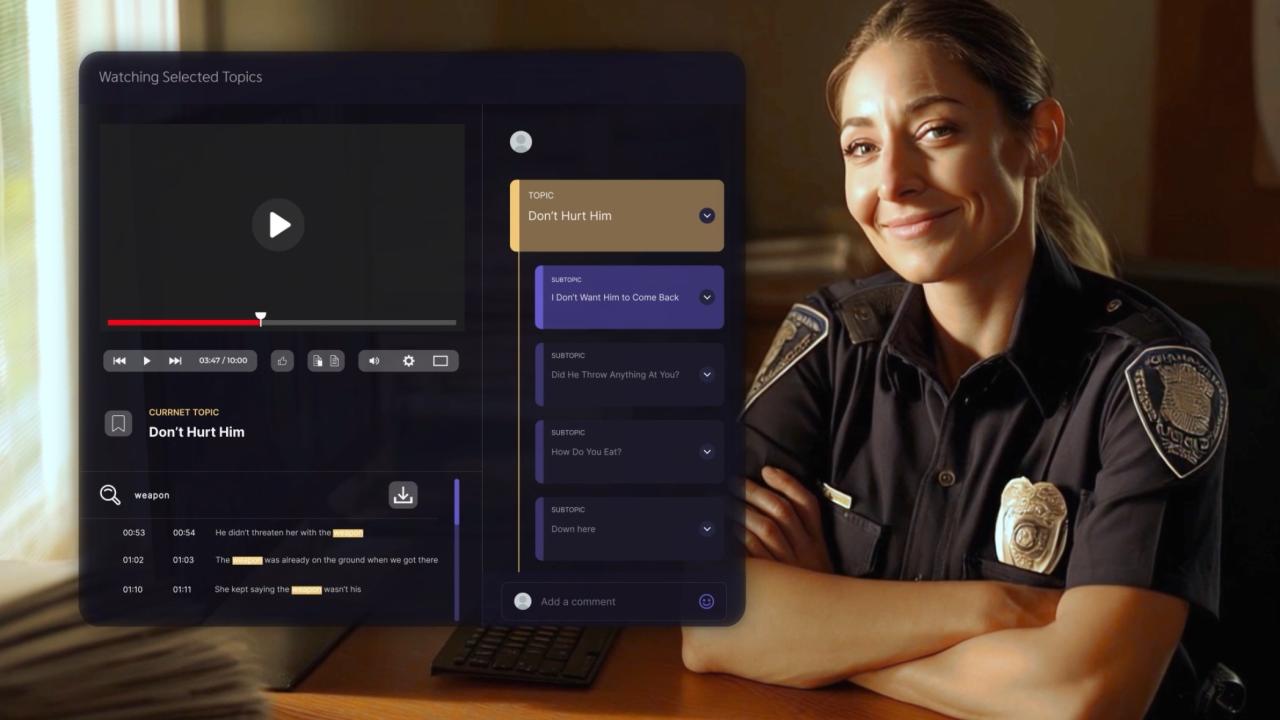
CLIPr publishes this guide, and CLIPr is not scheduling software, so it was not evaluated for the seven options above and is not a substitute for any of them.
The reason a report-drafting tool appears in a scheduling guide at all: a duty roster can only allocate the hours officers actually have, so time saved on police reports compounds across the roster by returning time to patrol, backup, and other scheduled work.
When agencies evaluate that adjacent layer, the relevant checks are:
CLIPr offers a 30-day agency pilot for up to 50 officers, subject to approval, so an agency can run it on real police reports and let its own numbers decide. That connection is context, not a recommendation, and the scheduling decision stands on its own.
The demo proved the system can model your rules. Implementation is where agencies find out what it costs to get there, and most of the risk hides in checks nobody scheduled.
Ottawa County's RFP asks for nearly all of this in writing before award. If budget is the blocker rather than the requirements, the guide to law enforcement equipment grants covers how grant programs and procurement timelines interact.
No universal pick exists here; any guide that names one skips the part where your CBA, court system, and payroll stack decide the answer. Use these fit conditions to pick two or three candidates, then run the worksheet and demo script against all of them.
Start withInTime
When a dedicated court and subpoena workflow is a gating requirement, then verify the court-system connection and module scope.
Start withPowerTime
When PowerDMS/NEOGOV alignment and explicit CBA and FLSA-oriented configuration are central, then test the exact 7(k) and payroll rules.
Start withUKG TeleStaff Cloud
When enterprise HCM, SSO, and CAD, RMS, and payroll integration, plus complex public-safety rules, drive the project.
Start withVector Scheduling
When callback automation, qualification-aware coverage, and Vector training and readiness connections matter most.
Start withAladtec
When the agency wants public-safety-specific 24/7 scheduling, mobile self-service, qualifications, and current structured shift bidding.
Start withSchedule Express
When deep CBA and MOU configuration and cooperative purchasing paths are priorities.
Start withJivasoft On Duty
When paired on-duty and off-duty workflows or a cloud-versus-self-hosted choice merit evaluation.
Whichever two or three you shortlist, the requirement is the same: a configured demonstration on your rules, evidence captured in the worksheet, and a parallel payroll test before contract approval.
Police scheduling software is a core duty-roster system that places qualified personnel into 24/7 agency coverage under operational and labor rules.
It manages rotations, assignments, minimum staffing by hour and unit, shift bids, leave and trades, open shifts and recalls, qualifications, and employee notifications.
It is distinct from off-duty detail management, timekeeping and payroll systems, generic schedulers, and personal shift-calendar apps, which solve related but different jobs.
Core scheduling software builds and manages the agency's own duty roster: who covers which shift, under which staffing and labor rules.
Off-duty detail software, such as PowerDetails, RollKall, Jobs4Blue, or Jivasoft's Xtra Duty, administers secondary employment: external job intake, officer eligibility, invoicing, and payment. The two can connect, but one does not replace the other; evaluate them as separate lanes.
Several products in this guide track hours and configure overtime rules, and some market FLSA-oriented tracking.
None of that proves your agency's exact section 7(k) calculation. The 7(k) framework depends on the work period your agency adopted, employee classification, state law, CBA or MOU terms, comp time, callback, and court pay treatment.
Ask each vendor to demonstrate your adopted work period and pay codes in a configured demo, then have payroll, labor counsel, HR, and the bargaining-agreement owner approve the configuration before go-live. This guide is operational guidance, not legal advice.
No. Scheduling systems plan and manage coverage; timekeeping and payroll systems record payable time and calculate or transmit pay. Several products offer timekeeping modules or payroll exports, but a payroll export is not full payroll processing or a bidirectional production integration.
Treat the connection as something to test: export a full pay period into your actual payroll test environment, reconcile totals and pay codes, correct an error, and rerun. If reconciliation fails in the demo, it will not improve under deadline pressure after go-live.
Document your real rules first: rotations, minimum staffing, overtime and callback lists, court handling, leave routing, and qualifications.
Then require each shortlisted vendor to run the same configured demo scenarios, including a bid with a tie, a callout that breaks minimum staffing, a court conflict, and a payroll export you reconcile.
Test the mobile apps on the phones your officers actually carry, and get full costs in writing, including migration, training, support, and exit, before anything is signed.
Free and low-cost scheduling tools exist, mostly as generic employee schedulers rather than police-specific platforms, so free options exist but need heavy screening.
A free or generic tool should not move past initial screening until the agency has tested rule depth for CBA and overtime scenarios, security and access controls, audit history, support terms, migration, and payroll controls.
For many agencies the real cost question is not the license, it is reconciliation errors, coverage gaps, and staff time spent working around a tool that cannot model the rules.
Yes. Current PowerDMS pages identify PowerTime as the product previously called PlanIt Schedule, with the same scheduling workflows under the new name.
The current iOS and Android apps remain branded PlanIt Schedule under PowerDMS and NEOGOV, so treat them as one product in a naming transition and confirm current app branding during procurement.
Most vendors reviewed price by scoped quote, and no standard public dollar amount was located for any of the seven products on current sales pages.
Watch for numbers that look like prices but are not: cooperative-contract discount percentages, separate SMS messaging rates, and legacy desktop prices. Request itemized costs covering licenses, modules, apps, integrations, migration, training, support, messaging, storage, renewal, and exit.
The CLIPr Team writes about operational technology and documentation workflows for law enforcement. CLIPr itself makes AI-assisted police report drafting software, which is why this scheduling guide evaluates no CLIPr scheduling tool.
Do not pick a product from feature pages, including the ones summarized here.
Complete the shift-rule worksheet with everyone who owns a piece of the rules in the room, because each will name rules the others forgot:
Then shortlist two or three fits, require a configured demo that runs all six scenarios on your data shapes, and collect security and integration evidence for your specific deployment plus a parallel payroll test before contract approval.
The agencies that get this right are not the ones that found a perfect product; they are the ones that made every vendor prove the same things.