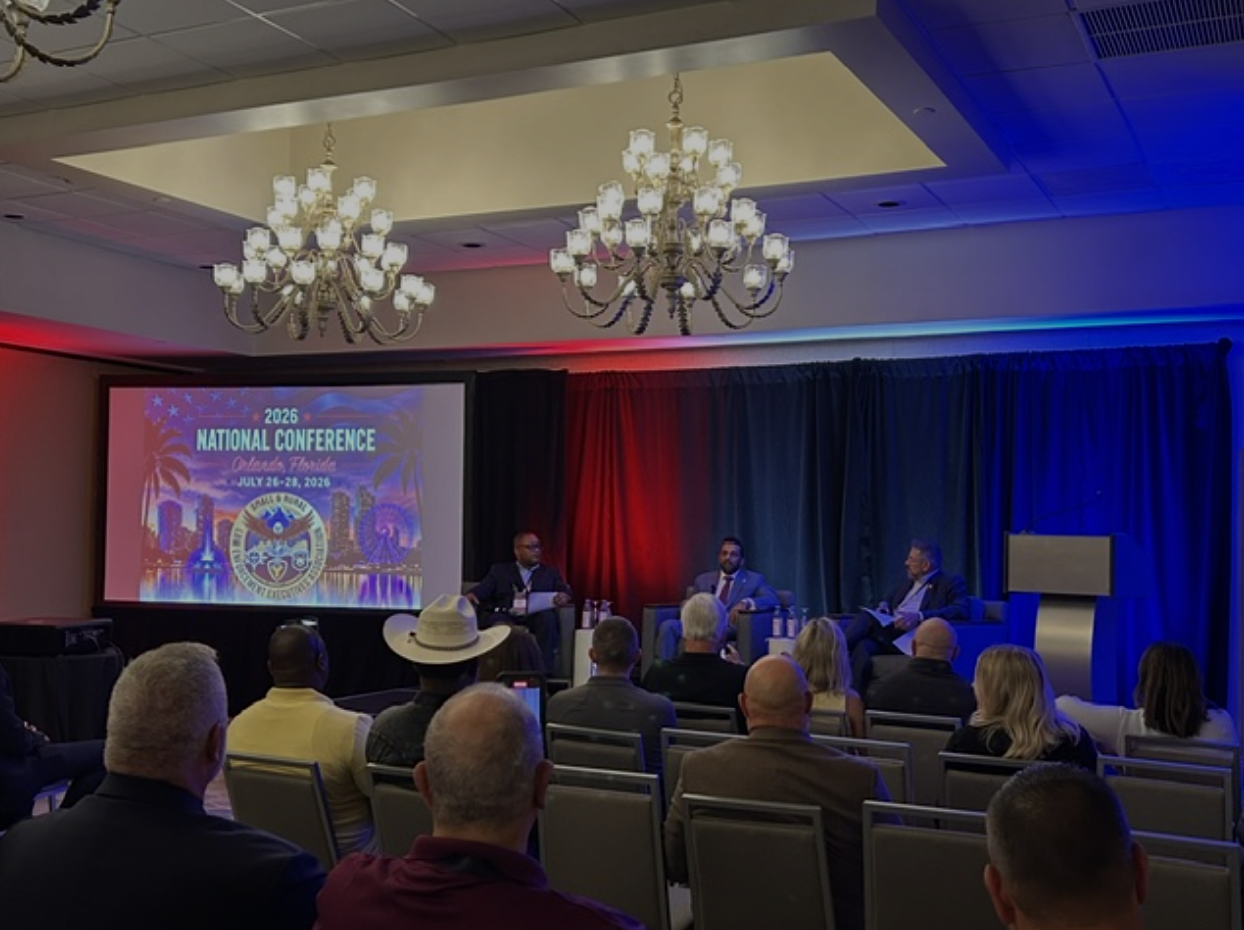
CLIPr Proudly Sponsors SRLEEA Conference in Orlando
At SRLEEA, FBI Director Patel called AI essential for agencies of every size. See how CLIPr is helping small and rural departments do more with less.


Ten report writing tools compared against six criteria built for agencies under budget and policy constraints, from RMS-native suites to AI drafts from bodycam audio.
Command staff and records leaders keep running into the same math: every hour an officer spends typing a narrative is an hour off the street. That drag grows as call volume rises and staffing stays flat, and it can wear down morale.
The market now has three flavors: RMS-native report writers, dictation layers, and AI tools that draft from BWC audio. Vendors in all three camps make time-savings claims, so agencies still need to test workflow, policy, and budget fit.
This guide compares 10 options against six agency-focused criteria. It sits alongside the broader law enforcement software landscape, but stays focused on accurate, reviewable reports. By the end, you should have a practical pilot shortlist.
"Police report writing software" covers three genuinely different product types. Knowing which one you are evaluating prevents most bad purchases.
RMS-native report writers
Mark43, Tyler, CentralSquare, Versaterm, eFORCE
Build smarter forms, validation, and mobile entry into the records system itself.
Pros
Cons
Dictation layers
Nuance Dragon Law Enforcement
Let officers speak the narrative instead of typing it, inside whatever RMS they already use.
Pros
Cons
AI-from-bodycam tools
CLIPr, Axon Draft One, PoliceReports.ai
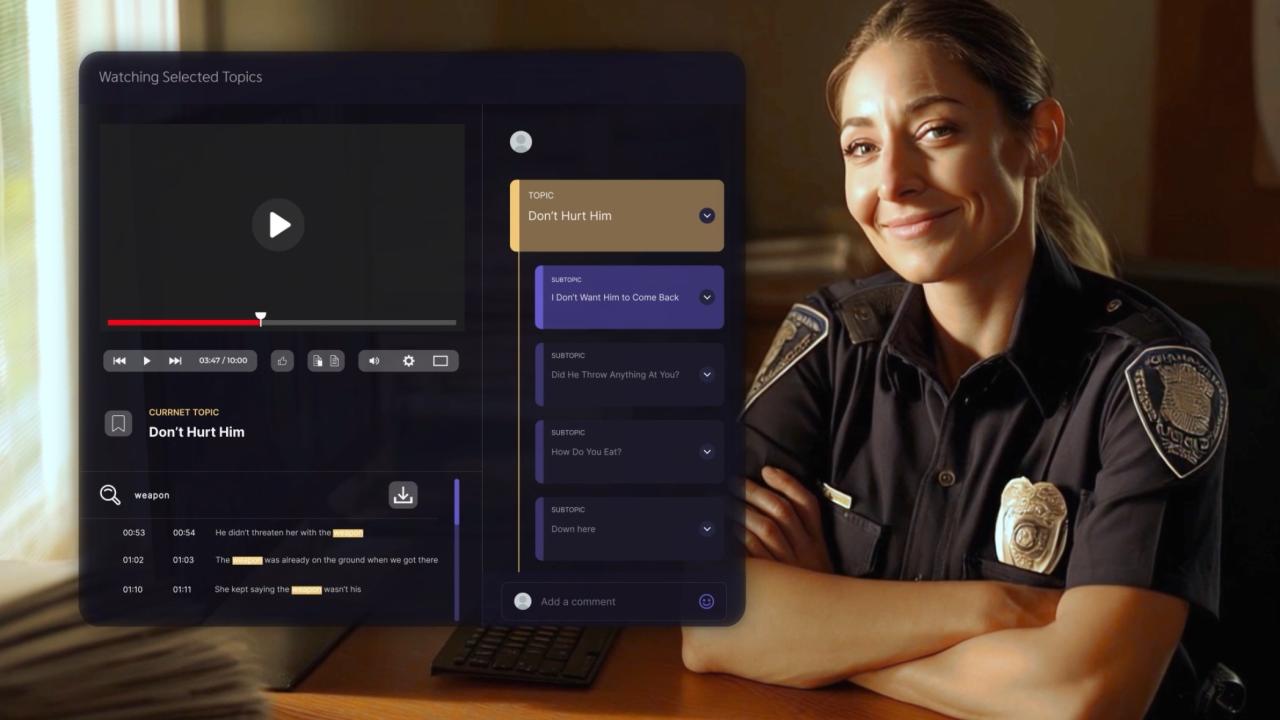
Generate a first-draft narrative from BWC or dashcam audio, which the officer then reviews, edits, and submits.
Pros
Cons
For a deeper breakdown of how the third category actually produces a narrative from audio, the AI police report generator explainer walks through the pipeline step by step.
Every tool below was assessed against the same six dimensions. They map directly to the PATROL rubric in the next section.
Most buying guides list features. Agencies need a way to score fit. PATROL is a six-dimension rubric: score each shortlisted tool 1 to 5 on every dimension during demos and pilots, then compare totals.
A worked example. Take a 25-officer department running body cameras with a legacy RMS it has no budget to replace. Illustrative scoring of two candidate approaches might look like this:
| Dimension | AI-from-BWC overlay | Full RMS replacement |
|---|---|---|
| Pilot readiness | 5Free structured pilot | 2Procurement-led evaluation |
| Auditability | 4Verify draft history in pilot | 4Native record trail |
| Time savings | 4Test against baseline | 3Gains arrive after migration |
| RMS/Roadmap fit | 5Keeps current RMS | 2Replaces it entirely |
| Officer UX | 4Review-and-edit drafts | 3New system to learn |
| Licensing/total cost | 4Pilot first, scale later | 2Capital project budget |
| Total | 26 / 30 | 16 / 30 |
The scores can flip for a 150-officer agency already funded for an RMS replacement: R and L may favor the integrated suite. That is the point. PATROL keeps the decision tied to agency constraints, not the highest vendor claim.
All time-savings figures are vendor-stated claims. Sources are linked in each product section below; verify them in your own pilot.
| # | Tool | Time-savings claim (vendor-stated) | Pricing signal | Best for |
|---|---|---|---|---|
| 01 |  CLIPrAI-from-BWC/dashcam
|
Up to 50% less report-writing time | Searchable Audio $0.105/min; Searchable Video $0.21/min; pilot available | BWC-to-draft without RMS replacement |
| 02 |  Mark43 RMSRMS-native
|
50-80% less report-writing time | Custom pricing | Agencies replacing their RMS |
| 03 |  Axon Draft OneAI-from-BWC
|
Reduce report writing by 50% | Custom pricing | All-in Axon agencies |
| 04 |  Tyler Enterprise LERRMS-native
|
"From 30 to 7 minutes" (webinar; as published by the vendor, last checked July 2, 2026) | Custom pricing | Deep IBR/NIBRS + Tyler shops |
| 05 |  CentralSquare RecordsRMS-native
|
Reduced manual entry (no % published) | Custom pricing | Multi-agency data sharing |
| 06 |  Versaterm RMS + MRERMS-native
|
Enter-once data flow (no % published) | Custom pricing | Mobile-first report entry |
| 07 |
Nuance Dragon LEDictation
|
Faster dictated reports (no % published) | Enterprise licensing | Dictation across any stack |
| 08 |  OmnigoIncident-first
|
Streamlined mobile reporting (no % published) | Custom pricing | Campus and incident-first teams |
| 09 |  eFORCE RMSRMS-native
|
Streamlined incident reports (no % published) | Custom pricing | Budget-conscious RMS buyers |
| 10 |  PoliceReports.aiAI overlay
|
Vendor case studies report large savings | Contact sales | AI drafting + investigative analysis |
Pricing and pilot terms verified June 2026.
The order below weighs the PATROL dimensions for agencies that need faster reports without betting the budget on a platform migration: small departments running a low-friction pilot.
It also covers larger county, state, metropolitan, and sovereign buyers that want "AI your way" across modern cloud, private, or hybrid architectures.
A lower placement does not mean weaker software overall; it means the fit may be less direct for this specific report-automation job.
Best for: turning BWC and dashcam audio into draft reports without replacing your RMS.
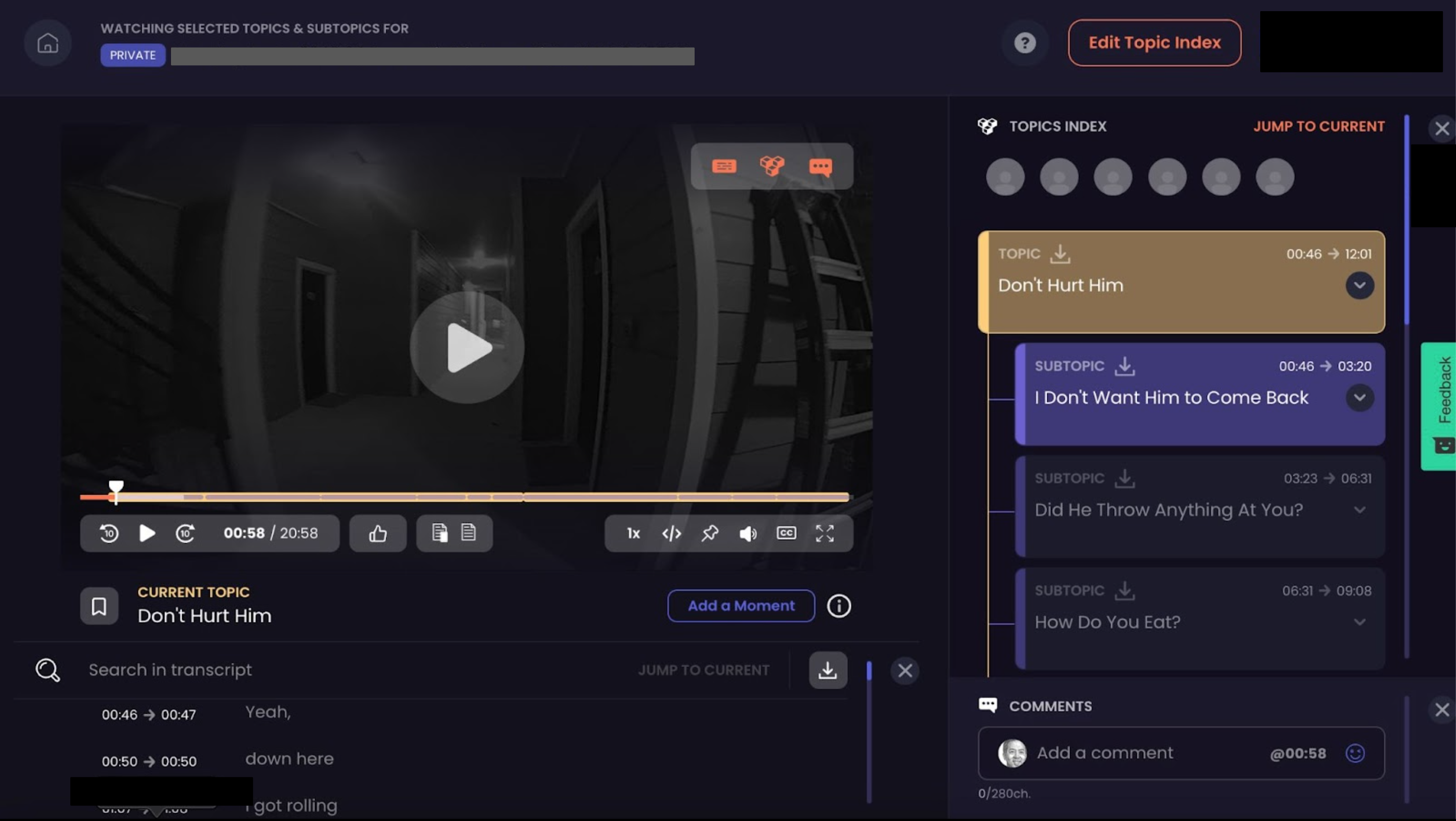
CLIPr is first here because it turns BWC and dashcam audio into AI-assisted drafts that officers review, edit, and own, then copy into the current RMS. It works across camera platforms instead of locking the agency into one ecosystem.
CLIPr is an AI platform for law enforcement you can start with drag-and-drop footage and no RMS replacement. A free pilot lets agencies test workflow fit, timing, draft quality, and implementation support before a contract, with no new hardware on day one.
Pricing: Searchable Audio is $0.105/min and Searchable Video is $0.21/min; the free 30 to 90 day pilot requires no credit card, and larger deployments can be scoped around utilization, architecture, sovereignty, and carry-forward capacity.
Best for: Small agencies that need a low-friction pilot, and larger county, state, metropolitan, or national agencies that want "AI your way" while keeping sovereignty and architecture control.
Best for: agencies ready to replace their RMS and want report writing rebuilt into it.
A cloud-native records management system with dynamic forms and workflows designed to cut report-writing drag at the source.
If the main problem is slow narratives, confirm that an RMS replacement is proportionate before starting procurement.
Pricing: Custom pricing.
Best for: Mid-sized agencies with an approved RMS replacement budget who want report writing fixed as part of the larger modernization.
Best for: agencies already standardized on Axon cameras and Axon Records.
Axon's AI tool that drafts report narratives directly from body-worn camera audio inside the Axon ecosystem.
AI-drafted reports have drawn public scrutiny on transparency and auditability, including concerns raised by the ACLU. A written policy and disclosure stance should be set before rollout.
Pricing: Custom pricing.
Best for: Agencies all-in on Axon hardware and Records that want AI drafting with the least integration work.
Best for: agencies on or moving to the Tyler/New World stack with deep IBR/NIBRS needs.
The report-writing module inside Tyler's Enterprise Law Enforcement Records (formerly New World), covering field and mobile reporting with IBR/NIBRS alignment.
Tyler is a records-suite decision, not a lightweight AI drafting pilot. If the main pain is slow narratives from BWC audio, validate whether a full records project is proportionate before starting procurement.
Pricing: Custom pricing.
Best for: Tyler/New World agencies, or buyers whose state reporting complexity justifies a deep integrated records suite.
Best for: agencies that share data across neighboring jurisdictions.
Records and reporting software within CentralSquare's public safety suite, built around field capture and reduced manual entry.
Public examples mix dated material with current claims, so ask the vendor to demo current module capabilities against your workflow.
Pricing: Custom pricing.
Best for: Agencies in multi-jurisdiction regions where shared records matter as much as faster narratives.
Best for: agencies that want reports started and finished in the vehicle.
Versaterm's records management system paired with Mobile Report Entry (MRE), part of an end-to-end records and evidence portfolio.
Versaterm positions its value around enter-once data flow rather than a published time-savings percentage, so quantify gains in a pilot.
Pricing: Custom pricing.
Best for: Mobile-first agencies that want report entry embedded in patrol workflow and are open to the full Versaterm stack.
Best for: a dictation layer that speeds reports inside any RMS.
Speech recognition built for law enforcement that lets officers dictate incident reports directly into their existing RMS. Treat it as a dictation layer, not a report generator: the officer still authors every word, but typing time drops.
Accuracy depends on noise environment and voice-profile training.
Pricing: Enterprise licensing; contact sales.
Best for: Policy-cautious agencies that want speed gains while avoiding AI-drafting policy work, on any RMS.
Best for: incident-first reporting across campus and public safety teams.
Incident reporting software used widely across public safety and campus environments, with a mobile app that includes voice-to-text for field reports.
Departments with heavy NIBRS and investigations requirements will likely outgrow an incident-first core.
Pricing: Custom pricing.
Best for: Campus police, hospital security, and smaller public safety teams that need streamlined incident reporting more than a full RMS.
Best for: budget-conscious agencies that want a streamlined web-based RMS.
A web-based police records management system with a streamlined incident report workflow and budget-friendly positioning.
Agencies wanting AI assistance would pair it with an overlay tool.
Pricing: Custom pricing.
Best for: Small departments prioritizing affordability and simplicity over advanced automation.
Best for: AI report drafting plus investigative analysis layered over existing systems.
An AI platform for police report writing and investigative analysis that overlays existing agency systems, with modules including a report checker and bodycam processing.
As with any newer AI vendor, ask how draft version history, disclosure support, retention, and export controls work in practice.
Pricing: Contact sales; demo language references free licenses, so confirm current terms directly.
Best for: Agencies that want AI drafting plus investigative analysis tools in one overlay and are willing to verify case-study claims locally.
A pilot is where vendor claims meet your agency's reality. Run it deliberately and the data makes the budget conversation for you.
The step-by-step playbook on how to automate police reports covers implementation in more depth; here is the short version.
Measure before you start, or the pilot has no baseline.
Independent reviewers have pushed back on this category's marketing, with the ACLU pointing to studies questioning the value of AI-assisted police reports, which is exactly why local numbers beat vendor decks.
Settle these before the first draft is generated, not after a defense attorney asks.
Agencies that want the lowest-friction starting point can pilot CLIPr with their current cameras and RMS: the standard pilot runs 30 to 90 days for up to 50 officers.
Departments with recently upgraded MDTs can use the no-dock, drag-and-drop MDT pilot program and have officers running within a shift.
You want AI drafts from the bodycams you already own without an RMS migration.
That can mean a small department testing value quickly, or a larger county, state, metropolitan, national, or sovereign agency that wants "AI your way" across modern cloud, private, or hybrid architecture.
Your agency is already standardized on Axon cameras and Axon Records. The ecosystem integration is the product; outside it, agencies should test whether the same workflow value carries over.
An RMS replacement is already funded and underway. Fix report writing inside the migration rather than bolting on a tool you may replace anyway. Mark43 suits cloud-first modernizers; Tyler suits deep IBR/NIBRS complexity and existing New World shops.
Your council, union, or prosecutor relationships make AI drafting premature. Dictation can improve speed while avoiding AI-drafting policy questions, and nothing stops you from piloting AI drafting later.
Budget is the binding constraint and the current records process is the real bottleneck. Pair it with grants: agencies that qualify can offset costs through law enforcement technology grants.
Interview documentation is the bigger drain than patrol narratives.
PoliceReports.ai adds investigative analysis, and CLIPr's detective interview-room reports turn recorded interviews into speaker-identified, searchable first drafts, with a free 30-day pilot for up to 50 detectives.
There is no blanket prohibition, but rules vary by state, agency policy, and prosecutor expectations.
Agencies adopting tools like Draft One have done so with safeguards such as optional use and required officer review, while the ACLU has raised concerns about transparency and bias and has questioned some vendors' time-savings claims.
A practical baseline to discuss with counsel and prosecutors is officer review of every draft, a written policy, a disclosure stance, and preserved version history.
Yes, copy-into-RMS can work for ecosystem-agnostic tools like CLIPr when the surrounding process is documented.
The agency should require officer review and edits, retain the draft-to-final version trail, confirm retention and deletion terms, and keep the final RMS report as the official record.
Officers still need command of the fundamentals, which is why pairing rollout with a refresher on how to write a police report can improve edit quality.
No. Draft One is designed around the Axon ecosystem, but camera-agnostic tools exist for agencies with mixed or non-Axon environments.
CLIPr lists support for camera platforms including Axon, Motorola, i-PRO, Getac, Digital Ally, Reveal Media, Hytera, HALOS, and 10-8 and copies finished reports into your existing RMS, while PoliceReports.ai overlays existing systems.
Your camera vendor should inform the shortlist, not dictate it.
No full-featured product on this list is free outright, and a permanently free tool would raise its own data-security questions.
The practical equivalents are free pilots: CLIPr offers 30 to 90 days for up to 50 officers with no credit card, and its MDT pilot runs 14 days with no dock required.
For permanent funding, federal, state, and private law enforcement technology grants can cover adoption costs for qualifying departments.
The report-writing category is splitting in two: records platforms making forms faster, and AI tools addressing the first draft itself.
Over the next few budget cycles, auditability features such as draft history, disclosure tooling, and export trails are likely to matter more as policy expectations mature.
Small agencies will favor vendors that can show local value in weeks, not quarters.
The next step is not a purchase. Baseline your minutes-per-report this month, pick one or two tools that fit your PATROL scores, and run a structured pilot against that baseline.
Officers preparing to evaluate drafts can sharpen their eye with these police report writing examples before the pilot starts.
CLIPr turns BodyCam and DashCam audio into AI-assisted police report drafts that officers review, edit, and copy into their existing RMS.
CLIPr describes the platform as designed around CJIS Security Policy alignment and its SOC 2 Type 1 posture; agencies can review controls, documentation, ownership, retention, and deletion terms during procurement and can test the workflow in a free 30 to 90 day pilot for up to 50 officers.
Run CLIPr with your own bodycam footage. Free 30 to 90 day pilot for up to 50 officers, no credit card required, subject to approval.