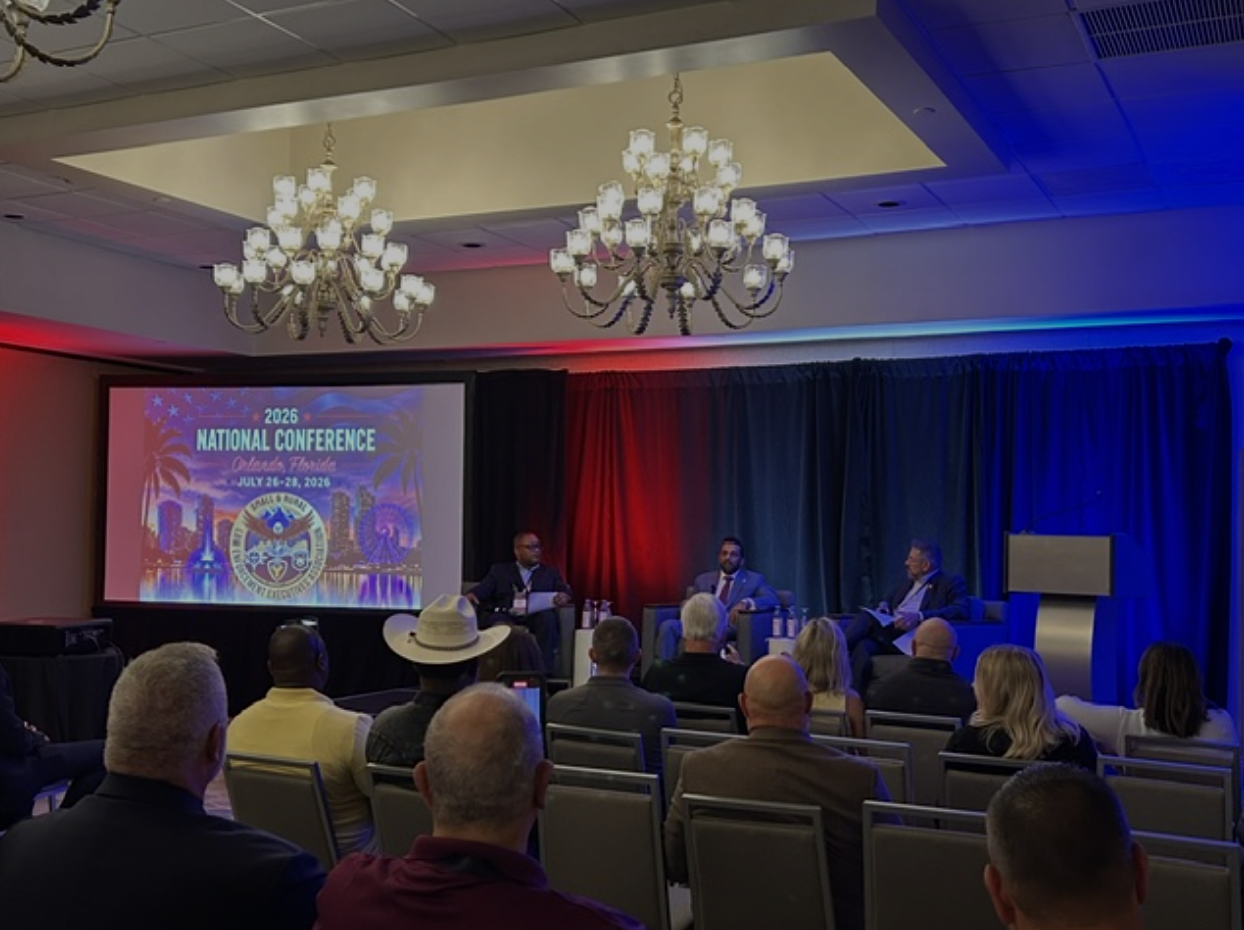
CLIPr Proudly Sponsors SRLEEA Conference in Orlando
At SRLEEA, FBI Director Patel called AI essential for agencies of every size. See how CLIPr is helping small and rural departments do more with less.


If you write police reports for a U.S. police department, the real problem is not grammar. It is 0300, reports are stacked from a busy night, and every narrative will eventually be read by supervisors, attorneys, or a judge.
Most advice stops at "be clear and chronological." True, and not much help in front of a blank narrative field. This guide gives patrol officers, academy recruits, FTOs, and supervisors 7 report examples, the PACE-R framework, and a one-page self-audit checklist.
One ground rule: every report here is generic and agency-neutral, with invented names, dates, times, and case numbers. Your RMS fields, charging language, and report format always follow your department's policy and your prosecutor's preferences.
A strong police report narrative is a first-person, chronological account of what the officer saw, heard, and did, written in plain English, with parties labeled consistently and facts kept separate from conclusions.
This sentence can be broken down into important categories, as listed below.
This is not just style preference. Police1's guidance on organized, concise reports identifies organization, clarity, and chronology as the foundation.
Chronology is where many writers struggle. POLICE Magazine's report-writing refresher makes the same case for accuracy, thoroughness, and active voice.
Formal training standards agree. The California POST Learning Domain 18 workbook on investigative report writing builds its competencies and evaluation around clarity, completeness, and accuracy.
California POST, Learning Domain 18One structural habit is worth keeping: introduce people, property, and the scene before you discuss them, so a reader meets each element before it matters.
For the step-by-step process behind these principles, the companion guide on how to write a police report walks the full sequence from dispatch notes to submission.
Tips are easy to forget mid-shift. A structure is not. PACE-R is a five-part mental checklist for building a narrative under time pressure, and every example below follows it.
Introduce every person once, with a role label: Victim Tran, Witness Hall, Suspect Reed. Use the same label for the rest of the report. Undefined pronouns make a narrative harder to follow in supervisory, prosecutor, or defense review.
Who did what, when, and where, in the order it happened. Anchor the timeline with dispatch, arrival, and key event times. If you learned something out of order, say so: "Daniels later stated..." keeps the timeline honest.
Lighting, weather, road surface, scene condition, threats present. Context lets a reader reconstruct the scene and judge the reasonableness of your decisions months later.
Observations, statements, physical evidence, recordings, and the facts that articulate the elements of the offense. Articulate, do not argue. The facts should support the charge without a legal conclusion.
Arrests, citations, referrals, notifications, evidence handling, case numbers, next steps. A narrative that ends at the last witness statement leaves the reader guessing how the call resolved.
When does PACE-R apply? Most patrol narratives, directly. Long investigative reports may use formal section headers per agency format, but the same five elements still need to show up.
The 1-page version of this framework lives in the self-audit checklist later in this guide, formatted to print and keep at the workstation.
The fastest way to calibrate is seeing the same fact pattern written badly and well.
A fight had occurred at the bar prior to officers arriving on scene. Statements were obtained. The suspect had already left the area at some point.
I arrived at 2308 hours. Witness Diaz stated the fight started near the pool tables at approximately 2255 hours and ended when staff separated both men. Subject Lee left on foot before my arrival.
The vehicle was observed crossing the center line, and a traffic stop was initiated by this officer.
I saw the sedan cross the center line twice. I stopped the vehicle at Route 9 and Garner Rd.
The suspect appeared intoxicated and was acting in an aggressive manner.
Ortiz swayed while standing, smelled of an alcoholic beverage, and twice yelled that he would "knock out" the bartender.
Notice the pattern. The improved versions are not longer for the sake of it. They are longer where precision matters and shorter everywhere else.
Each police report narrative example below runs 120 to 180 words, follows PACE-R, and ends with a note on what makes it strong. Together they work as a police incident report sample set for the call types patrol handles most.
Treat them as calibration, not copy-paste templates.
On 03/14 at approximately 1652 hours, I was dispatched to Maple Discount Mart, 412 E. Commerce St., for a theft in custody.
I arrived at 1658 hours and contacted Loss Prevention Officer Daniels. Daniels stated he watched Suspect Reed conceal two phone chargers and a Bluetooth speaker, total value $84.97, in a backpack and walk past all points of sale without paying.
Daniels detained Reed outside the exit and recovered the merchandise.
The store was open and well lit, and the concealment was captured on CCTV. I reviewed the footage, which was consistent with Daniels' account, and collected a copy. Reed stated, "I was going to come back and pay for it."
I arrested Reed for theft, photographed the recovered merchandise, and returned it to Daniels. Reed was transported to booking without incident. Case 26-04412 issued; CCTV copy submitted to evidence.
Why this works: parties are labeled once and reused, the value is documented, the admission is quoted exactly, and evidence handling is explicit.
On 05/02 at 2126 hours, I was dispatched with Officer Bryant to 88 Linden Ct., Apt. 3, for a verbal domestic disturbance. Dispatch advised a neighbor reported shouting; no weapons were mentioned.
We arrived at 2133 hours. I spoke with Resident Alvarez in the kitchen while Officer Bryant spoke with Resident Cole on the balcony. Both stated the argument was verbal only and concerned shared rent payments.
I observed no injuries on either party and no signs of a physical struggle in the apartment.
Neither party reported being touched or threatened, and their accounts were consistent. Based on the totality of the circumstances, I found no probable cause that an offense occurred.
I provided both parties a domestic resources referral card and explained how to request a copy of this report. Cole elected to stay the night with a relative and left at approximately 2205 hours.
Why this works: separate interviews are documented, the absence of injuries and inconsistencies is stated affirmatively, and the referral and resolution are on the record.
On 06/07 at 0117 hours, I was on patrol eastbound on Route 9 near mile marker 12 when I saw a silver sedan cross the fog line twice and the center line once over approximately a quarter mile.
I stopped the vehicle at Route 9 and Garner Rd. at 0119 hours. My BWC and dashcam were recording.
I contacted Driver Ortiz, the sole occupant. I smelled an odor of an alcoholic beverage from the vehicle and saw that Ortiz's eyes were bloodshot and watery.
He handed me a credit card when I asked for his license and stated he had "two beers" at a friend's house.
Ortiz agreed to standardized field sobriety tests on the level, dry shoulder and showed multiple indicators of impairment on each test, detailed below. I arrested Ortiz for DUI at 0134 hours.
I administered a breath test at the station per implied consent procedures, inventoried the vehicle, and arranged the tow.
Why this works: the driving pattern, personal observations, and test performance build the probable cause chain in order, with recordings noted on the record.
On 04/22 at 1804 hours, I was dispatched to a two-vehicle injury collision at Hartley Ave. and 3rd St. I arrived at 1809 hours. EMS was treating Passenger Webb, seated in Vehicle 2, who complained of neck pain. Webb was transported to County General.
The roadway was wet from earlier rain and the traffic signal was functioning. Driver Nguyen (Vehicle 1) stated she was northbound on Hartley with a green light.
Driver Barker (Vehicle 2) stated he was westbound on 3rd and "thought it was still yellow." Witness Hall, stopped behind Vehicle 1, stated Vehicle 2 entered against a red signal.
I observed front-end damage to Vehicle 2, passenger-side damage to Vehicle 1, and a debris field in the northbound lane consistent with the point of impact.
I photographed the scene, completed a diagram, recorded CAD times, and exchanged driver information. The collision report and citation determination were completed per department policy.
Why this works: every statement is attributed, the physical evidence quietly corroborates one account, and conditions are documented without editorializing.
On 02/18 at 1742 hours, I responded to 1521 Brookfield Dr. for a residential burglary report. Victim Tran stated she left for work at 0750 hours and returned at 1725 hours to find the rear door open and the frame splintered.
I observed pry marks near the deadbolt and fresh wood fragments on the rear step. Tran reported a gray laptop (serial number recorded), a jewelry box, and approximately $200 cash missing from the main bedroom.
Drawers in two bedrooms were open with contents emptied onto the floor.
I photographed the door, the pry marks, and both bedrooms, and requested latent print processing on the door frame. A canvass of three neighboring homes located one doorbell camera facing the street; Witness Patterson agreed to provide the footage.
I gave Tran the case number, explained the follow-up process, and forwarded the report to the detective bureau.
Why this works: the entry point, time window, loss list with identifiers, and preserved leads give investigators something to act on.
Narratives like this one feed follow-up investigations, where detective case management software helps organize statements, photos, and evidence across open cases.
On 03/30 at 0712 hours, I met Victim Singh at Riverside Print Co., 240 Dock St., regarding vandalism discovered at opening. Singh stated the building was undamaged when he locked up at approximately 1900 hours the prior evening.
I observed spray-painted markings in black and red covering approximately 12 feet of the north exterior wall, with a matching marking on the rear dumpster. There was no other damage and no sign of attempted entry.
Singh estimated cleanup at $600 and stated he did not give anyone permission to paint on the property. There were no witnesses on scene. A canvass located one business camera with a partial view of the alley, and I requested the overnight footage.
I photographed all markings, provided Singh the case number, and routed the report per department policy.
Why this works: the damage is scoped and valued, the time window is established, lack of permission is explicit, and a lead is preserved.
On 07/12 at 2304 hours, I was dispatched with Officer Ruiz to Duke's Tavern, 77 Main St., for a fight in progress. On arrival at 2308 hours, staff had separated two men, Subject Murphy and Subject Lee.
I interviewed Murphy, who had a swollen left cheek and stated Lee "swung first" after an argument over a pool game. Officer Ruiz interviewed Lee, who had a cut lower lip and stated Murphy shoved him first.
Witness Diaz, the bartender, stated both men "squared up at the same time" and could not say who struck first.
Both subjects declined medical attention. I photographed both injuries. The bar's interior camera covers the pool area, and management agreed to preserve the footage.
Given the conflicting accounts and mutual injuries, I did not arrest either party on scene. I documented both statements and forwarded the report to the prosecutor's office for charging review per department policy.
Why this works: conflicting statements are preserved without the writer picking a winner, injuries on both parties are documented, and the charging decision is routed properly.
Worth knowing as you study these: officers using AI-assisted police report drafts from BodyCam audio can start from a draft generated from the recording, then review, edit, and copy the finished narrative into their RMS.
The principles in this guide keep that workflow grounded in officer review rather than automation alone.
Run this pass before every submission. It takes about two minutes and maps to PACE-R, in line with the clarity, completeness, and accuracy competencies in the POST LD 18 workbook.
Parties
Actions
Context
Evidence and elements
Response and results
Final 30 seconds: reread only the facts that articulate the elements and your probable cause. Would a reader who was not there follow the chain without help? Keep this pass generic and align specifics with your local training and prosecutor guidance.
For teams looking at tooling around this workflow, the rundown of police report writing software covers what the current options actually do.
These are the patterns supervisors and prosecutors flag most, and the quick fix for each.
The right words to use in a police report are usually the plain ones: short verbs, named people, exact times, and measured quantities.
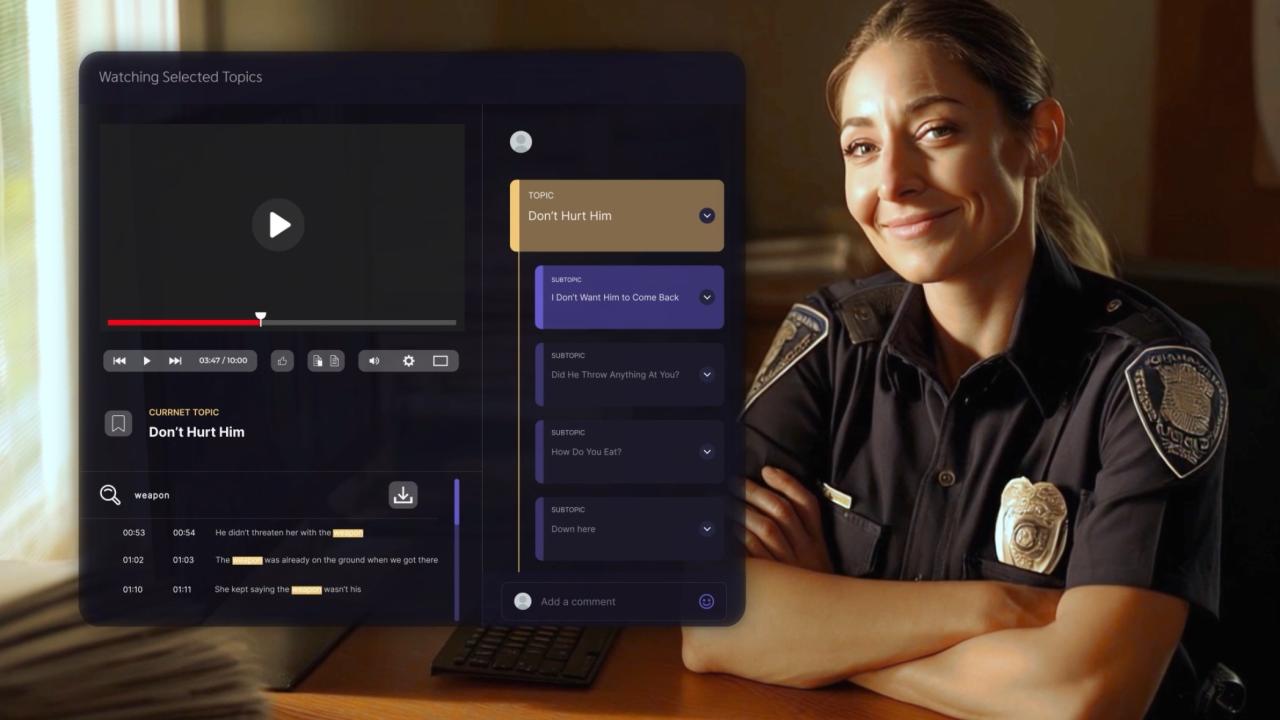
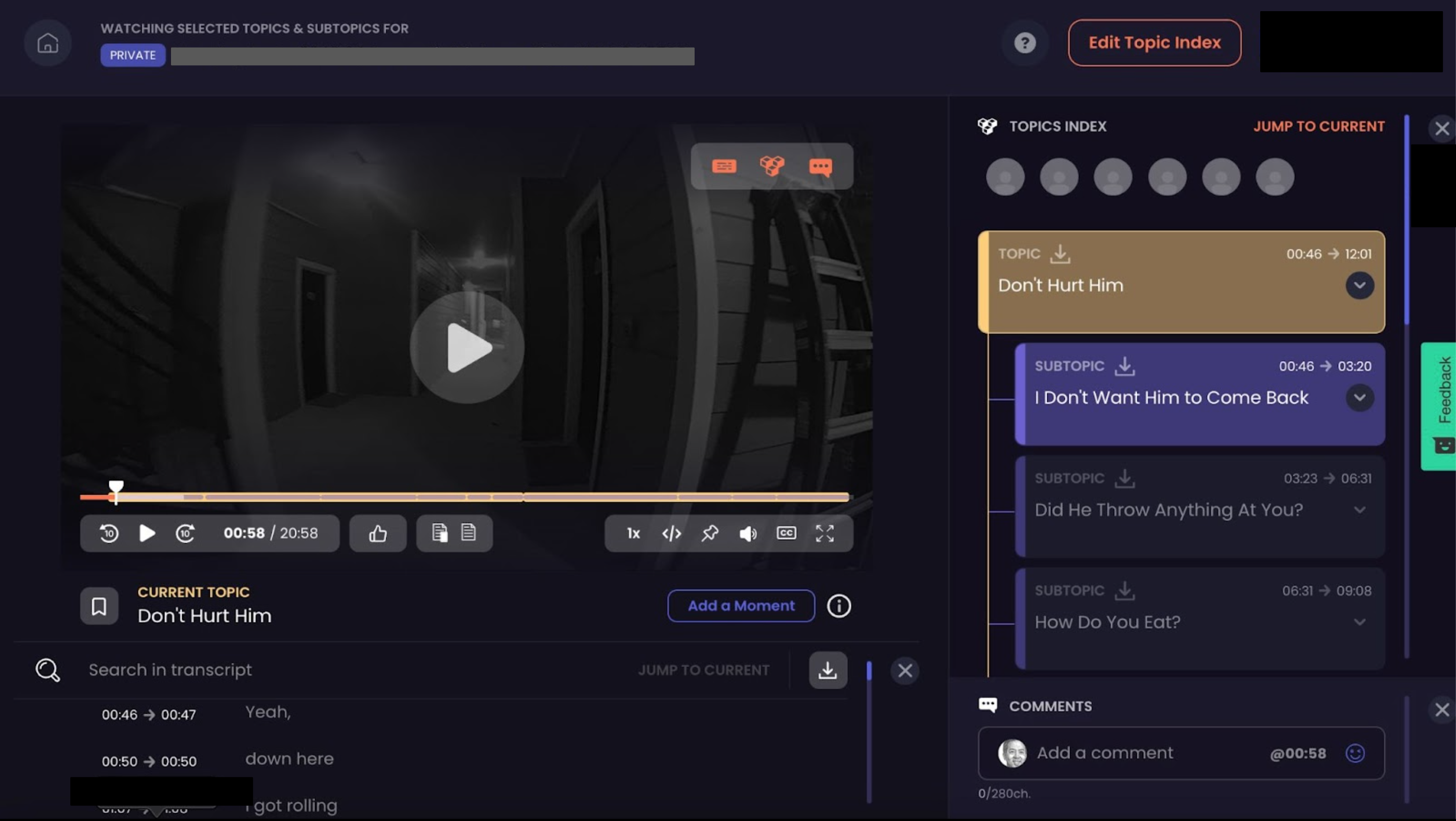
Agencies can use BWC and dashcam audio for first-draft narratives and searchable notes instead of starting every report from a blank field. In CLIPr, an officer or records clerk drags footage from the existing evidence platform, and the officer reviews, edits, and owns the finished report before RMS entry.
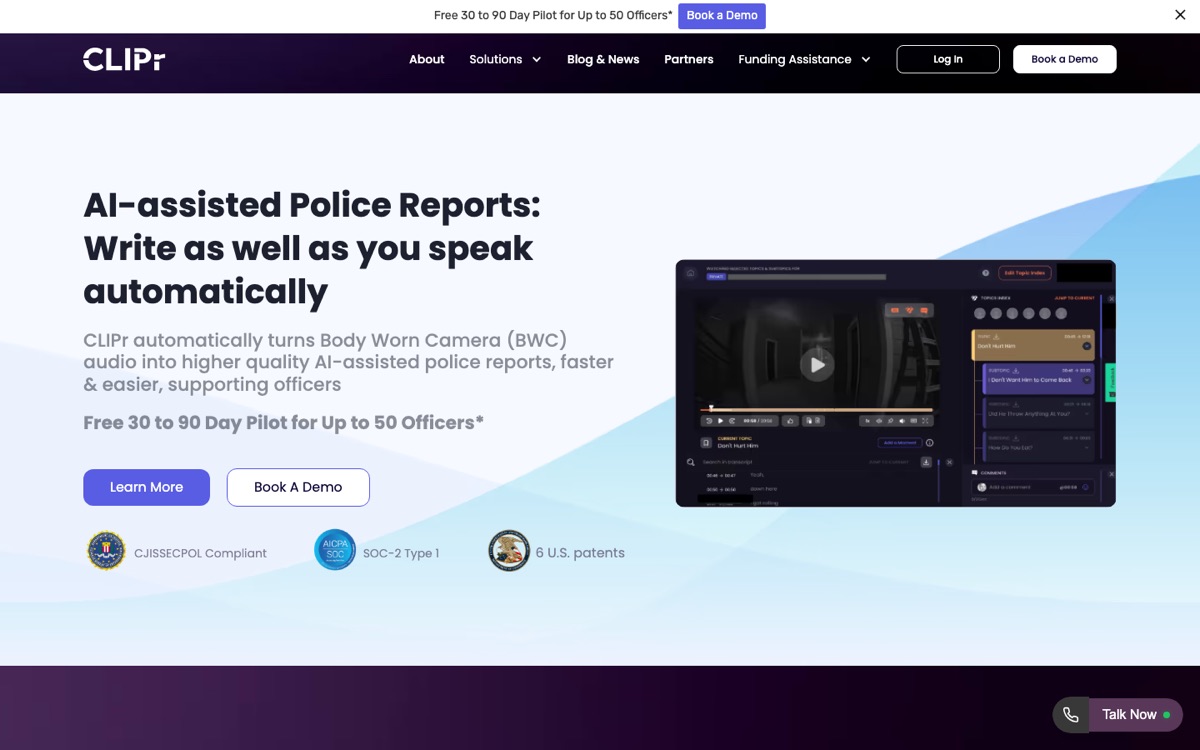
Officers remain responsible for accuracy and agency policy compliance. AI drafts are a starting point, never the final word.
Where AI drafting can help
Where officer review still matters
Treat every AI draft like a partner's notes: useful raw material, fully your responsibility once your name is on it.
Ask any vendor in this category how it handles data ownership, CJIS Security Policy alignment, and retention and deletion, and review the security documentation it provides. CLIPr shares its CJIS Security Policy-aligned posture and SOC 2 Type 1 materials for review during a pilot.
The deeper guide to AI report-drafting tools covers how these systems draft and where review fits.
For command staff weighing a rollout, the report automation workflow guide covers the operational side, and AI in law enforcement covers the policy and ethics questions agencies should settle before deployment.
As long as the facts require and no longer. A routine call may resolve in a few tight paragraphs, while a complex incident can justifiably run pages. Length should track the complexity of the incident, never a desire to look thorough.
Quote exact words when the wording itself matters: admissions, threats, spontaneous statements, and consent. Paraphrase routine information, and never clean up grammar inside quotation marks.
When interviews are recorded, teams that need exact wording at scale often work from transcripts; that is the territory covered by legal transcription software.
No. Documentation requirements vary by agency policy, and many calls are cleared with a CAD note rather than a full report. When in doubt, the safer habit is to document.
Active. "I handcuffed Reed" tells the reader who acted; "Reed was handcuffed" leaves it open. Passive voice can make the action sequence harder to review.
Use frameworks like PACE-R rather than canned language. A mock police report is a fine practice tool for recruits, but identical phrasing repeated across real reports can make review harder and credibility questions easier to raise.
Always follow your agency's format and your prosecutor's preferences.
Here is the one thing to do this week. Pull the last report you submitted and run it against the self-audit checklist above. Mark every miss: an undefined pronoun, a time jump, a conclusion standing in for an observation.
You may find a few misses in the first pass, and the same misses often repeat. Fix the pattern once and future reports get easier to review.
If report time itself is the bottleneck, it is worth understanding how AI-assisted report drafts are built from BWC audio, and what it takes to evaluate report automation without bypassing review workflows or agency policy.
If a first draft from BWC audio would help your workflow, CLIPr can support that review loop: the draft starts from the recording, the officer reviews and edits it, and the final text moves into the RMS according to agency policy.
CLIPr turns BodyCam and DashCam audio into AI-assisted police report drafts that officers review, edit, and copy into their RMS.
The platform is built for law enforcement workflows, with an architecture designed around CJIS Security Policy alignment and SOC 2 Type 1 materials available for review during a pilot.
Officers review and edit every draft before it goes into the RMS. CLIPr's 30 to 90 day pilot covers up to 50 officers, requires no credit card, and is subject to approval.