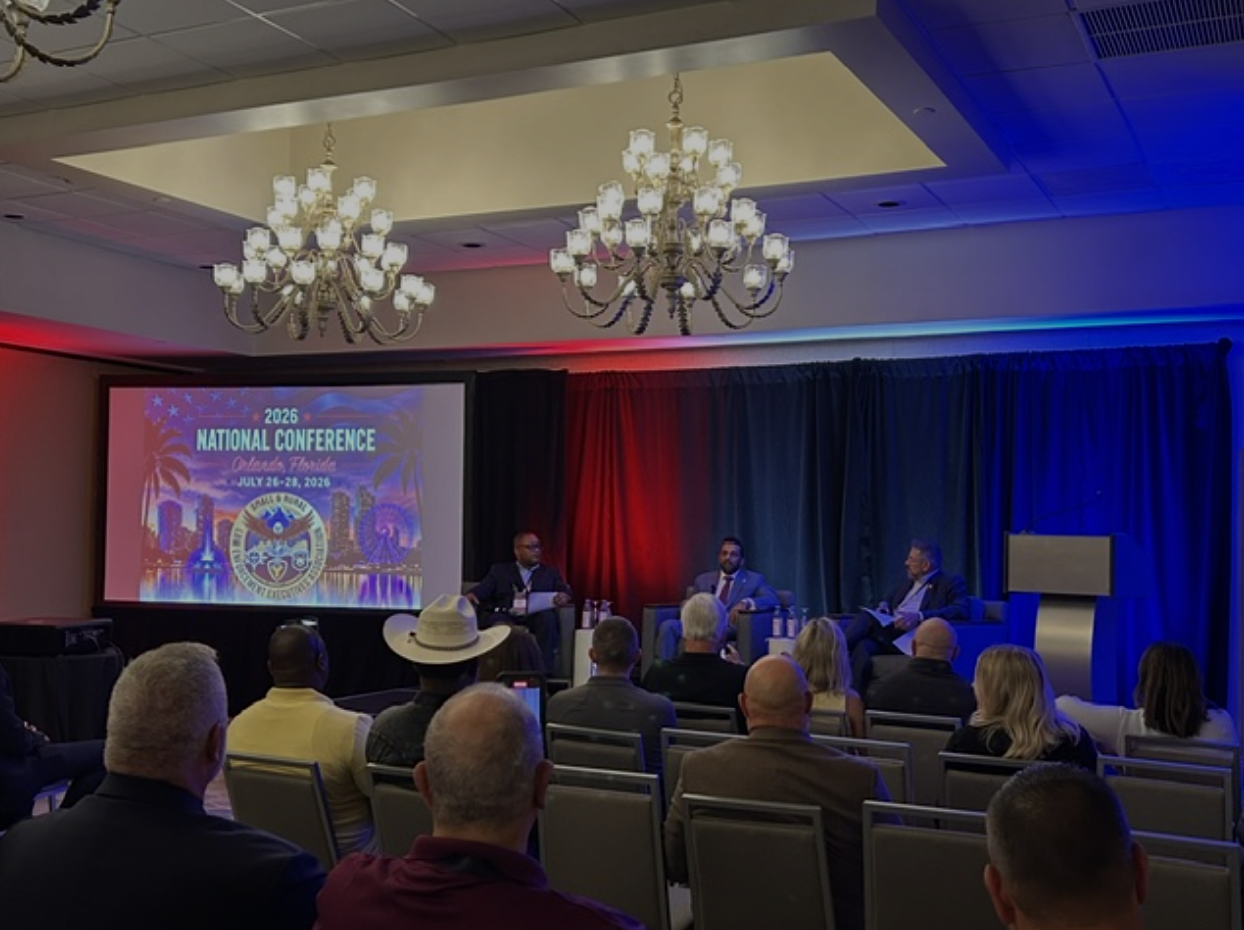
CLIPr Proudly Sponsors SRLEEA Conference in Orlando
At SRLEEA, FBI Director Patel called AI essential for agencies of every size. See how CLIPr is helping small and rural departments do more with less.


AI for first responders is a set of artificial intelligence (AI) tools that support specific jobs across police, fire, emergency medical services (EMS), 911, and emergency management. In practice that means bounded work, such as:
AI creates drafts, not final official records. Every AI-assisted report, summary, or other proposed official record requires 100% human review by a qualified, authorized person. That reviewer must compare the output with the source material, correct omissions or unsupported content, and provide the required authorized signoff before the record enters an official system.
Maturity and consequence vary widely. The Federal Emergency Management Agency (FEMA) lists geospatial damage assessment as deployed in its official AI inventory, with a trained analyst reviewing every flagged image.
Report drafting from body-camera audio is current in some agency workflows, with local validation still varying.
The label AI is never the point. Four questions decide whether a use is safe to pilot:
The test: hold any tool to those four questions and the right first pilot usually picks itself.
This guide is for police, fire, EMS, 911, and emergency-management leaders picking one bounded use, comparing 12 use cases in a risk and readiness matrix, then running a lean pilot check.
Public claims about AI in public safety blur research, pilots, and production systems.
This guide sorts every use case into three maturity labels, reused as the chips on each matrix row:
Current operational use
A named agency or product operates it for a stated job today.
Pilot and emerging
Real activity exists, but performance and transferability are still being tested.
High-risk or poorly validated
The consequence is severe and public validation is thin or absent.
FEMA's AI use case inventory is a useful model of precise lifecycle wording. "Deployed" means the named agency runs it for a stated purpose. It does not mean independently validated, and it does not mean transferable to your agency.
Bounded documentation and transcription support is current in some products and agency workflows:
On the vendor side, CLIPr runs a Mobile Data Terminal pilot program aimed at smaller agencies and publishes a claim of up to 50% less report-writing time, with the officer reviewing, editing, and owning every report.
A homepage testimonial attributed to a police officer in Bentonville, Arkansas describes the same document-less goal. Treat the time figure as CLIPr's published claim, not an independent result, and validate it on your own reports during a pilot.
Some uses carry consequences that current public evidence does not support. Autonomous high-consequence decisions, such as dispatch or incident command without an accountable human, have no established public record of safe operation.
Where deployment, performance, or validation facts are unavailable, the accurate phrasing is simple: not established publicly.
A flat allowed-or-banned list fails because the same technology can be low-stakes in one job and dangerous in another. A transcription model drafting an administrative summary is not the same decision as a model recommending a patient destination.
This matrix reads each use case on its own terms instead. Every row carries a maturity chip using the three labels above, and oversight is its own column, so the planning posture stays visible without a scoring scheme.
| Use case and maturity | Example tools | Job and source data | Human decision point | Failure consequence | Oversight | Auditability | Implementation dependencies | Policy and data environment |
|---|---|---|---|---|---|---|---|---|
| Report transcription and first-draft police, fire, and EMS reportsCurrent in some products and agency workflows; local validation varies.Current operational | CLIPr, Axon Draft One, Truleo, Abel. Axon Draft One, Truleo, and Abel are named for context only. | Convert authorized audio, notes, or structured incident inputs into a reviewable first draft. Sources can include body-camera or dash-camera audio, dictated notes, and approved incident fields. | The authorized report writer compares the draft with source material, edits it, resolves uncertainty, and approves the final report. | Omitted, invented, misattributed, or privacy-sensitive content can damage a record, an investigation, a patient record, or public trust. | Records owner plus operational, legal and privacy, security, labor, and clinical review where applicable. | Preserve the original source, draft and version history, user edits, timestamps, approvals, access events, and retention treatment. | Audio quality, speaker identification, terminology, identity and access, export workflow, retention, state and local forms, user training, and a tested manual fallback. | CJI only when CJI is handled; HIPAA only for regulated entities and information flows; NEMSIS and state ePCR rules for EMS; NERIS and state rules for fire; local public-records, discovery, evidence, and report policy. |
| 911 call transcription, translation, and quality-assurance supportOperational in some centers, emerging in others.Current operational | Prepared, Carbyne, Motorola CommandCentral Assist. | Render call audio as text, support language access, surface key terms, or assist post-call review. Sources include live or recorded emergency calls and approved call metadata. | A trained call-taker or reviewer confirms meaning and retains call-handling authority. | A mistranscription, translation error, or missed cue can delay or misdirect response. | ECC or PSAP operations, language-access owner, quality assurance, IT and security, legal and privacy, labor, and medical, fire, and law partners as appropriate. | Link outputs to the original audio, model and version, confidence or uncertainty, user action, corrections, and the call record. | Telephony quality, latency, approved languages, CAD interfaces, outage behavior, accessibility, staffing, and interoperability testing. | State 911 rules, local call-record retention, public records, privacy, accessibility and language obligations, and CJI or health data only where the actual flow triggers them. |
| Non-emergency diversion or AI call triagePilot or emerging.Pilot and emerging | Aurelian, Prepared. | Classify incoming contacts or propose alternate response pathways using call content, location, history, and policy rules. | A qualified call-taker confirms call type and response path; emergency escalation stays immediate and visible. | Under-triage can delay emergency care or response; over-triage can consume scarce resources or escalate an encounter. | Executive sponsor, ECC or PSAP plus medical, fire, and law leadership, legal, equity and civil-rights review, quality assurance, and independent evaluation. | Record the input, recommendation, policy and version, override, final disposition, response time, error type, and subgroup performance where lawful. | Representative test data, clear exclusions, escalation, latency and outage controls, CAD mapping, protocol approval, and manual fallback. | State and local 911 authority, medical dispatch protocols, accessibility, public records, privacy, civil rights, and CAD governance. |
| CAD-assisted incident summarization or unit recommendationPilot or emerging.Pilot and emerging | Hexagon HxGN OnCall Smart Advisor, Motorola CommandCentral, Versaterm Real-Time Intelligence. | Summarize event data or recommend response resources from call, CAD, unit, mapping, and policy data. | The dispatcher or incident authority confirms the summary and independently decides resource assignment. | Missing context or an unsuitable recommendation can expose responders or the public to harm and create inequitable service. | Dispatch leadership, field command, IT and security, legal, labor, quality assurance, and mutual-aid partners. | Retain source events, recommendation, model or rule version, dispatcher action, overrides, timestamps, and downstream changes. | Exact CAD configuration, data quality, real-time availability, interoperability, mutual-aid rules, geospatial accuracy, and resilient manual operation. | CAD and vendor contracts, 911 policy, CJI where present, public records, labor policy, mutual-aid agreements, and local dispatch authority. |
| Fire-scene sensing, thermal-image assistance, or hazard detectionPilot or emerging; individual components may be operational.Pilot and emerging | Qwake C-THRU Navigator, Teledyne FLIR thermal imaging. | Identify heat signatures, structural or environmental patterns, or responder hazards from thermal, visual, sensor, building, or location data. | Incident command and trained personnel interpret the output against direct observation and established tactics. | False negatives can hide hazards; false positives can divert crews; overreliance can create life-safety risk. | Fire command, safety officer, training, IT and security, equipment owner, labor, and independent technical evaluation. | Store sensor source, device and model version, alert, user response, environmental conditions, failures, and maintenance and calibration records. | Ruggedization, sensor limits, smoke and heat conditions, connectivity, latency, calibration, protective-gear and workflow fit, training, and fallback tactics. | Department operating procedures, occupational safety, mutual aid, procurement, records, building and location-data rights, and applicable state fire standards. |
| EMS documentation and ePCR draftingEarly operational use and pilots.Current operational | CLIPr, ESO Auto-Generated Narrative, ImageTrend AI Assist. | Convert authorized speech or encounter notes into a reviewable ePCR draft or structured documentation suggestion. Sources can contain PHI, clinical observations, timestamps, and treatment details. | The treating or authorized clinician reviews the source, corrects the draft, confirms clinical facts and coding, and signs under local protocol. | An omission or invented clinical fact can affect continuity of care, billing, quality review, litigation, and patient safety. | EMS medical director, clinical quality assurance, privacy and security, records, billing and compliance, state EMS authority, labor, and IT. | Preserve the source, draft and edits, author and signature, access, model and version, exports, error reports, and retention per policy. | ePCR compatibility, NEMSIS and state validation, vocabulary, noisy environments, identity and access, PHI handling, downtime, training, and workflow timing. | HIPAA only where the entity and flow apply, state health privacy, NEMSIS plus state and local ePCR rules, medical-record retention, consent and access, and billing policy. |
| EMS clinical decision support, such as treatment or destination recommendationsEmerging and high consequence.High-risk | Corti, an emerging example at the dispatch and triage edge. No other tool is independently validated for this high-consequence row. | Produce a recommendation from symptoms, vitals, history, protocol data, and possibly device inputs. | A qualified clinician understands the basis, applies medical direction and protocol, and retains the treatment and transport decision. | A wrong or delayed recommendation can cause patient harm, inequitable care, or protocol deviation. | Medical director, state EMS authority, clinical governance, privacy and security, Food and Drug Administration (FDA) and regulatory counsel as needed, human-factors review, and independent validation. | Retain inputs, the basis available to the clinician, recommendation, version, clinician action and override, outcome measures, adverse events, and protocol changes. | Intended-use analysis, representative clinical validation, device and data reliability, protocol mapping, explainability sufficient for the decision owner, escalation, and a manual care pathway. | State EMS scope and protocols, medical direction, HIPAA where applicable, FDA clinical decision support and device analysis, health privacy, quality systems, and clinical liability. |
| Disaster imagery triage and damage assessmentDeployed in the named FEMA inventory use case; local maturity varies.Current operational | Esri ArcGIS, Maxar, Planet. | Prioritize imagery likely to show damage or debris so analysts can investigate and recommend findings. Sources include authorized aerial, satellite, or geospatial imagery and event metadata. | A trained analyst investigates flagged imagery and makes or recommends the assessment. | Missed damage can delay aid or situational awareness; false flags waste analyst time or distort priorities. | Emergency-management program owner, geospatial and data owner, privacy and civil-rights review, security, and a quality and evaluation team. | Retain imagery provenance, model and version, priority score, analyst review, correction, final recommendation, and performance by event and condition. | Imagery rights and timeliness, geolocation, disaster-condition drift, network throughput, analyst capacity, mapping interoperability, and alternate assessment methods. | FEMA or program rules where applicable, state and local emergency-management authority, privacy, records, geospatial licensing, critical-infrastructure sensitivity, and grant conditions. |
| Planning, staffing, or resource-demand forecastingOperational in some analytical settings, emerging elsewhere.Current operational | Darkhorse Emergency, Deccan ADAM and LiveMUM. | Forecast demand or propose resource positioning from historical incidents, schedules, weather, events, geography, and operational data. | An accountable supervisor evaluates assumptions and makes the staffing or allocation decision. | Biased or stale data can under-resource communities, increase workload, or reduce response capacity. | Operations, data governance, labor, legal and civil-rights review, finance, community oversight where required, and independent evaluation. | Record the training window, features, exclusions, version, forecast, decision, overrides, error by geography, time, and group where lawful, and drift. | Data completeness, changed service patterns, rare events, mutual aid, staffing constraints, labor agreements, interpretability, and regular recalibration. | Labor agreements, civil rights, public records, budget and procurement, local allocation policy, and privacy limits on source data. |
| Policy, procedure, or knowledge search assistantDeployed or piloted in bounded environments.Current operational | Lexipol Policy Assistant, PowerDMS. | Retrieve or summarize approved policy, training, equipment, or emergency-plan material from a controlled corpus. | The responder or staff member opens the cited source and follows the current authoritative policy, not the summary alone. | A stale or fabricated answer can produce a policy violation, unsafe action, or delay. | Policy owner, training, records, IT and security, legal, and content administrators. | Log the source set and version, query, retrieved citations, answer, user feedback, corrections, and content update history. | A controlled corpus, permissions, citation fidelity, version control, update ownership, offline access, and a direct route to authoritative documents. | Records and retention, access controls, sensitive security information, copyright and licensing, local policy authority, and disclosure rules. |
| Face recognition or other biometric identification used to support enforcementOperational technology with high rights risk and variable legal authority.High-risk | Clearview AI, NEC, Idemia. Named for context only, not endorsed, given the wrongful-arrest and civil-rights record in this category. | Produce candidate matches or identity signals from images, video, or biometric templates. | A trained, authorized person treats output as an investigative lead, uses corroborating evidence, and follows jurisdictional policy. | False matches can lead to wrongful stops, searches, arrests, surveillance, or disparate harm. | Legal and civil-rights review, privacy, executive command, prosecutor where relevant, security, records, community oversight, and independent performance review. | Preserve query authority, source image, candidate list, algorithm version and threshold, examiner action, corroboration, final action, access, and deletion and retention. | Image quality, thresholds, watchlist provenance, demographic performance, examiner training, security, disclosure, and an appeal and correction process. | Federal, state, and local law, warrants and policy, civil rights, biometric privacy, public records, evidence and discovery, retention, CJI where handled, and procurement terms. |
| Predictive enforcement or autonomous incident command and dispatchPoorly validated for replacing accountable judgment.High-risk | No established, independently validated named tool. Predictive-policing products such as PredPol and Geolitica were discontinued or dropped amid accuracy and civil-rights concerns. | Predict where or whom to target, assign enforcement attention, or direct high-consequence response from historical and live data. | Accountable human and legal authority cannot be hidden behind a score. Any proposed operational use needs evidence and controls specific to that decision. | Feedback loops, biased allocation, unsafe tactics, missed emergencies, due-process harm, and inability to contest or reconstruct the decision. | Executive command, legal and civil-rights review, clinical or fire authority as applicable, labor, community oversight, independent evaluation, security, and elected or governing authority where required. | Full data lineage, assumptions, model and version, recommendation, human rationale, overrides, downstream actions, subgroup and geographic impact, incidents, and suspension history. | High-quality representative evidence, causal limits, drift management, explainability, appeal, safe interruption, clear authority, and independent validation. Public evidence of safe autonomous replacement is not established. | Constitutional and civil-rights law, state and local law, 911 and medical and fire authority, public records, evidence, labor, procurement, surveillance rules, and agency policy. |
Maturity chips use the three labels defined above and summarize the public sources linked throughout this guide. Example tools are named illustrations, not endorsements; verify current capabilities with each vendor.
Five moves turn the table into a working evaluation:
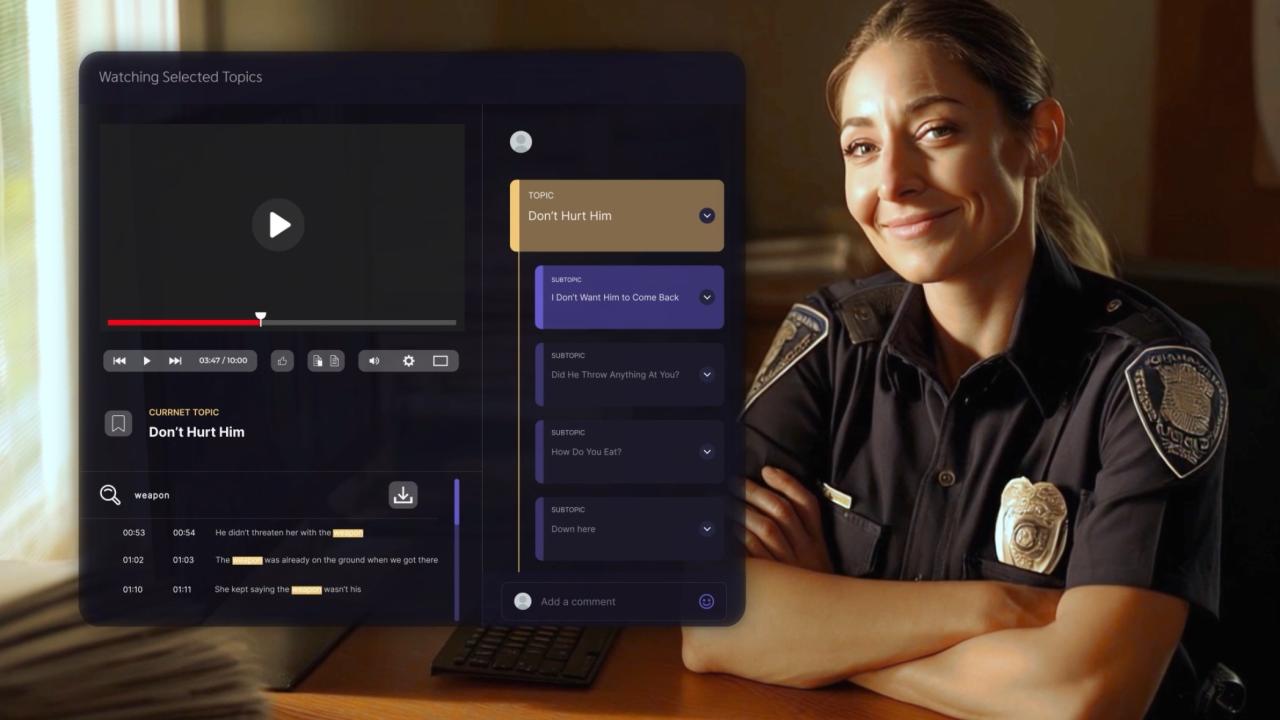
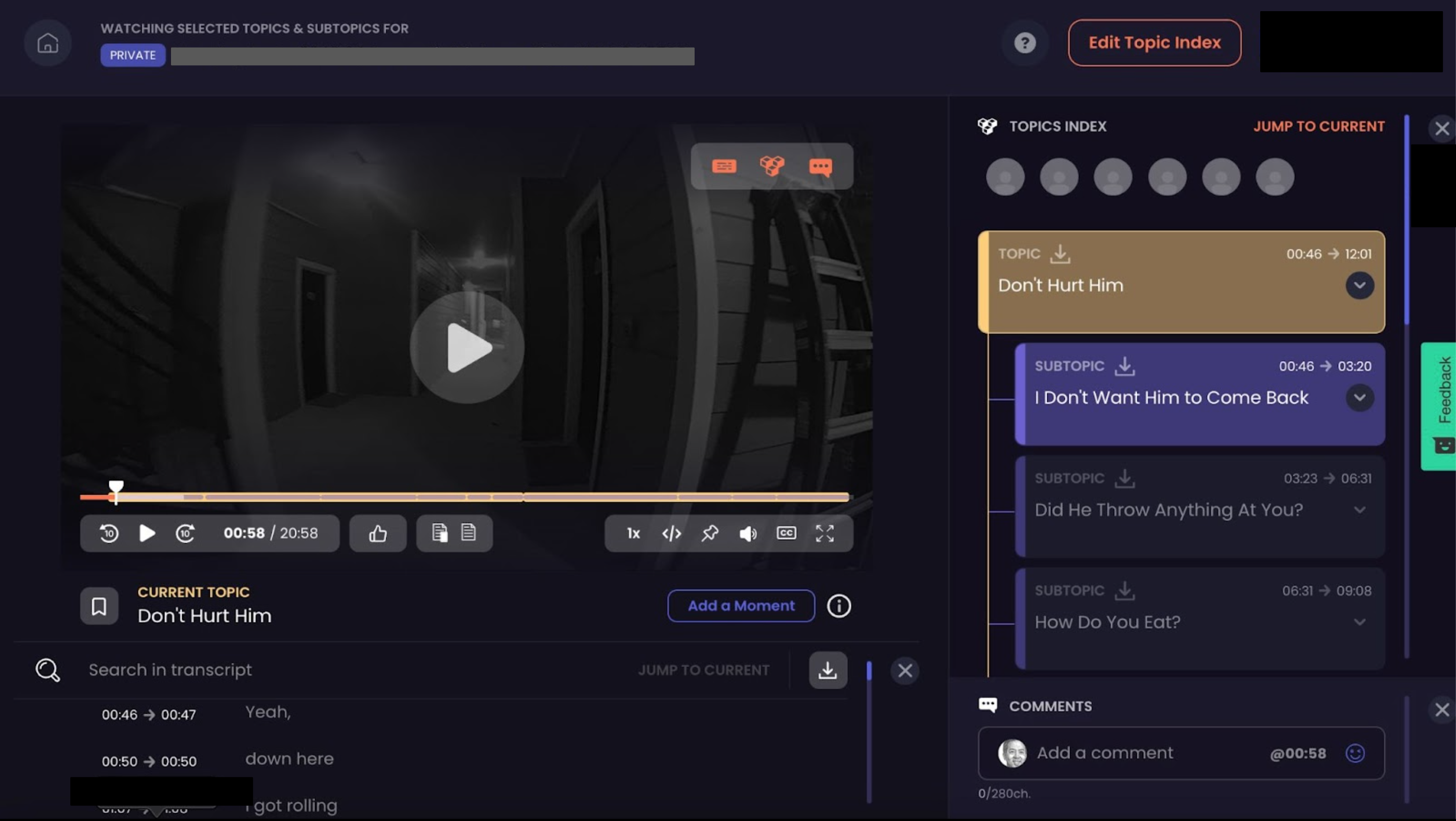
CLIPr turns authorized body-camera and dispatch audio into AI-Assisted first-draft reports the responder reviews, edits, and owns. CLIPr reports up to 50% less report-writing time, a vendor-reported claim an agency can validate against its own baseline during a 30-day pilot, subject to approval.
The evaluation method stays the same across agencies. The operational environment, the accountable human, and the governing rules do not.
CJIS obligations attach based on CJI handling and system boundaries, not the word police.
A drafting tool that never touches CJI sits in a different posture than an analytics system inside a CJI enclave, which is why the data-flow questions below matter more than vendor badges.
Documentation load is also an operational issue, not just an administrative one. Hours spent on police reports reduce field availability and wear on morale, which is why bounded documentation support keeps showing up as the first pilot.
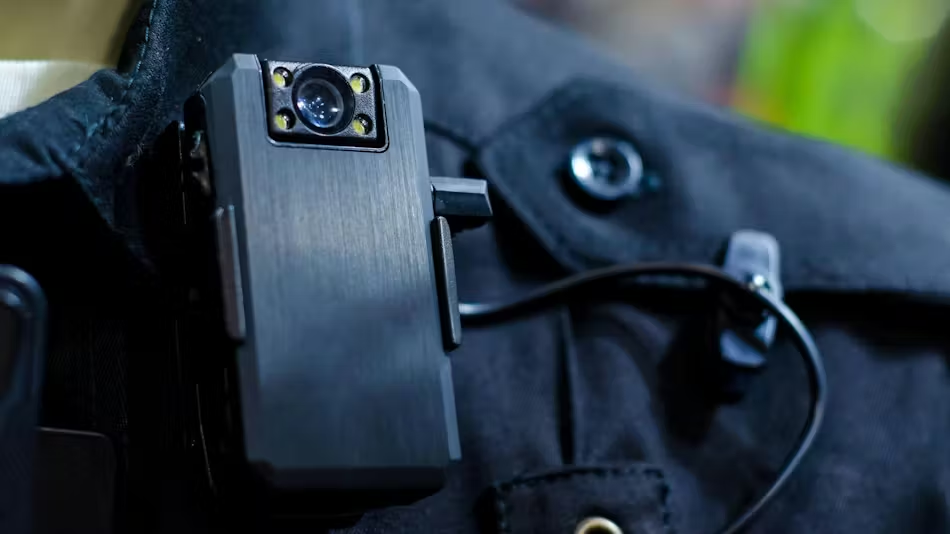
In practice, body-camera audio analysis and first-draft police reports come from tools like CLIPr, with the officer reviewing, editing, and owning every report before it enters the record.
NIST's considerations for implementing AI in the fire service is a useful starting point for fire leaders.
It treats sensor limits, failure consequences, autonomy levels, and performance metrics as implementation considerations rather than promises.
On reporting data, use the current standard. Per the U.S. Fire Administration (USFA), 2026 incident data is reported only to NERIS, and NFIRS no longer accepts calendar-year 2026 incidents.
Fire incident report drafting from dispatch and responder audio is available today from tools like CLIPr, with incident command reviewing and approving the filed report.
Keep documentation assistance and clinical decision support in separate conversations. The position statement on AI use in EMS describes early adoption centered on documentation, with human review, audit trails, and governance as conditions.
A treatment or destination recommendation is a different product with different rules: it needs medical direction, clinical validation, and possibly an intended-use analysis under the FDA's clinical decision support software guidance.
ePCR and EMS documentation drafting is available today from tools like CLIPr, with the clinician reviewing, correcting, and signing every record under local protocol.
The documentation workflow itself gets full treatment in the AI-Assisted EMS documentation guide.
The NTIA's review of AI in 911 operations separates the achievable from the aspirational: transcription and translation support exists in some centers, while triage and diversion carry the harder questions about under-triage and accountability.
Dispatch tools also inherit CAD reality. Interfaces are nonuniform across centers, so latency, outage behavior, and a rehearsed manual fallback are evaluation criteria, not implementation afterthoughts.
The FEMA use-case inventory entry is worth reading as a template: it names the job (prioritize imagery likely to show damage or debris), the lifecycle state, and the human analyst step.
That is the level of specificity to demand from any vendor or internal proposal, in any discipline.
Local maturity varies, and a federal deployment label says nothing about a county emergency-management office's data, imagery rights, or analyst capacity. Validate against local conditions before borrowing the label.
Report drafting is the bounded use with the clearest human decision point. CLIPr drafts police, fire, and EMS reports from authorized audio, so report time comes back to the field while the responder reviews, edits, and approves every one before filing.
No single compliance regime covers AI for first responders, and marking every regime as applicable is as wrong as ignoring them. Walk the actual data flow through five questions.
State law is starting to address AI documentation directly. California's SB 524, enacted in October 2025, sets California-specific requirements for law-enforcement reports produced using AI, including:
Treat it as a state example and a signal of direction, not a national rule, and recheck its current status with counsel.
For the standards layer that sits above these regimes, the AI public-safety standards guide maps the frameworks agencies keep meeting in procurement.
A bounded public safety AI pilot is the practical middle path between hype and prohibition. Two NIST resources help define the guardrails:
Two rules make the difference between a pilot and a soft launch. Baselines and pause thresholds are set before the tool goes live, and stop or redesign are legitimate outcomes, not failures to be explained away.
Use this six-point field check before launch:
| Timing | Agency action | Evidence and measures |
|---|---|---|
| Days 1 to 5 | Define one use, eligible record types, authorized users, exclusions, owners, pause thresholds, and a representative baseline sample. | Baseline median completion time, review time, correction categories, rework, and approval outcome. |
| Days 6 to 20 | Run the tool with a small authorized cohort and require human source comparison, correction, and signoff on every output. | Draft time, human review time, total completion time, omissions, unsupported additions, factual corrections, escalations, and system failures. |
| Days 21 to 27 | Have a supervisor, records reviewer, or other independent agency reviewer compare accepted outputs with source material and policy. | Critical-defect rate, factual-correction rate, source-verification pass rate, first-pass acceptance, rejection reasons, and policy or form compliance. |
| Days 28 to 30 | Compare the pilot sample with the baseline and decide whether to stop, revise, extend, or scale. | Median minutes saved per accepted record, total staff time saved, quality results, user feedback, incidents, unresolved risks, and documented decision. |
Define every metric and denominator before launch. For quality, track critical omissions, unsupported additions, factual corrections, source-verification results, and policy or form compliance instead of relying on one opaque vendor accuracy score.
A pilot that ends in a documented stop is a working governance process, not a waste. It costs a fraction of an unwound deployment.
First-draft documentation is often the easiest first-responder AI use to bound, and the matrix shows why. It comes with natural walls that automated dispatch and clinical recommendations simply do not have:
CLIPr publishes this guide, and it is one example of this workflow.
CLIPr turns supported, authorized source material, such as body-camera or dash-camera audio, into a reviewable first draft. The officer checks, edits, and owns the final police report before it enters the agency's system of record.
Results vary by agency and rollout, so validate on your own reports.
To make that practical, CLIPr offers a 30-day agency pilot for up to 50 officers, subject to approval, so a team can measure quality, timeliness, and review discipline against its own baseline before committing.
These apply to evaluating any option in this guide, CLIPr included, not just this one.
It is a set of AI tools that support specific jobs across police, fire, EMS, 911, and emergency management, from report drafting and call transcription to imagery triage.
Federal research programs, such as the DHS Science and Technology Directorate's first-responder research, study these capabilities; maturity and consequence vary by use case.
The NTIA describes call transcription, translation, callback handling, quality-assurance support, and non-emergency diversion as possible or emerging applications.
Results are case-specific, and a trained call-taker retains call-handling and dispatch authority throughout.
Early adoption centers on documentation assistance and ePCR drafting, per the national EMS position statement from NEMSIS and NASEMSO, with the clinician reviewing and signing every record.
Clinical decision support is a separate, higher-risk category that requires medical direction and validation.
No. Requirements under the current CJIS Security Policy attach where a system accesses, stores, or transmits CJI.
Agencies should verify the current policy version, state CSA requirements, agreements, and the exact system boundary for each tool rather than relying on a vendor badge.
No. HIPAA applies when a covered entity or business associate handles electronic PHI in that specific flow. Entity status, role, contract terms, and state health-privacy law determine the obligations, so the analysis is per workflow, not per agency.
Test a bounded job, the human review and approval step, current capture-source fit, the data boundary, a representative sample, baseline measures, pause thresholds, and manual fallback.
The high-risk uses: biometric identification, clinical treatment recommendations, predictive enforcement, and any autonomous high-consequence decision.
These shape rights, care, or safety directly, and public validation is limited, so they carry legal, civil-rights, or clinical review, corroboration requirements, and continuous monitoring.
Every use case in this guide reduces to four questions: what is the job, what data does it touch, who makes the decision, and what happens when the output is wrong.
Adopting any tool, CLIPr included, does not resolve governance, legal, clinical, or compliance review. Those decisions stay with the agency, which is exactly where they belong.
The CLIPr Team writes about AI-Assisted documentation for law enforcement, fire, and EMS.
CLIPr turns BodyCam and DashCam audio into AI-Assisted first drafts that authorized users review, edit, and own before approval into the system of record.
It runs on a SOC 2 compliant architecture and is CJIS Security Policy-aligned.