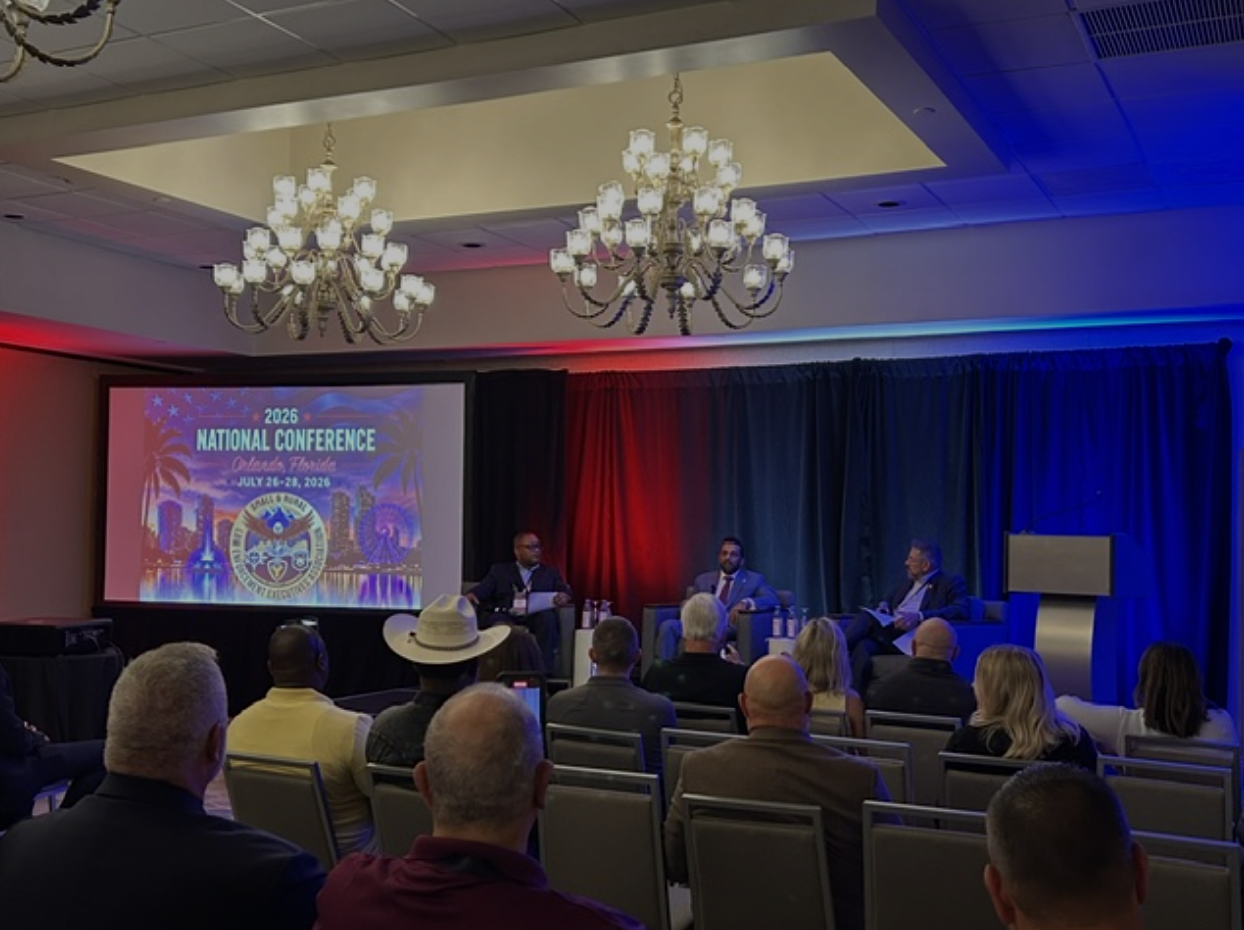
CLIPr Proudly Sponsors SRLEEA Conference in Orlando
At SRLEEA, FBI Director Patel called AI essential for agencies of every size. See how CLIPr is helping small and rural departments do more with less.


Grant money for police equipment is real, but most of it is not sitting in an open pot any department can tap. Programs differ sharply in who can apply, what they pay for, and when they close, and several that look open in search results are invitational, school-limited, or state-routed.
This guide maps the current federal equipment and technology funding routes, then walks through eligibility, the application systems, and post-award steps.
This is a U.S. federal funding guide. Agencies elsewhere should begin with their own national and regional grant portals, such as the U.K. government's Find a Grant service or the European Commission's Funding & Tenders Portal, then verify public-safety eligibility with the administering authority.
Bottom line: read the status label on the official page before the dollar figure. For most departments only a couple of routes are reachable per cycle, and eligibility still turns on the current Notice of Funding Opportunity (NOFO).
Every route below carries a status label that decides whether the money is reachable for your agency at all.
Statuses and deadlines below come from each program's linked official page; confirm the current window on that page before you rely on it.
| Program | Status | Route and current deadlines | Who applies | Money and match | Equipment fit |
|---|---|---|---|---|---|
| COPS FY2026 Technology and Equipment Program (TEP) | ClosedFY2026 cycle closed July 23, 2026 | Grants.gov step 1 closed July 21, 2026, 4:59 p.m. ET; JustGrants step 2 closed July 23, 2026, 4:59 p.m. ET | Only entities designated in the Joint Explanatory Statement (JES), for their designated projects | Up to $401,406,387 total; project amounts designation-specific; 24 months; no match | Items aligned to the designated project only |
| COPS FY2026 CPD Microgrants | Open competitive | Grants.gov by August 17, 2026, 4:59 p.m. ET; JustGrants by August 24, 2026, 4:59 p.m. ET | State, local, tribal, and territorial law enforcement agencies | About $6.7 million total; maximum award $200,000; 24 months; no match | Demonstration or pilot projects inside a named subcategory |
| COPS FY2026 School Violence Prevention Program (SVPP) | Open competitive, purpose-limited | Grants.gov by August 4, 2026, 4:59 p.m. ET; JustGrants by August 11, 2026, 4:59 p.m. ET | States, local governments, and tribes, including school districts and law enforcement agencies | Up to $73 million total; maximum federal share $500,000; 36 months; 25 percent match | K-12 school-safety measures and coordination only |
| Edward Byrne Memorial Justice Assistance Grant (JAG) | Formula / pass-through | Direct FY2025 windows are closed; most agencies apply through their state administering agency | State administering agencies and specified direct recipients; others seek pass-through funds | Allocation-based; amounts and terms vary by state and cycle | Program areas can include equipment, supplies, and information systems |
| Federal Emergency Management Agency (FEMA) Homeland Security Grant Program (HSGP) | Formula / pass-throughCurrent FY2026 status not established publicly | States and territories administer subawards; local agencies check their state agency | Applicant and subrecipient routes vary by state and current documents | FY2026 amounts, match, and deadlines not established publicly | Equipment only where current preparedness priorities support it |
| USDA Community Facilities Direct Loan and Grant Program | Ongoing financing route | Apply through your USDA Rural Development office; confirm the current window | Public bodies, nonprofits, and tribes serving rural areas, generally 20,000 residents or fewer | Loan, grant, or combination; grant share depends on need, income, and funds | Official page lists public-safety equipment and police vehicles as eligible uses |
Read the status label before the dollar figure. Recheck each official page before planning a submission.
The Community Oriented Policing Services (COPS) Office FY2026 Technology and Equipment Program is the largest line in the table and the most misread. Only entities named in the congressional Joint Explanatory Statement (JES) can apply, and only for their designated projects.
The FY2026 Community Policing Development (CPD) Microgrants program is not a general equipment account. Projects must be demonstration or pilot efforts inside a current named subcategory, and the FY2026 list includes areas such as:
The current resource guide defines the subcategories and cost rules. If your equipment need maps cleanly onto one, this is one of the few live routes a typical department can still enter this cycle; if it does not, reviewers read the fit first, so do not force it.
Every FY2026 SVPP dollar is tied to qualifying K-12 school-safety purposes:
About $1 million is reserved for microgrants up to $100,000 for rural, tribal, and low-resourced school districts. Treat it as a school-safety partnership program, not a department equipment grant that happens to mention schools.
The Edward Byrne Memorial Justice Assistance Grant program, run by the Bureau of Justice Assistance (BJA), moves money by formula. The direct FY2025 state opportunity and FY2025 local opportunity are closed, so watch current allocations and your state administering agency's notice rather than carrying prior-cycle terms forward.
Local agencies do not apply to FEMA for the Homeland Security Grant Program; they apply to their state administrative agency's subaward process, which is the source of truth for current amounts and dates. The FY2025 preparedness grants bulletin is historical context only.
For rural agencies, the USDA Community Facilities Direct Loan and Grant Program is an ongoing financing route, not a competitive grant cycle, so assistance may be a loan, a grant, or a combination. There is no Grants.gov and JustGrants sequence: contact the USDA Rural Development office for your state, confirm the current window, and ask what mix is realistic.
Fit questions kill more applications than writing quality does, so run three checks in order before anyone drafts a narrative:
No vendor can determine eligibility or allowability, not CLIPr, not a camera manufacturer, not a consultant. Only the grant-maker and the controlling award documents decide, and any sales pitch that implies otherwise is a reason to slow down, not speed up.
If a route survives all three checks, map the remaining practicalities: procurement rules, match source, data and security requirements, and the sustainment cost after the award ends. The worksheet later in this guide walks each field.
The mechanics differ by route, and mixing them up costs agencies real deadlines.
With the route clear, use this five-step application checklist:
Two timing habits matter: start registrations weeks before the deadline, not days, and treat the two DOJ deadlines as separate calendar events, because they are.
Reviewers do not fund equipment. They fund a documented problem, a fitting solution, a defensible budget, and an agency that can carry the project after the money stops.
Work through the fields below for each requested item. The table prints cleanly on a single 8.5 x 11 sheet, so it can travel to budget meetings and command staff reviews.
| Field | What to document |
|---|---|
| Operational need | The specific problem, affected users and community, baseline numbers, and the consequence of leaving it unresolved |
| Program purpose | The exact current NOFO priority or program area the project supports |
| Applicant route | Direct applicant, designated recipient, state or local subrecipient, partner, or USDA office route |
| Requested item | Quantity, specification, use, location, and who operates it; avoid vendor-first framing |
| Allowable-cost evidence | The exact current NOFO or guide section, plus any written grant-maker clarification |
| Cost category and budget | Equipment, supplies, software, contractual, training, personnel, or indirect, as the current instructions define them |
| Match and funding source | Required share, source, documentation, and a contingency if the amount changes |
| Total cost and sustainment | Acquisition, implementation, training, connectivity, licenses, storage, maintenance, replacement, and post-award continuation |
| Procurement | Competition or an approved exception, specifications, quotes, conflicts, and timing |
| Data and security | Data types, system boundary, access, retention, interoperability, incident response, and vendor terms |
| Partnerships and attachments | Required partners, MOUs, letters, approvals, certifications, and assurances tied to the current notice |
| Evidence and outcomes | Baseline, outputs, outcomes, data owner, collection method, and reporting schedule |
| Post-award owner | Who carries financial, program, property, procurement, reporting, audit, and closeout duties |
Two of those fields deserve extra attention for technology purchases.
The data and security field matters because reviewers increasingly expect a plain answer to how data is stored, retained, deleted, and handled for any connected system, applied evenly to every vendor under consideration.
Before writing it, review the data and compliance environment for law enforcement tools. If the purchase involves AI-supported software, the public-safety AI standards overview covers the governance questions a proposal should anticipate.
Ask every vendor under consideration the same questions:
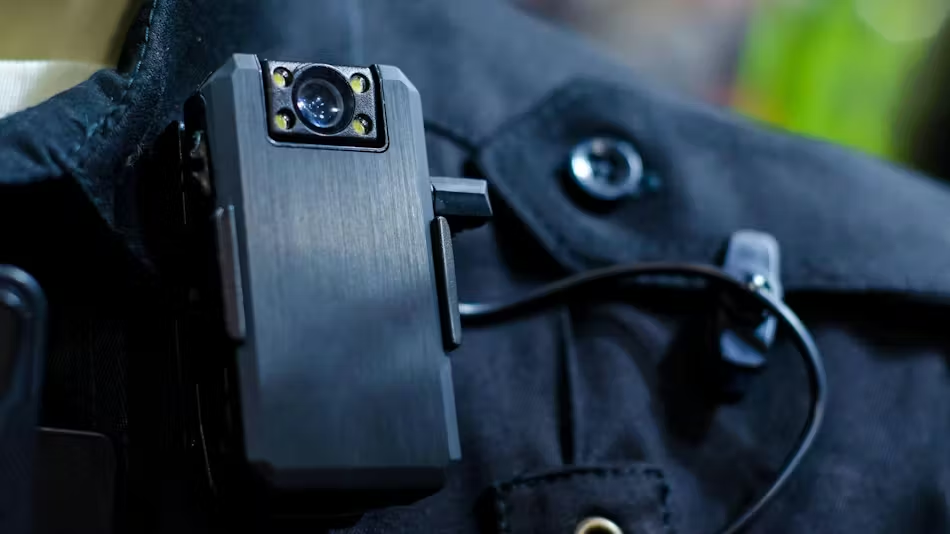
When cameras are involved, evidence handling deserves the same care: a body-worn camera request should show reviewers the full lifecycle of capture, storage, retention, disclosure, and the controls between them. The guide to body camera footage and chain of custody maps those obligations.
A request built this way also survives the award, because every field above becomes a compliance obligation the moment the money arrives.
An award notice starts the compliance clock; it does not end the work. Four duties carry the project from award to closeout:
As of the July 25, 2026 check: COPS FY2026 CPD Microgrants (competitive, subcategory-bound), FY2026 SVPP (K-12 school-safety purposes), JAG and HSGP funds through state processes, and USDA Community Facilities financing for qualifying rural applicants.
The FY2026 TEP cycle closed July 23 and was limited to designated recipients. Status and allowability change by cycle, so verify the official page first.
No. The FY2026 TEP is noncompetitive and invitational, limited to entities designated in the congressional Joint Explanatory Statement for their designated projects. Departments not named there cannot apply this cycle, regardless of need.
JAG program areas can include equipment, supplies, and information systems under current rules.
But JAG is a formula program: unless your government receives a direct allocation, the request runs through your state administering agency's subaward process, on its timeline and strategy.
The USDA Community Facilities program expressly lists public-safety equipment and police vehicles among eligible uses for qualifying rural applicants, generally in areas of 20,000 residents or fewer.
Assistance may be a loan, a grant, or a combination, so confirm the realistic mix with your Rural Development office.
Not in the current official sources. The BJA Body-Worn Camera Policy and Implementation Program is recurring but not currently open; its most recent opportunity closed November 3, 2025.
Monitor the BJA BWC funding hub for a new cycle rather than budgeting on an assumed one.
For direct DOJ applications, yes: a UEI with active SAM.gov registration, a Grants.gov submission, and a JustGrants application, each with its own deadline.
Pass-through applicants follow their state administering agency's instructions instead, and USDA applicants work through a Rural Development office.
No. Only the grant-maker and the controlling award documents determine eligibility and allowability, program by program and cycle by cycle.
Treat any vendor claim of grant eligibility, including for report-drafting software, as a prompt to check the current NOFO, not as an answer.
Deadlines moved during this cycle alone, which is why the live official page always outranks any guide, including this one. Product evaluation also stays separate from grant eligibility and allowable-cost review.
For a department weighing report-drafting technology, CLIPr can be evaluated on its own merits while a budget or grant cycle is still moving:
Departments specifically evaluating funding for a CLIPr implementation can also review the existing police technology grants guide. Grant eligibility and allowable-cost decisions still belong to the grant-maker.
CLIPr publishes this guide and is not a grant-maker: it cannot determine eligibility or allowable costs, and nothing here promises funding for any product.
Product evaluation, procurement, data and security review, grant eligibility, and cost allowability remain separate decisions, and no vendor can make a cost allowable.
The CLIPr Team writes about AI-Assisted documentation for law enforcement.
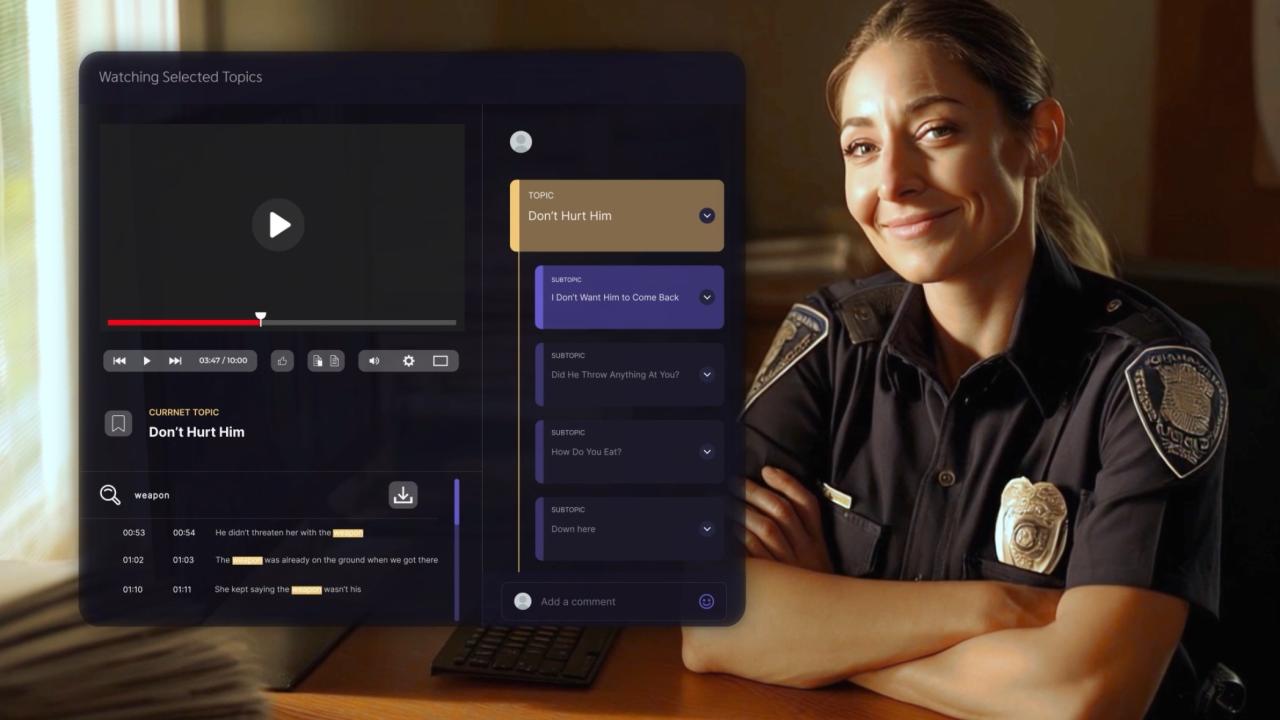
CLIPr turns BodyCam and DashCam audio into AI-Assisted first drafts of police reports that officers review, edit, and copy into their RMS.
This funding guide is published as an editorial resource; CLIPr is not a grant-maker and cannot determine eligibility or allowable costs.