CLIPr Proudly Sponsors SRLEEA Conference in Orlando
At SRLEEA, FBI Director Patel called AI essential for agencies of every size. See how CLIPr is helping small and rural departments do more with less.


Eight digital evidence management systems compared on ingest, integrity, permissions, retention, review, sharing, integrations, storage, exit terms, and pricing status. Updated July 2026.
Searches for the best evidence management software collide two categories on one results page: physical evidence inventory for the property room, and digital evidence management systems for the files themselves.
This guide covers the digital category only. There is no universal answer; the right shortlist depends on your agency's binding constraints:
The guide compares eight current digital evidence management systems on those axes with a lifecycle and exit test to run during demos. Narrow by your binding constraint first, then let the test carry the evidence.
If your department is still defining requirements before building a shortlist, the existing digital evidence management system evaluation guide covers the requirements and procurement questions first.
A digital evidence management system (DEMS) is a platform for ingesting, preserving, organizing, finding, reviewing, controlling access to, retaining, sharing, exporting, and disposing of digital evidence under agency policy.
It can support documented chain-of-custody processes, but software alone does not determine admissibility or replace agency procedures, legal review, evidence custody, or the official records system.
That definition draws a line most vendor pages blur. A DEMS manages the digital files themselves: body-worn camera (BWC) video, dashcam and interview-room recordings, closed-circuit television (CCTV) footage, citizen uploads, 911 audio, photos, and documents.
It does not decide what a court accepts, and it does not replace the people and policy that evidence handling depends on.
Work that happens after custody, such as turning footage into a police report draft, is a separate downstream job that CLIPr, which publishes this guide, performs without being a DEMS itself.
An agency that evaluates a property-room inventory product as if it were a digital-media lifecycle platform, or the reverse, buys the wrong contract. Place each system in its actual category first:
| Category | Primary job | Relationship to digital DEMS |
|---|---|---|
| Digital DEMS | Ingest, preserve, organize, search, review, control, retain, share, export, and dispose of digital media and files | Core category compared here |
| Physical property/evidence inventory | Barcode, package, location, transfer, audit, storage-room, and disposition workflow for physical items | Can connect to digital evidence but is not, by itself, a digital-media platform |
| Records management system (RMS) | Official law-enforcement records, police reports, approvals, search, reporting, retention, and disposition | Links cases and records to evidence; see the police RMS options guide |
| BWC or camera system | Capture and device or camera-fleet workflow | Can feed a DEMS or include a vendor evidence platform; see law enforcement body cameras |
| Forensic extraction or analysis | Acquire, recover, process, or analyze data from devices or media | Produces outputs that a DEMS can ingest and manage |
| Redaction-only tool | Redact audio, video, image, or document content | Can be native, add-on, integrated, or separate |
| Transcription, search, or report drafting | Derive text, find content, or create a reviewable draft | Optional downstream processing; not evidence custody or system-of-record control |
| Investigative case management | Tasks, relationships, collaboration, and investigative workflow | Can connect case activity with evidence without replacing DEMS controls; see detective case management software |
The camera boundary blurs most. Several camera vendors ship an evidence platform with the hardware, and the BWC software layer that manages the camera fleet is a separate job from managing every evidence source the agency holds.
Do not assume a camera evidence platform is a full multi-source DEMS without current evidence. None of the adjacent categories in this table is a DEMS substitute, and none appears in the eight-product count below.
Every product needed current first-party evidence, a real digital-DEMS category fit, plausible US law-enforcement relevance, and more than one documented lifecycle capability.
The at-a-glance comparison keeps the purchasing lens lean:
Security, integrity, and agency policy are baseline gates, not weighted points. No scores are prefilled, and CLIPr is not evaluated here because it is not a DEMS.
Evaluation principles come from government sources, not vendor marketing:
These documents define what to evaluate, not who wins; they certify no vendor. Mapping deployment-specific documents to the current policy, alongside your broader law enforcement data compliance obligations, is an agency review applied evenly to every vendor on the shortlist.
Numbering supports navigation and matches the profiles below.
Grouped, not ranked. The eight systems are grouped by procurement context and alphabetized within each group. They are not ranked by quality.
| # | Digital DEMS | Good fit to investigate when | Deployment evidence | Public lifecycle evidence | Integration or ecosystem evidence | Pricing status |
|---|---|---|---|---|---|---|
CLIPrComplementary reporting layer
|
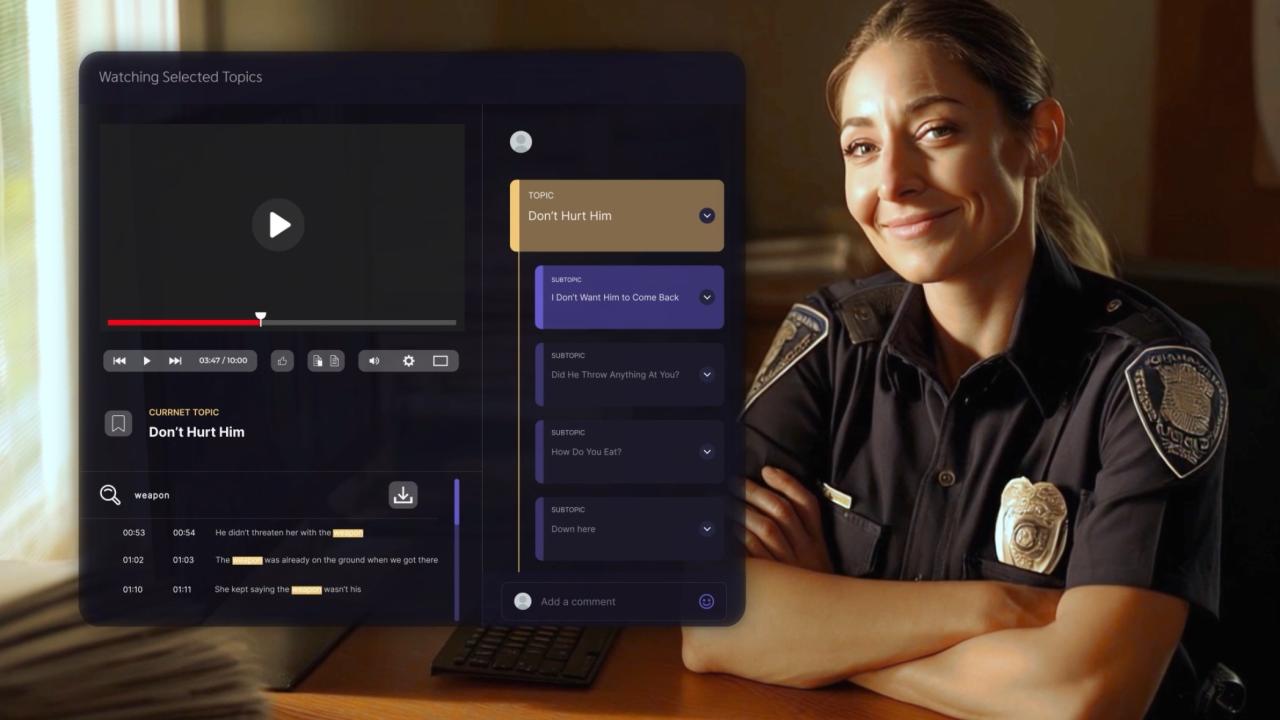
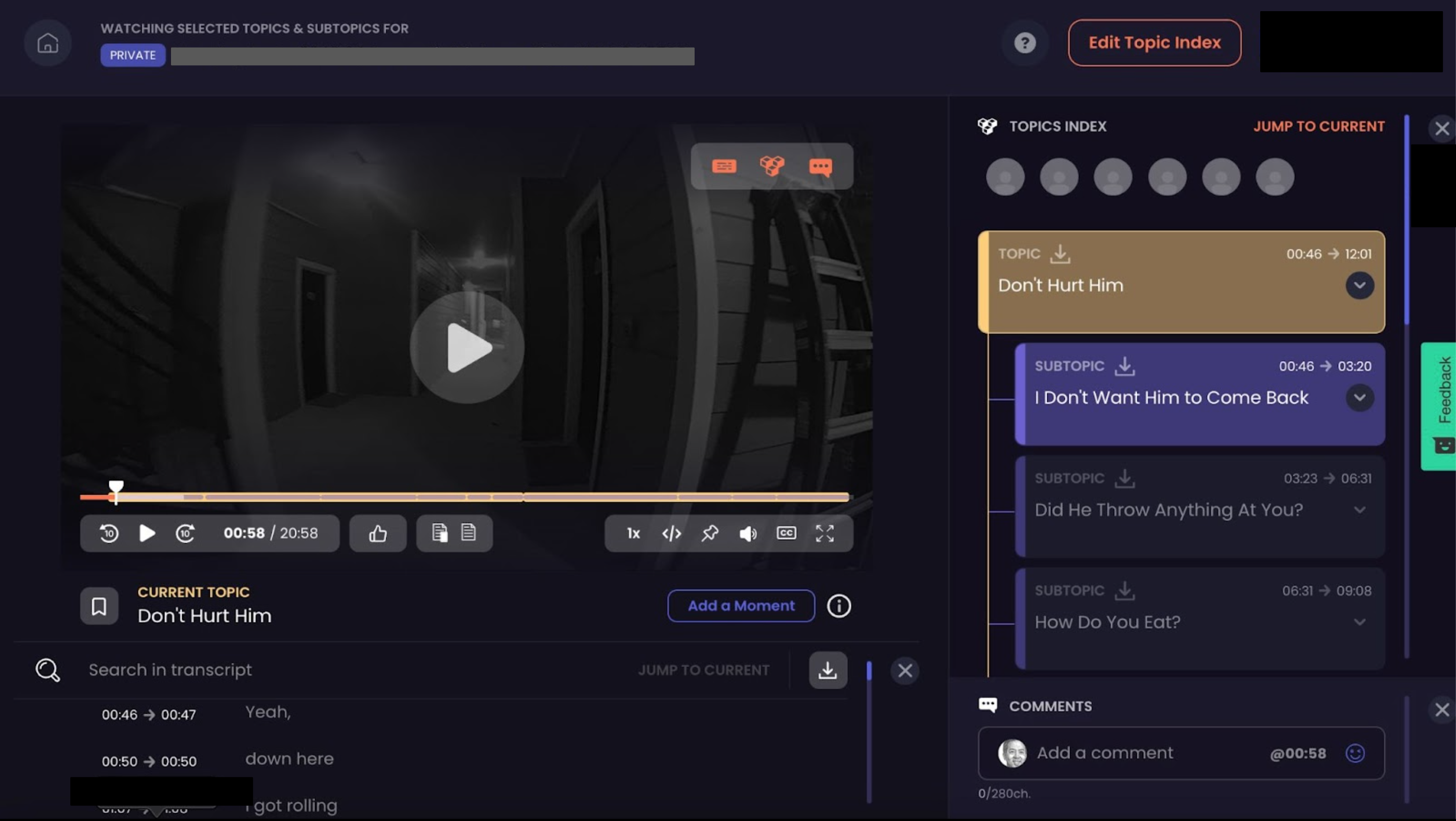
CLIPr turns supported body-camera, dash-camera, and interview recordings into searchable transcripts and AI-assisted first-draft reports. The DEMS remains the evidence system of record, while the officer or detective reviews, edits, and owns the report. Verify the exact file and handoff workflow during the pilot.
Request a 30-Day Agency Pilot
|
|||||
| 1 | 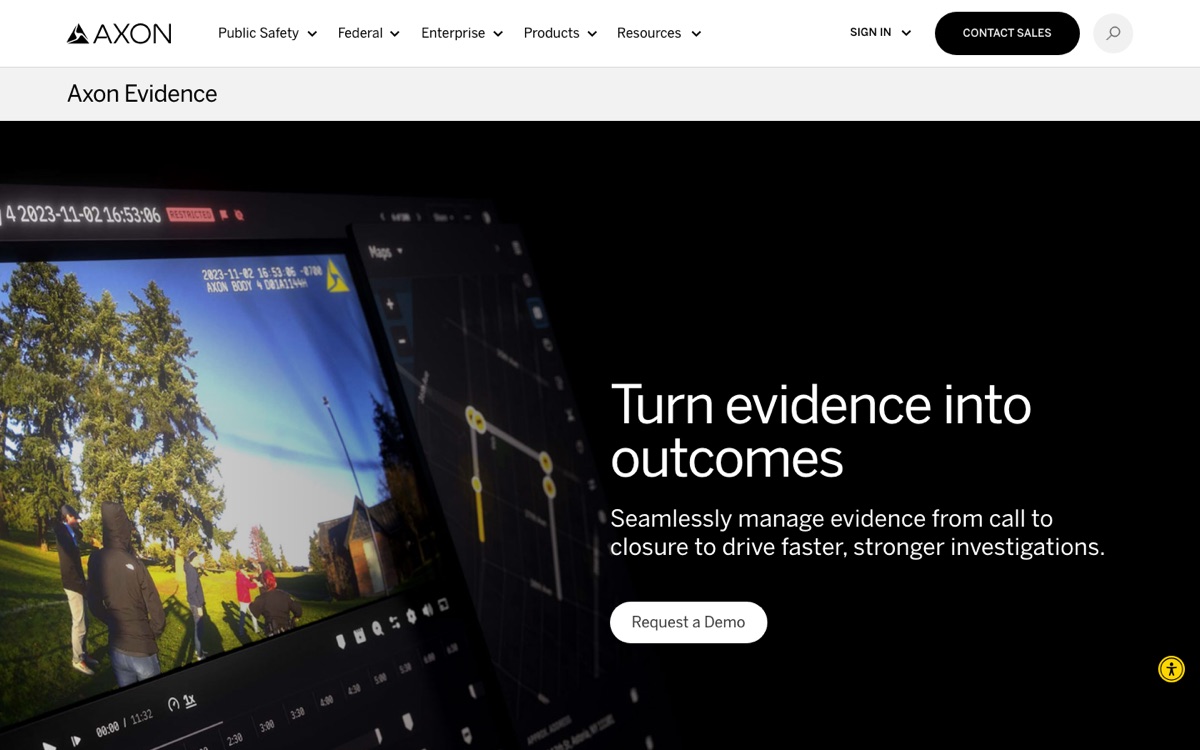 Axon EvidenceConnected ecosystem
|
Axon camera and public-safety ecosystem in use or under evaluation | Cloud platform; Evidence Local is a separate on-premises path to verify | Multi-file evidence, metadata, case search, access, audit, retention, redaction, transcription, sharing, integrity fields | Axon devices and platform workflows; third-party sources and API scope require verification | Public amount not located |
| 2 | 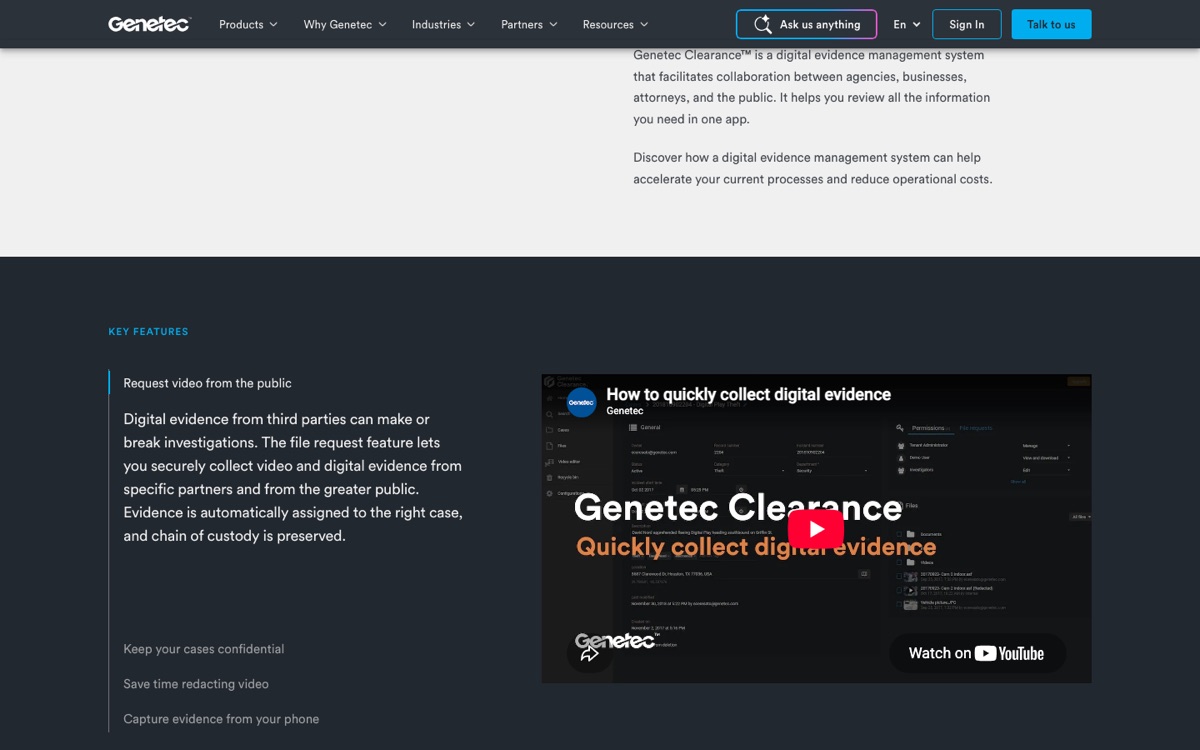 Genetec ClearanceConnected ecosystem
|
Video-security sources, browser collaboration, public requests, and API access central | Cloud service per current docs; confirm region and architecture | Multi-source ingest, permissions, audit, retention, redaction, sharing, transfer, eDiscovery receipts | Surveillance, BWC, in-car, mobile, CAD, RMS categories documented; exact vendors and versions require verification | Public amount not located |
| 3 | 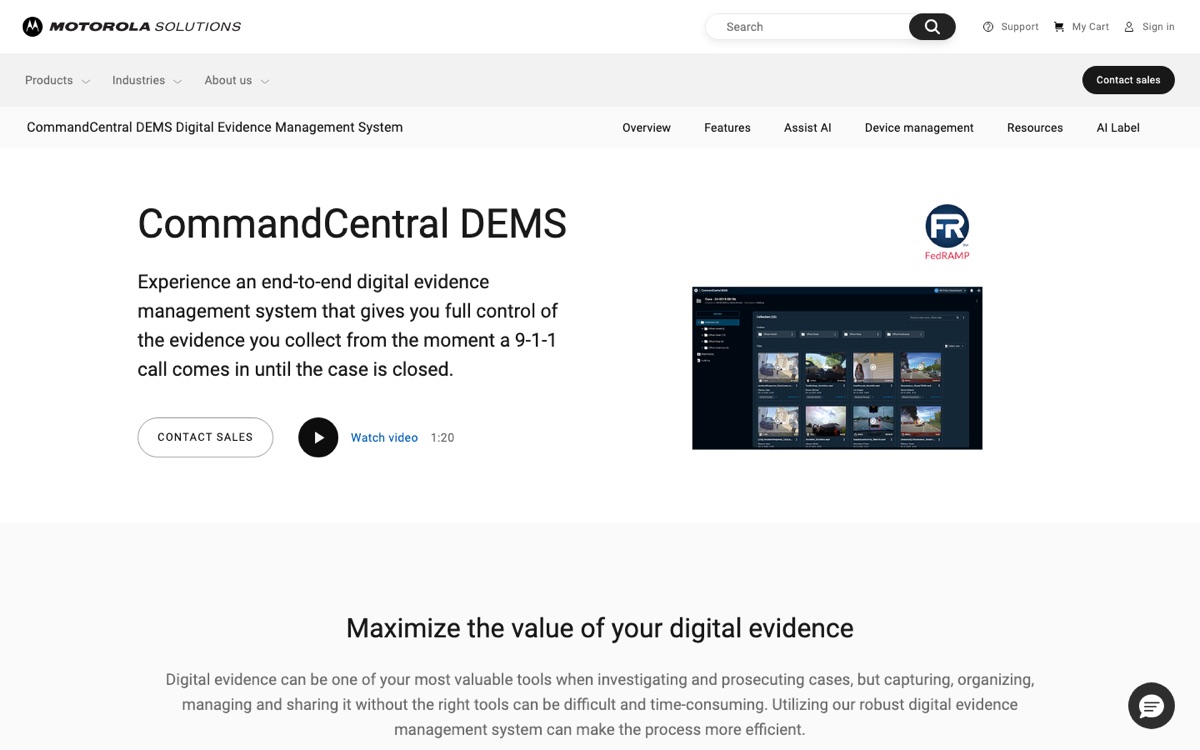 Motorola CommandCentral DEMSConnected ecosystem
|
CommandCentral evidence, device, and records stack under evaluation | Confirm proposed CommandCentral deployment | Multi-source ingest, review, sharing, redaction, transcription, mobile evidence, current release updates | Integration data sheet and RMS-linked release behavior published | Public amount not located |
| 4 |  NiCE Evidencentral InvestigateConnected ecosystem
|
Aggregation and investigation workflows across many digital sources | Cloud or software-as-a-service (SaaS) positioning per NiCE | Aggregation, transcode, indexing, virus check, case workflows, review, redaction, transcription, sharing, retention | Confirm every source connector, RMS or CAD workflow, API, and package in the proposal | Public amount not located |
| 5 |  iCrimeFighterFlexible or broader platform
|
Mobile and witness collection plus law-enforcement and prosecutor collaboration | Cloud positioning per vendor | BWC, CCTV, document, mobile and witness collection, offline mobile, review, transcription, sharing controls, audit history | Desktop sync and prosecutor or defense sharing described; named integrations require verification | Public amount not located |
| 6 | 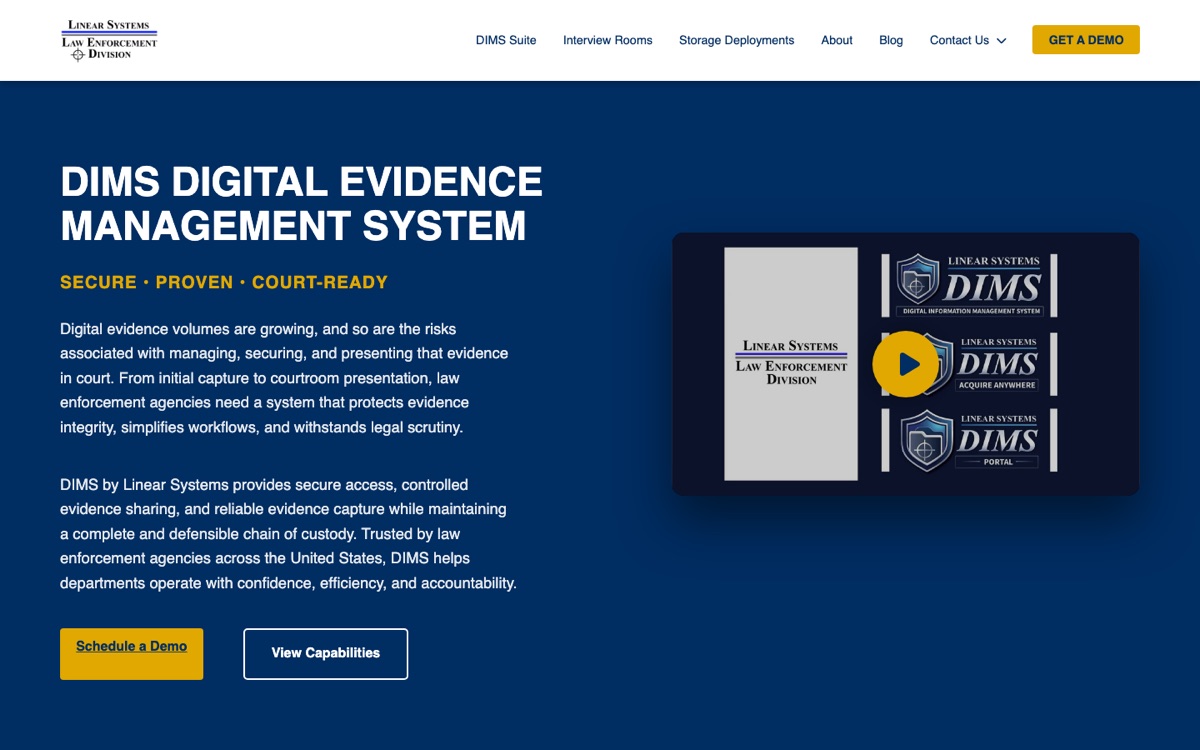 Linear DIMSFlexible or broader platform
|
Cloud, on-premises, or hybrid flexibility and direct desktop or mobile ingest required | Cloud, on-premises, and hybrid described | Desktop and mobile ingest, metadata, hashing, case association, permissions, audit, controlled sharing | Confirm named camera, RMS, forensic, and prosecutor connections | Public amount not located |
| 7 |  OpenText Digital Evidence CenterFlexible or broader platform
|
Broader enterprise content and forensic ecosystem merits evaluation | Deploy-anywhere positioning; confirm exact proposed architecture | Ingest, search, storage, analysis, access, audit, collaboration, sharing, reporting, lifecycle functions | Broader OpenText content and forensic workflows; establish which product owns each function | Public amount not located |
| 8 |  VIDIZMO DEMSFlexible or broader platform
|
Flexible cloud, on-premises, hybrid, or SaaS deployment and configurable media workflows | Multiple deployment patterns described | Ingest, review, search, redaction, audit, legal hold, sharing, API-oriented integration | Confirm named source connectors, RMS or CAD workflow, and API licensing | Standard, Professional, Premium plan structure plus seven-day trial; public numeric amount not located |
Grouped by procurement context and alphabetized within each group; not ranked by quality.
"Public lifecycle evidence" means reviewed vendor material, not independent validation, and a documented source or integration category does not establish universal compatibility, included licensing, or a working deployment at an agency like yours.
Where a cell says a detail requires verification, that is a documentation gap to resolve during procurement, not a product defect.
This is an agency evidence-capture tool, not a vendor scorecard. Your team defines baseline requirements and priorities before demos, then records what each vendor actually proves.
The body-camera chain of custody guide is useful background before the audit and integrity rows.
Cloud and on-premises deployment move costs into different places. Neither is automatically cheaper, and a hybrid model can carry costs from both.
| Cost area | Cloud deployment | On-premises deployment |
|---|---|---|
| Budget shape | Subscription, ingest, processing, storage tiers, archive retrieval, support, and overage charges. | Storage hardware, redundancy, data-center capacity, software maintenance, backup, staffing, and refresh cycles. |
| Retention growth | Longer retention increases stored volume and can change tier, processing, and retrieval charges. | Longer retention consumes local capacity and can trigger storage, backup, and redundancy expansion. |
| Data movement | Confirm download, API, sharing, cloud egress, bulk export, and post-termination access charges. | Confirm export tooling, migration labor, media handling, vendor assistance, and decommissioning costs. |
| Predictability | Require unit prices, annual increase terms, volume assumptions, and overage rules in writing. | Require a capacity forecast, replacement schedule, support boundary, and internal labor estimate. |
Require a five-year, agency-volume cost model that states its retention assumptions. The proposal should make predictable pricing, retention growth, cloud egress, full export, and exit costs visible before selection, including the cost and time required to retrieve or migrate the complete evidence set.
Require cryptographic integrity evidence, such as documented hashes or checksums at ingest, transfer, archive retrieval, and export, alongside tamper-evident audit records that capture the actor, action, time, object, reason, and material before-and-after state. Ask each vendor to demonstrate how those records are protected from silent alteration and exported for independent review. A hash or audit log alone does not establish chain of custody; these controls support the agency's documented people, policy, and handling procedures.
Legal defensibility is jurisdiction-specific. U.S. agencies should validate the proposed workflow against applicable evidence, discovery, public-records, retention, court, prosecutor, and agency requirements. Agencies outside the United States should run the same review against the relevant national or regional rules for criminal procedure, disclosure, records, data protection, retention, and data residency. The OJP digital-evidence policy guidance supports a documented lifecycle approach, but no product label or single control proves legal defensibility in every jurisdiction.
Run it during demos and reference calls, one worksheet per shortlisted system across all eight compared here. For each requirement, record one evidence state:
Do not total the states into a score. The distance between "public material reviewed" and "committed in contract" is where evidence platform projects go wrong.
| Lifecycle area | Agency-owned test | Evidence to retain |
|---|---|---|
| Source ingest | Ingest representative BWC, dashcam, CCTV, citizen, 911, document, image, and forensic-output files your agency requires | Supported source and version, format, metadata, retry, duplicate, error, and fee evidence |
| Original preservation | Compare source file, managed copy, derivative, and export | Original handling, checksum or fingerprint, derivative labels, export values |
| Integrity verification | Validate integrity on ingest, transfer, archive retrieval, and export | Algorithm or method, timestamps, verification result, exception workflow |
| Metadata | Test source metadata, agency-added fields, case association, corrections, and bulk change | Field map, provenance, edit history, validation, export behavior |
| Audit and custody support | Upload, view, edit metadata, share, download, redact, move, hold, and delete a test item | Actor, action, time, object, reason, before/after, report and export |
| Permissions | Test patrol, detective, supervisor, evidence, records, prosecutor, administrator, and sensitive-case roles | Role matrix, inheritance, exceptions, temporary access, review process |
| Retention and legal hold | Apply a schedule, exception, hold, release, and superseding rule | Priority logic, notice, approval, logs, affected copies and derivatives |
| Deletion and recovery | Run authorized deletion, failed deletion, recovery, and confirmation workflows | Approvals, logs, recovery window, backup behavior, proof of completion |
| Search and review | Find one item by case, person, time, source, location, metadata, and content where supported | Indexed fields, result logic, delay, permissions, false-match handling |
| Redaction and transcription | Create, review, edit, version, export, and disclose a derivative | Native, add-on, or partner status; source preservation, review, audit, pricing |
| Prosecutor and disclosure | Share, revoke, expire, replace, receive, download, and acknowledge a test package | Recipient identity, permissions, receipt, audit, package, retention, support |
| Export | Export files, metadata, hashes, audit, cases, relationships, derivatives, and manifests | Formats, schema, receipt, validation, timing, fees, downstream usability |
| Storage economics | Move media through hot, archive, retrieval, download, and rehydration workflows | Units, tiers, timing, service levels, overage, processing, egress, annual increase |
| Named integrations | Trace one case through each required BWC, RMS, CAD, forensic, prosecutor, and API workflow | Direction, object, frequency, version, owner, monitoring, error, fee |
| Migration | Migrate active, archived, held, shared, redacted, incomplete, and duplicate evidence | Mapping, hashes, metadata, audit, permissions, reconciliation, acceptance |
| Continuity | Test outage, queue, retry, recovery, and manual continuity | Recovery objectives, backlog, order, duplicates, logs, owner, escalation |
| Exit | Run a representative full export and termination plan | Formats, completeness, assistance, timeline, fees, access window, deletion proof |
Five baseline gates sit outside the priorities, applied evenly to every vendor as pass-or-review items:
An undocumented gate is "requires review," not an editorial verdict against the product.
These four sell digital evidence management inside a broader public-safety or video-security ecosystem, fitting agencies whose shortlist starts with an installed camera fleet, device stack, or records platform. Listed alphabetically, not ranked.
Cloud digital evidence management platform.
Agencies with Axon cameras or broader Axon platform dependencies that want to test ecosystem workflow and procurement scope.
Axon Evidence manages video, audio, image, and document evidence with case metadata, search, access controls, sharing, audit, retention, redaction, and transcription.
Help documentation describes file-detail fields including a digital fingerprint or checksum where applicable, and the archive page states unlimited-storage evidence can be archived after six months and retrieved, typically within a day.
A separate Evidence Local guide describes an agency-hosted path; its capabilities do not transfer to the cloud service, or the reverse.
Pricing status: public amount not located.
Confirm:
An Axon ecosystem can be lower-lift for an Axon-standardized agency; verify the actual contract rather than assuming universal fit.
Product facts: official Axon Evidence product page, help documentation, archive documentation, and Evidence Local guide. No vendor link per editorial link policy.
Cloud digital evidence and case-sharing platform.
Agencies with Genetec video-security context, mixed media sources, public requests, external collaboration, or API requirements.
Genetec Clearance documents evidence collection, case organization, access controls, audit, redaction, mobile workflows, public requests, and controlled sharing.
The user guide, updated July 7, 2026, names surveillance, BWC, mobile, in-car, CAD, and RMS source categories and documents configurable retention with automatic-deletion warnings.
A REST API is documented, and transfer documentation, updated May 1, 2026, explains that a case transfer creates a separate replica with its own access and retention behavior, not continuing synchronization. An eDiscovery receipt workflow is also documented.
Pricing status: public amount not located.
Confirm:
A source category in documentation is not compatibility with your specific vendors and versions.
Product facts: official Genetec Clearance product page, user guide, retention and transfer documentation, developer guide, and eDiscovery documentation. No vendor link per editorial link policy.
Digital evidence management in the Motorola CommandCentral portfolio.
Agencies evaluating Motorola cameras, devices, records, and evidence workflows in a connected public-safety stack.
Motorola CommandCentral DEMS documents centralized multi-source evidence ingest, device workflows, mobile evidence, review, sharing, redaction, transcription, and connections across the CommandCentral portfolio.
Motorola publishes an integration data sheet dated June 2026 and a release update page showing recent DEMS changes tied to records workflows, with a May 2026 update observed.
Pricing status: public amount not located.
Confirm:
A data-sheet listing is not proof that an interface is included, bidirectional, or compatible with your versions without services work.
Product facts: official Motorola CommandCentral DEMS page, integration data sheet (June 2026), and release update page. No vendor link per editorial link policy.
Cloud digital evidence and investigation platform.
Agencies that need evidence aggregation, indexing, case building, review, redaction, transcription, sharing, and retention across many source systems.
Evidencentral Investigate aggregates evidence from multiple sources and describes transcoding, indexing, virus checking, evidence correlation, case workflow, review, redaction, transcription, sharing, and retention.
NiCE also publishes its own DEMS evaluation guide; treat that as vendor positioning, useful for product facts only.
Pricing status: public amount not located.
Confirm:
Treat any vendor outcome figures as vendor-reported and leave them out of your business case until your own pilot data replaces them.
Product facts: official NiCE Evidencentral Investigate page and NiCE DEMS guide. No vendor link per editorial link policy.
These four systems fit agencies that weight collection workflow, deployment flexibility, or a broader enterprise content architecture over ecosystem alignment. Listed alphabetically, not ranked.
Cloud digital evidence management and collaboration platform.
Agencies that prioritize mobile or witness collection and sharing with prosecutors or defense recipients.
iCrimeFighter documents collection from BWC, CCTV, documents, mobile devices, and witnesses, plus offline mobile capture, desktop sync, browser review, transcription, revocable sharing, and audit history.
Its modules page separates collection, review, and sharing functions rather than one all-inclusive package.
Pricing status: public amount not located.
Confirm:
Establish the exact contracted module set; do not assign every module to every deployment.
Product facts: official iCrimeFighter site and modules page. No vendor link per editorial link policy.
Digital evidence management platform with multiple deployment patterns.
Agencies that require cloud, on-premises, or hybrid options plus desktop and mobile acquisition.
DIMS Acquire Anywhere, DIMS Capture, and DIMS Portal and Share cover desktop and mobile ingest, metadata capture, case association, role permissions, audit logging, and controlled sharing.
The product page also describes hashing and cloud, on-premises, and hybrid deployment patterns.
Pricing status: public amount not located.
Confirm:
Hold the vendor's own court, compliance, and control wording to the same written-proof standard as everything else in this framework.
Product facts: official Linear DIMS suite page (non-www URL; the www host had a hostname or certificate mismatch). No vendor link per editorial link policy.
Digital evidence platform in a broader enterprise information-management portfolio.
Agencies that need to evaluate rich media, documents, content management, analysis, and evidence workflows in a broader enterprise architecture.
OpenText Digital Evidence Center documents digital-evidence ingest, search, storage, analysis, role-based access, audit, collaboration, sharing, and reporting.
A 2026 solution overview describes deploy-anywhere lifecycle management and integration with broader OpenText content and forensic workflows.
Pricing status: public amount not located.
Establish which functions are native to Digital Evidence Center, separately licensed, or supplied by other OpenText products.
Confirm:
Portfolio breadth is only an advantage when the order form names the products that deliver each function.
Product facts: official OpenText digital evidence management page and solution overview PDF. No vendor link per editorial link policy.
Configurable digital evidence management platform.
Agencies comparing cloud, on-premises, hybrid, or SaaS patterns with search, review, redaction, legal hold, and sharing needs.
VIDIZMO DEMS documents multiple deployment options plus ingest, review, search, redaction, audit, legal hold, sharing, and API-oriented integration.
Its pricing page presents Standard, Professional, and Premium plans with a processing-unit consumption structure, viewers, add-ons, and a seven-day trial; a plan structure is not a numeric price.
Pricing status: public numeric amount not located in the reviewed page.
Confirm:
Ask for deployment-specific security documentation rather than repeating the page's compliance or legal-readiness labels as conclusions.
Product facts: official VIDIZMO DEMS page and pricing page. No vendor link per editorial link policy.
There is no award to hand out. Start from your binding constraint, then use the lifecycle test rather than adding another scorecard.
Two of these constraints deserve extra weight. Disclosure workload is chronically underestimated.
If public records requests under the Freedom of Information Act (FOIA) or your state equivalent drive real volume, test sharing, redaction, and receipts end to end. The FOIA redaction software guide covers how that layer behaves as its own category.
Storage economics is the other. A product that cannot quote hot storage, archive retrieval, processing, and egress against your projected volume cannot really be compared on cost at all.
None of the eight products reviewed exposes a complete public agency price, so total cost of ownership (TCO) work happens in the proposal stage. Require one itemized answer for each cost bundle:
VIDIZMO's published plan structure is the closest thing to public pricing among the eight, and it is a structure, not a number.
Treat every agency total as quote-dependent. A vendor's willingness to itemize these four bundles is evaluation evidence in its own right.
If export and deletion-confirmation commitments are not in a schedule you can enforce, the lifecycle test's exit row stays at "not established."
A full DEMS owns or supports evidence ingest, storage, access, audit, retention, sharing, export, and disposition controls. CLIPr, which publishes this guide, is not a DEMS. It sits downstream, after custody is settled, and turns footage the agency already holds into a police report draft the officer reviews, edits, and owns before it is copied into the RMS.
A useful downstream layer should pass a shorter, category-appropriate test:
Any handoff to an evidence platform or RMS stays conditional on the named vendor, version, export path, security review, and contract; there is no universal-integration claim. If the DEMS you select already includes drafting that meets your requirement, weigh that native function inside the DEMS evaluation itself. The police report writing software guide covers the drafting category on its own terms.
A digital evidence management system (DEMS) is a platform for ingesting, preserving, organizing, finding, reviewing, controlling access to, retaining, sharing, exporting, and disposing of digital evidence under agency policy.
It manages digital files such as BWC video, CCTV footage, 911 audio, photos, and documents. It supports documented evidence handling; it does not determine admissibility or replace agency procedures.
Physical evidence software runs the property room: barcodes, packaging, locations, transfers, audits, and disposition of physical items.
A digital DEMS manages the files themselves through ingest, integrity, permissions, retention, review, sharing, and export.
Some vendors connect the two, but the categories answer different procurement questions, and broad "evidence management software" search results mix them freely.
A records management system (RMS) is the agency's system of record for police reports, cases, and official records through approval, reporting, retention, and disposition. A DEMS holds and controls the digital evidence files.
The two link where configured, with cases referencing evidence and evidence referencing cases, but neither replaces the other, and evidence custody controls stay with the DEMS.
Through controls: audit logs, integrity verification such as hashing, metadata, permissions, and retention records that document who touched what, when, and how. Those controls support an agency's documented chain-of-custody procedures.
They do not replace policy, people, and handling practices, and no software feature guarantees that evidence will be accepted in a legal proceeding.
It depends on the product, version, format, and contract.
Vendor materials for the eight systems here describe sources including BWC, dashcam, CCTV, interview-room, mobile, citizen upload, 911 audio, documents, and forensic outputs, but a named source category is not universal compatibility.
Test your agency's actual sources, formats, and metadata during the demo, and get supported versions in writing.
No public numeric agency total was located for any of the eight products reviewed; VIDIZMO publishes a plan structure without dollar amounts.
Expect an agency-specific quote, and budget the full lifecycle: users and modules, ingest and processing, storage tiers and retrieval, sharing and egress, migration, implementation, training, support, and exit assistance.
No. CLIPr is not a DEMS and does not provide evidence custody, storage, permissions, retention, legal hold, disclosure, or system-of-record controls.
Its role is downstream and optional: producing an AI-assisted first draft of a police report from agency-owned footage. The officer reviews, edits, and owns the final report before it enters the RMS.
Any direct handoff requires named-system verification and a contract.
All eight systems above are credible digital evidence platforms for some agency profile. Treat the choice like the five-year decision it is:
The lifecycle and exit test above exists so that by the time you sign, nothing important still rests on "public material reviewed."
The CLIPr Team writes about AI-assisted documentation for law enforcement.
CLIPr turns BodyCam and DashCam audio into AI-assisted first drafts of police reports that officers review, edit, and own before copying them into the RMS, backed by a SOC 2 compliant architecture and a CJIS Security Policy-aligned design.
The DEMS decision above is the five-year contract; run the lifecycle and exit test before you sign anything.
When custody is settled, an authorized user uploads agency-owned footage from the approved evidence source. The officer reviews, edits, and owns the final report before it is copied into the RMS. A 30-day agency pilot for up to 50 officers, subject to approval, is available.