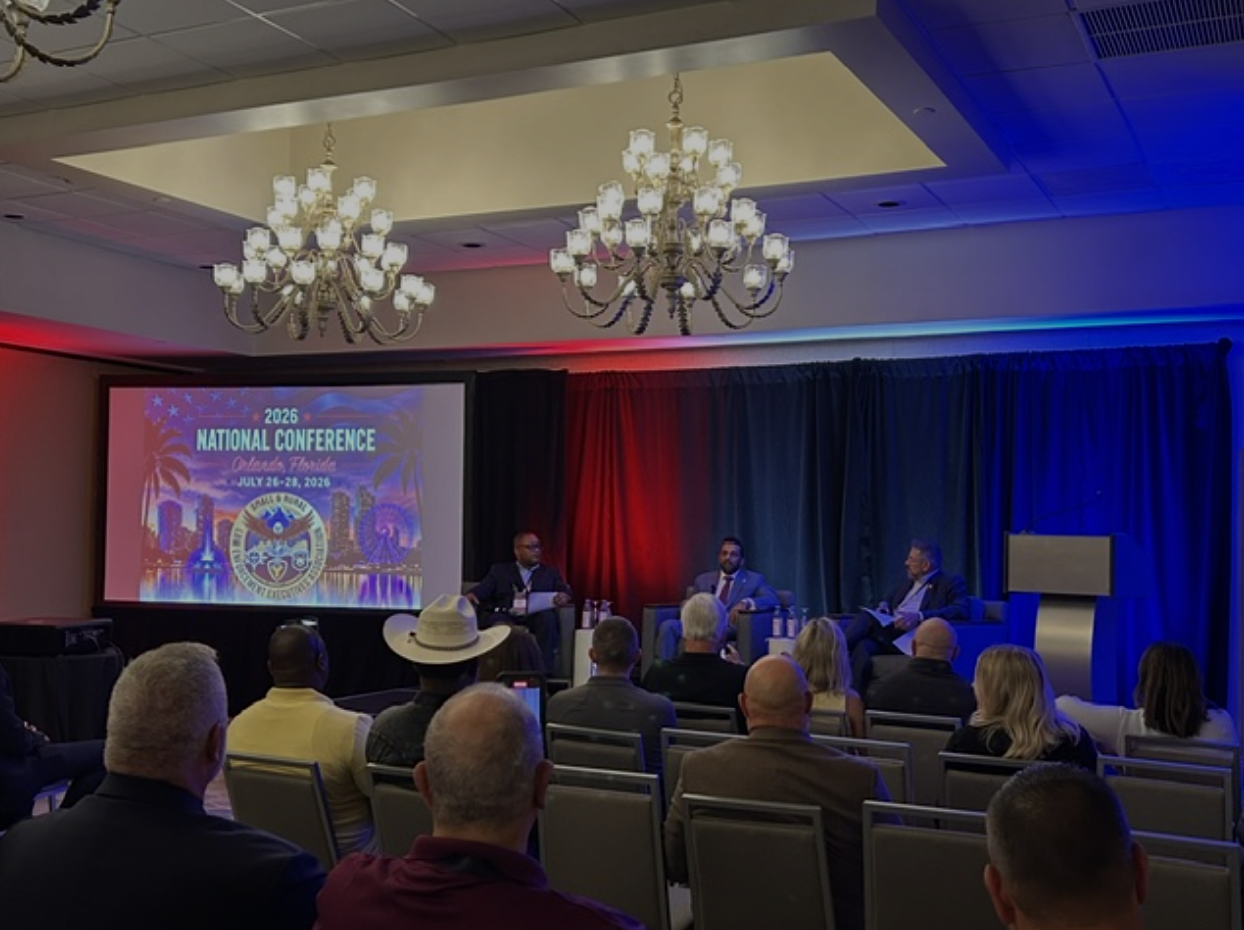
CLIPr Proudly Sponsors SRLEEA Conference in Orlando
At SRLEEA, FBI Director Patel called AI essential for agencies of every size. See how CLIPr is helping small and rural departments do more with less.


A busy night can leave an officer 4 or 5 reports, each later scrutinized by supervisors and prosecutors.
CLIPr and Axon Draft One both turn body-worn camera (BWC) audio into a first draft the officer reviews, edits, and owns. What separates them:
The right starting point depends on agency fit. CLIPr offers a camera-agnostic, staged evaluation on cameras you already run. Axon Draft One fits agencies already standardized on Axon Evidence, Records, or Standards.
CLIPr publishes this comparison and holds both products to the same evidence standard: vendor documentation for capability claims, government documents for policy, and peer-reviewed research for outcomes.
One phrase to define up front: "not established publicly" means ask the vendor, not that the feature is absent. The fix for a missing public statement is a written answer, a live demonstration, or contract language, never an assumption in either direction.
| Criterion | CLIPr public evidence | Axon public evidence | Buyer interpretation |
|---|---|---|---|
| Cameras and inputs | Camera-agnostic; BWC and dashcam audio via drag-and-drop from your existing evidence platform | Native across Axon Evidence, Records, and Standards; also accepts any playable file Axon Evidence supports | Match the tool to your fleet; validate exact models, codecs, and export paths |
| Draft-to-RMS workflow | First draft plus searchable notes; officer reviews, edits, and owns, then copies into the RMS | Side-by-side review and acknowledgment, with native supervisor routing in Records and Standards | Both produce a first draft, never a final report; name the exact RMS integration type |
| Security, data, and audit evidence | System logging, officer edit tracking, and audit trails within a SOC 2 compliant architecture; validate retention, export, and deployment scope | Optional original-draft retention, off by default; documented audit events, usage reports, and a trust center | Use the same procurement checklist for both vendors; do not treat different market footprints as security parity |
| Pricing, pilot, and deployment | Published reference rates, utilization-based; unused capacity carries forward | Contact-sales add-on on prerequisite Axon licenses; no public standalone amount located | Compare total annual cost on the same footage and user assumptions |
| Where each fits best | Camera-agnostic and mixed-fleet agencies seeking a staged rollout, from a low-integration pilot to a qualified multi-site or enterprise deployment | Departments standardized on Axon Evidence and Records, wanting native controls from day one | Match the tool to your fleet, rollout stage, and procurement path |
Compiled from each vendor's current public materials. Re-verify every line against your own deployment.
Two rows decide most of this comparison: security, data, and audit evidence, where buyers should compare deployment-specific documents rather than market footprint, and cameras and rollout fit, where the two products serve genuinely different situations.
Both public workflows are audio-led. Neither vendor's public pages establish that the AI interprets what the video shows, so do not assume visual analysis from either product.
| Source inputs and camera fit |  |  |
|---|---|---|
| Cameras and fit | Camera-agnostic: Axon, Motorola, Getac, i-PRO, Digital Ally, Pro-Vision, and other makers; no rip-and-replace | Native across Axon Evidence, Records, and Standards; deepest value assumes the Axon ecosystem |
| What builds the draft | BWC and dashcam audio, plus searchable notes and a linked player | BWC recording audio, plus optional narration or typed notes |
| Getting footage in | Drag-and-drop from your evidence platform, dock transfer later; CLIPr mobile app for field capture | Strongest inside Axon Evidence, where recordings already live |
Validate exact camera models, codecs, and export paths on your own footage.
Axon's Draft One product guide (updated May 28, 2026) builds drafts from 1 or more BWC recordings, plus optional narration or typed notes, and can use any playable file Axon Evidence supports. The native workflow is strongest inside Axon Evidence, Records, and Standards.
CLIPr works with footage from Axon, Motorola, Getac, i-PRO, Digital Ally, Pro-Vision, and other makers. It starts with manual drag-and-drop from your existing evidence platform and adds dock-based transfer as the deployment matures.
The decision rule: an Axon-standardized agency should give Axon the in-ecosystem edge, while a mixed-fleet agency should run the same real exports through both paths and validate the boring specifics (camera model, codec, export permissions, transfer time per incident).
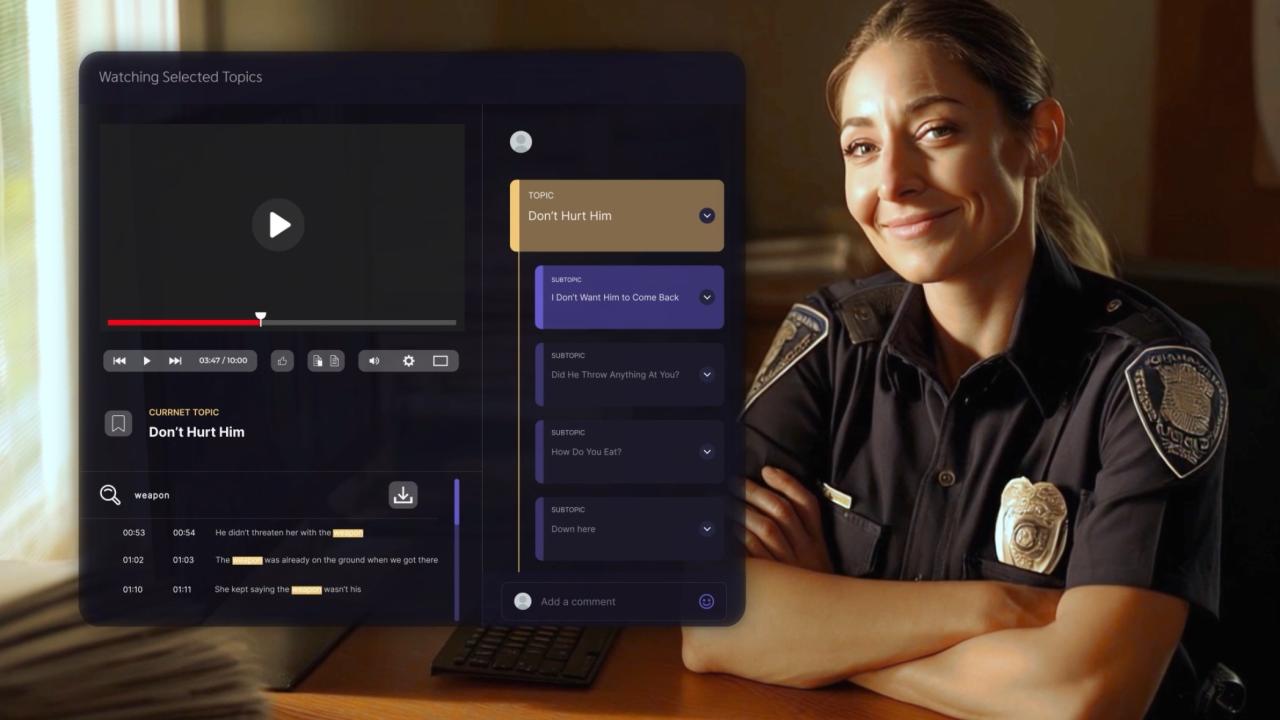
CLIPr produces a first draft plus searchable notes and a linked player, then notifies the officer, who reviews, edits, and copies the approved report into the RMS and owns it at every step.
| Draft and review workflow | | |
|---|---|---|
| Draft and limits | AI-assisted first draft with searchable notes; validate quality on your own reports in a pilot | AI-assisted draft reviewed side by side; its FAQ notes mistakes are possible in complex incidents |
| Officer ownership | Officer reviews, edits, and remains author of record | Officer reviews, edits, and acknowledges before use |
| Supervisor review | Runs through your existing RMS approval workflow | Native supervisor routing in Axon Records and Standards |
Axon documents native supervisor routing today; CLIPr relies on your existing RMS approval path.
Axon's product guide documents a similar loop with more native scaffolding: the officer generates a draft, can add narration or notes, reviews side by side, and acknowledges before use. Its administration guide (updated May 28, 2026) adds native controls:
Axon's FAQ says drafts can contain mistakes, and the same skepticism applies to any AI-assisted tool, CLIPr included. Neither replaces officer judgment or supervisor and prosecutor review. Treat it as an evaluation checkpoint for either option, not a flag against one vendor.
This is the most consequential evidence-led difference between the 2 products, and where stale coverage can mislead a buyer. Date your sources.
A July 2025 Electronic Frontier Foundation (EFF) investigation reported that Draft One, as then designed, did not preserve the original draft. Axon's auditing and reporting guide (updated June 10, 2026) now documents an optional original-draft retention feature for US state and local agencies:
| Retention and audit | | |
|---|---|---|
| Draft retention and versions | Officer edit tracking supports review; confirm configured retention, lineage, and export scope in the pilot | Optional original-draft retention, off by default; later edits not saved, not a full history |
| Audit events | System logging and audit trails within CLIPr's SOC 2 compliant architecture; request a live demonstration and sample exports | Documents draft-generation and acknowledgment events; demonstrate the audit export in evaluation |
This is the criterion where Axon's current public documentation is strongest. Get both vendors' answers in writing during evaluation.
Axon publishes more product-specific detail on these controls today. CLIPr's current logging, officer edit tracking, and audit capabilities should still be demonstrated against the agency's required events, retention period, roles, and export format. Public pages settle contract terms for neither product, so during evaluation get written answers from both vendors on retention and deletion triggers, version lineage and audit schema, export and access, and legal-hold handling.
"RMS integration" is one of the most abused phrases in police technology. It can mean copy/paste, a deep link, field mapping, an API write, or a full native report module, so make each vendor name which one applies to your RMS and your contract.
| RMS handoff and controls | | |
|---|---|---|
| Handoff path | Officer-reviewed copy/paste into the RMS requires no integration to start; direct push needs the RMS API, security review, and contract | Copy into a third-party RMS, or the native route in Axon Records and Standards |
| Core RMS role | None; overlays the records system you already run | Deepest value inside Axon Records and Standards |
| Admin reporting | Request a live demonstration and sample exports | Documents usage reports and audit-trail exports; validate the exports in evaluation |
CLIPr fits your current RMS with no rip-and-replace; Axon documents deeper native admin reporting today.
CLIPr's baseline is officer-reviewed copy/paste into your existing RMS, so no IT or RMS integration is required to start. Qualified deployments can evaluate pathways for Mark43, Tyler Technologies, Hexagon, NicheRMS, and CentralSquare, but availability depends on the RMS product and version, vendor and API access, security review, field mapping, and the executed contract. The staged deployment ladder and a pilot scorecard are in CLIPr's guide to automate police reports.
Axon documents copying a reviewed draft into a third-party RMS, plus a native route through Records and Standards. For either vendor, compare the specifics that decide a real handoff: identity mapping and report numbering, required fields, retries and audit events, and transfer-failure handling.
The 2 vendors publish different kinds of pricing information. Treat that as 2 statuses to verify, not a virtue and a defect.
| Pricing and pilot | | |
|---|---|---|
| Pricing | Published reference rates: $0.105/min audio, $0.21/min video; utilization-based, unused capacity carries forward | Contact-sales; no public standalone amount; add-on layered on prerequisite licenses |
| Prerequisites | Starts on your current cameras and evidence platform; no new licenses to test | Requires Unlimited Auto-Transcribe and Axon Evidence Pro, plus Respond+ for in-field |
| How you try it | Free 30-day agency pilot for up to 50 officers, subject to approval | Demo request; no public self-serve trial located |
Normalize both quotes on the same footage and user assumptions before comparing totals.
CLIPr's reference rates sit on its bodycam transcription software page and follow a utilization-based model, so unused capacity carries forward. The 30-day agency pilot for up to 50 officers, subject to approval, lets an agency measure results on its own footage first. No credit card.
Axon sells Draft One as an add-on on prerequisite Axon licenses, via a demo request. To compare fairly, normalize both quotes on eligible minutes and users, prerequisite licenses, storage, implementation, and overage, carry-forward, and exit costs.
Security is a gate, not a scoring bonus: a tool that saves time but fails your security review is not an option.
For U.S. agencies, start with the FBI Criminal Justice Information Services (CJIS) Security Policy, which applies to the whole deployment: people, processes, infrastructure, and contracts. No vendor can hand an agency CJIS compliance out of the box; alignment depends on the agency's controls, not a product badge.
| Security and data terms | | |
|---|---|---|
| Security controls | System logging, officer edit tracking, and audit trails within a SOC 2 compliant architecture; review current scope and deployment evidence | Trust center hosts security materials; confirm Draft One-specific scope, region, environment, and contract |
| Data use and model training | CLIPr states that agency footage and transcripts are not used to train models; require that restriction in the signed data terms | Draft One data remains in Axon Evidence; review any improvement program, model-provider path, and signed data-use terms |
| Regional hosting and privacy | Regional data residency may be available for UK, EU, and Australia deployments when contractually offered; confirm the exact region, subprocessors, transfer terms, and applicable local requirements | Verify the offered hosting region, subprocessors, transfer mechanism, and local privacy or security obligations for the proposed deployment |
| Audit and records | Demonstrate required system events, officer edits, roles, retention, and exports | Demonstrate enabled Draft One events, original-draft settings, usage reports, roles, retention, and exports |
Security is a pass-or-fail gate applied evenly. Require deployment-scoped evidence from both vendors.
This is a procurement checklist, not a claim that CLIPr and Axon have equal market footprint, documentation volume, certifications, or deployment history.
For international agencies, CJIS is useful U.S. context rather than a universal legal standard. Evaluate the national and regional privacy, security, records, data-transfer, and procurement rules that apply in the agency's jurisdiction. Regional availability and residency must be confirmed in the proposed architecture and contract.
Require the same packet from both vendors: data-flow diagram, encryption, and logging; identity, access, and incident response; subprocessor and model-provider path; ownership, retention, deletion, and legal-hold terms; and the current SOC report plus a CJIS Security Policy review where applicable.
For the wider governance picture, see this overview of AI in law enforcement.
CLIPr may fit when:
That last point is the practical path: the pilot is where those controls get confirmed in writing, on your own footage and your own RMS.
Axon Draft One is the stronger fit when you already run Axon Evidence, Records, or Standards, the prerequisite licensing is acceptable, and native audit, retention, and usage controls matter to your records and legal teams. On that scaffolding, Axon's documentation is genuinely stronger today.
Whichever way you lean, settle your prosecutor's position first. The DOJ COPS Office reported mixed prosecutor reactions in January 2025, and a Seattle Office of Police Accountability case summary from February 2025 records a King County moratorium. Verify your jurisdiction's current policy first.
Comparing more than these two? The roundup of Axon Draft One alternatives puts six options side by side, and the guide to police report writing software covers how agencies evaluate any drafting tool.
Keep the comparison even-handed by demanding the same written proof from each vendor, with one owner per answer. Do not accept "it depends" without a document:
Have your records, IT and security, procurement, and prosecutor liaison each own the lines that touch their work, then give the answers to your union liaison to review.
They overlap in audio-led first-draft creation, but they enter the agency workflow differently. Draft One is an add-on inside Axon's ecosystem; CLIPr is a camera-agnostic overlay that starts with manual transfer.
Replacement fit depends on your cameras, evidence transfer, RMS path, controls, and contracts.
The wider category of AI police report generators covers how these tools differ structurally.
CLIPr names multiple camera makers and starts with manual drag-and-drop from your existing evidence platform, while Axon's product guide states Draft One can use any playable file Axon Evidence supports.
Run the same real exports through both paths and validate models, codecs, and transfer timing before deciding.
Per Axon's auditing and reporting guide, updated June 10, 2026, optional original-draft retention is available to US state and local agencies and is off by default.
It saves only the original unedited AI draft; later edits are not kept, so it is not a complete version history. Configure and govern it deliberately.
CLIPr publishes reference rates of $0.105 per minute for Searchable Audio and $0.21 per minute for Searchable Video, with a full deployment quote still required.
Axon directs buyers to contact sales, and no public standalone Draft One amount was located on the pages reviewed.
Normalize both quotes on identical footage and user assumptions.
Review the complete deployment against the current CJIS Security Policy: people, processes, infrastructure, hosting, contracts, and controls.
Do not treat a logo, badge, or vendor-wide trust page as certification for either product.
Require deployment-scoped evidence, including the current SOC report and scope, subprocessor list, and data-handling terms, and involve your IT, legal, and prosecutor stakeholders early.
Predefine acceptance thresholds before day 1.
Useful metrics include eligible-recording rate, draft completion rate, median officer edit time, material correction rate, unsupported-detail rate, supervisor return rate, RMS handoff time, and failure rate by camera path.
Do not assume vendor-reported time savings will reproduce locally. This guide to technology and policing covers pairing pilots with training and policy.
Every capability claim is tied to the vendor, government, or research document named below.
The CLIPr Team writes about AI-assisted documentation for law enforcement.
CLIPr turns BodyCam and DashCam audio into AI-assisted first drafts of police reports that officers review, edit, and approve into their existing RMS, backed by a SOC 2 compliant architecture and a design that is CJIS Security Policy-aligned.
If your agency wants to test a staged, camera-agnostic drafting layer, the reliable way to decide is with your own evidence: your camera exports, your incident mix, your officers' review burden, your RMS handoff, and your retention and security requirements.
CLIPr's AI-assisted police reports are available through a 30-day agency pilot for up to 50 officers, subject to approval. No credit card required.
Bring the questions above and hold us to them.