CLIPr Proudly Sponsors SRLEEA Conference in Orlando
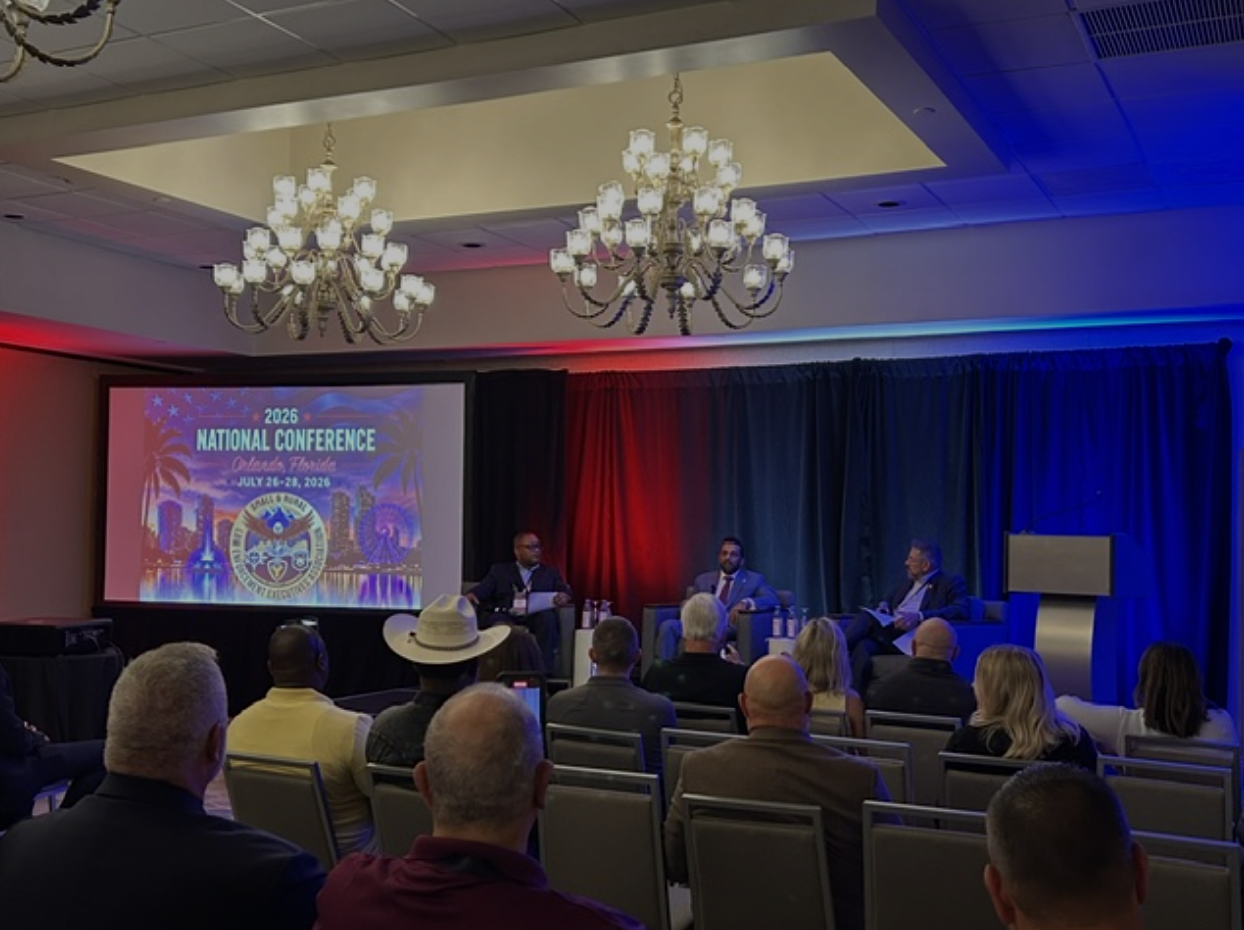
At SRLEEA, FBI Director Patel called AI essential for agencies of every size. See how CLIPr is helping small and rural departments do more with less.


Six Axon Draft One alternatives worth evaluating in 2026, and where each fits:
CLIPr is a practical fit to evaluate when an agency wants to keep its current cameras and RMS: a 30-day agency pilot for up to 50 officers, subject to approval, lets the agency test the workflow on its own footage. The wider police report writing software guide covers the category.
CLIPr publishes this guide and appears first as a clearly labeled mixed-fleet overlay. The remaining products are grouped by deployment model. Editorial order is not a score or winner ranking, and every option must be tested against the agency's own footage and workflow.
| # | Option | Strong fit when | Inputs | RMS path | Pricing status | Provenance question |
|---|---|---|---|---|---|---|
| 01 | 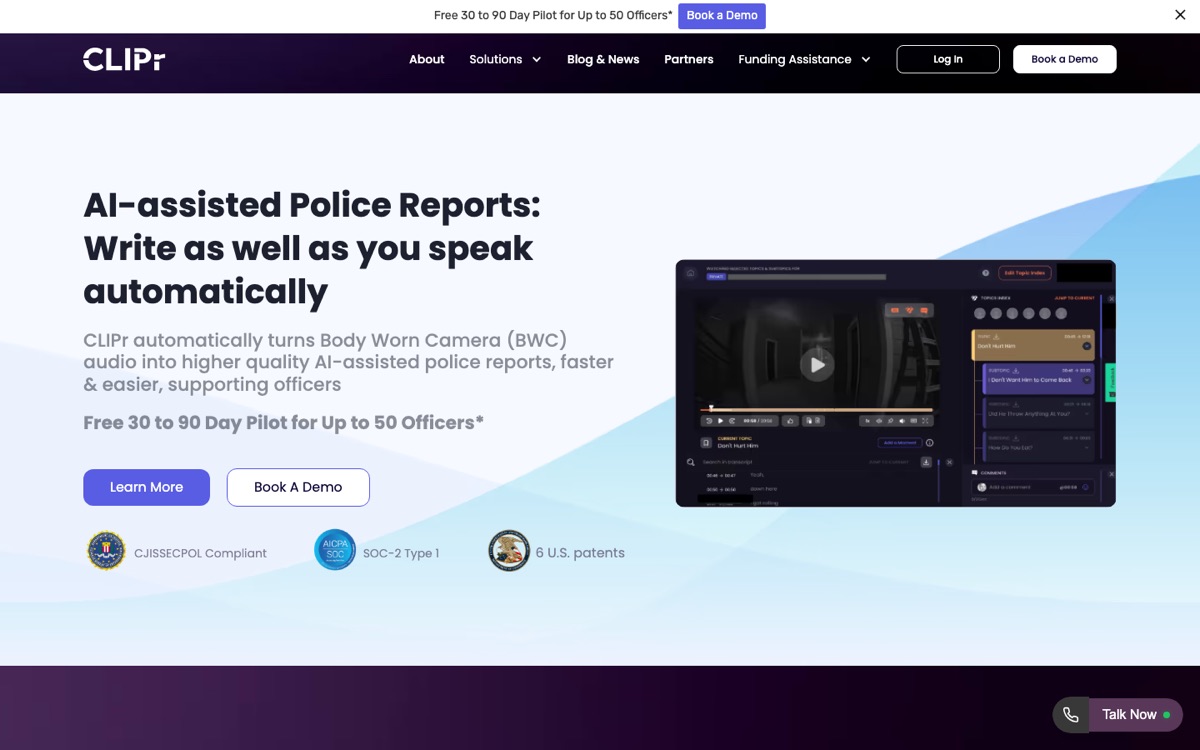 CLIPrOverlay, camera-agnostic
|
Mixed fleet, staged low-IT pilot | BWC and dashcam audio, drag and drop | Copy into RMS today; dock upload and handoff later | $0.21/processed video minute (list); 30-day agency pilot for up to 50 officers, subject to approval | Which deployment stage does your contract cover? |
| 02 | 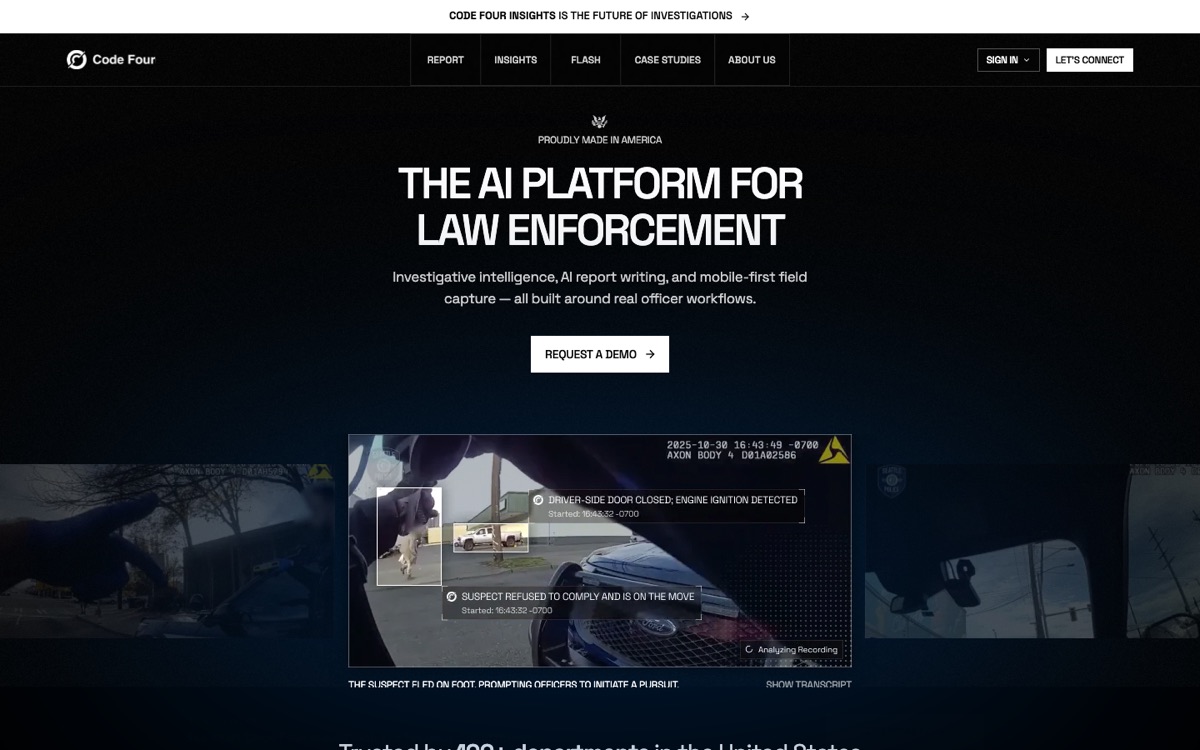 Code Four ReportOverlay
|
Source-linked review of video plus audio | BWC video/transcripts, dispatch, notes (vendor) | RMS export/API (vendor); confirm | $50 per officer per month (public) | Source links and versions in production? |
| 03 | 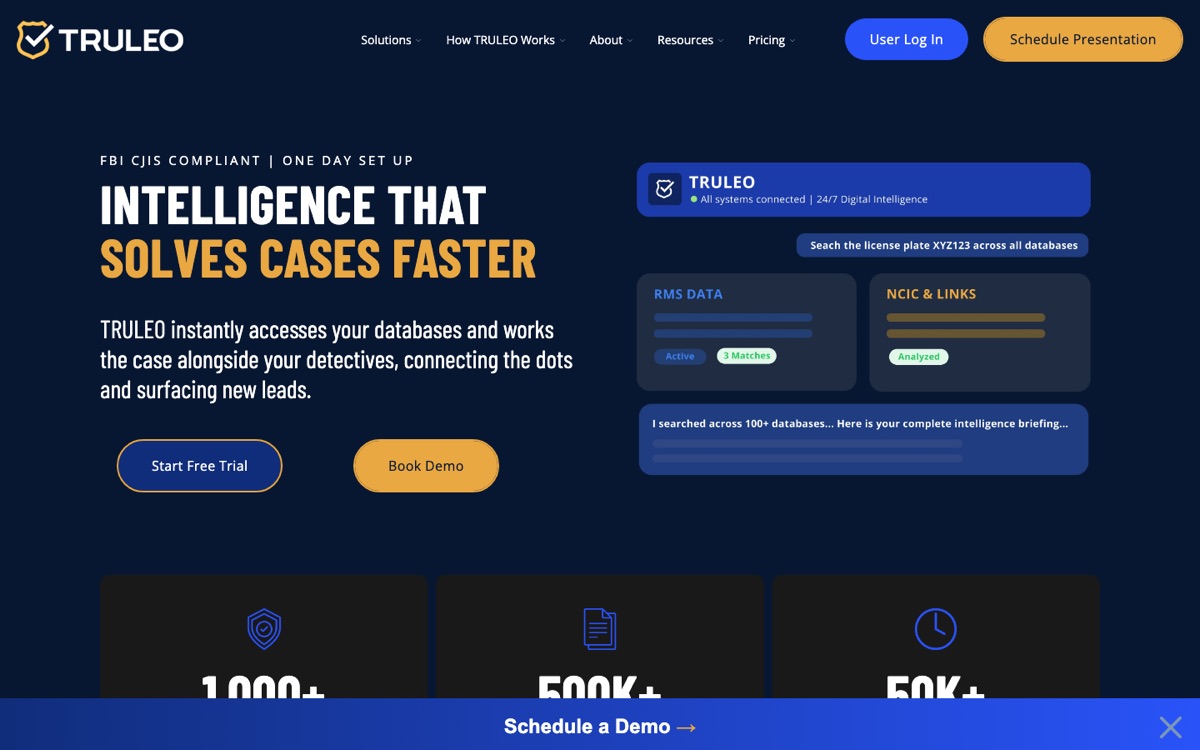 TRULEOOverlay plus assistant suite
|
Broader patrol workflows alongside drafting | Talk/type recollection plus BWC, audio, CAD (vendor) | Confirm in deployment | Public per-user tiers; confirm rates | What survives 90-day default retention? |
| 04 | 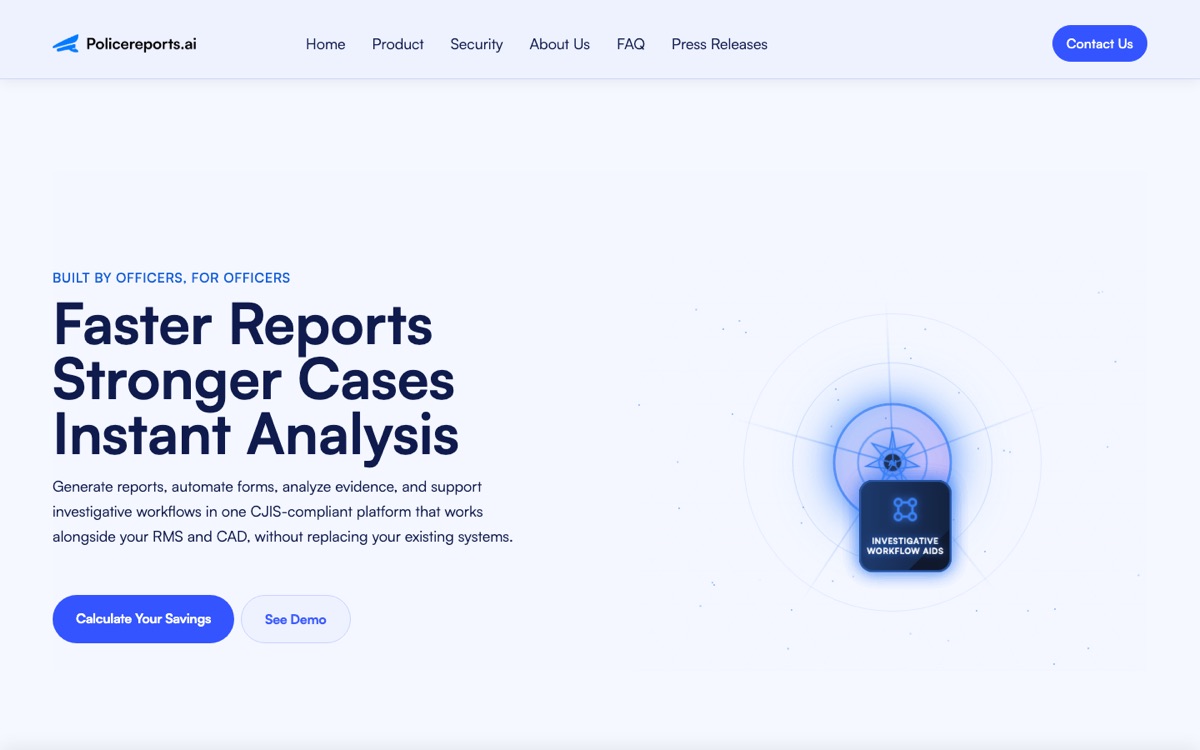 Policereports.aiStandalone documentation workflow
|
Inputs beyond BWC audio, documents and forms | Voice, audio, video, notes, documents (vendor) | Alongside most RMS/CAD (vendor); confirm | Not public; custom quote | Export or validated connector? |
| 05 |  Motorola Narrative AssistCommandCentral-native
|
CommandCentral is the operational stack | Officer account plus up to 10 sources (vendor) | Native within CommandCentral | Not public; contact sales | Generally available in your environment? |
| 06 |  Mark43 ReportAIMark43-native
|
Mark43 CAD/RMS is the operational stack | CAD data, BWC transcripts, location, weather (vendor) | Native within Mark43 CAD/RMS | Not public; contact sales | How is draft history configured? |
Order reflects breadth of fit across agencies, argued from the criteria in each section, not a black-box score.
Pricing status: CLIPr and Code Four publish reference rates; TRULEO publishes per-user tiers; Axon, Motorola, Mark43, and Policereports.ai show no standard public price. Public contract figures below are negotiated examples, not list prices.
Axon says Draft One creates a police report first draft from BWC audio plus officer-added context, starting from evidence (with Auto-Transcript), spoken narration, or typed details.
Whatever the path, the officer must review the draft, fill gaps, and sign off on accuracy before anything moves forward.
Two details in Axon's current help documentation (updated May and June 2026) matter:
Two more line items decide fit, and each belongs in the quote:
A College Station, Texas council agenda packet from June 2026 lists a negotiated Draft One quote of 13 units over 74 months at $72.30 per unit per month, $69,552.60 extended total. That is one bundled, negotiated contract, not list pricing.
For a plain-English walkthrough of what tools in this category do and where they break, see how AI police report generators work.
Where Axon Evidence and Records already own the evidence workflow, Draft One is a credible, lower-lift fit. Four questions decide it, held to the same standard as every alternative below.
Which Axon products and AI Era entitlements your configuration requires, and whether your path out is native supervisor review in Records or clipboard transfer into a third-party RMS. That choice changes training, audit, and records procedures.
Original-draft retention is off by default and varies across products, so verify it live against the July 2025 EFF investigation and September 2024 King County memo.
Rules trump features, so clear your jurisdiction and prosecutor first: California SB 524, San Jose PD's pause, Hillsborough County's limit, and DOJ COPS Office reactions all shape the AI in law enforcement review structure.
Every vendor, CLIPr included, reports gains, so treat them as claims to test on your own reports, which a CLIPr 30-day agency pilot for up to 50 officers, subject to approval, is built for.
The overlays come first, led by CLIPr, then the two platform-native modules.
Focused report-drafting and video-intelligence overlay.
CLIPr publishes this guide, and we hold this section to the same evidence standard as the rest.
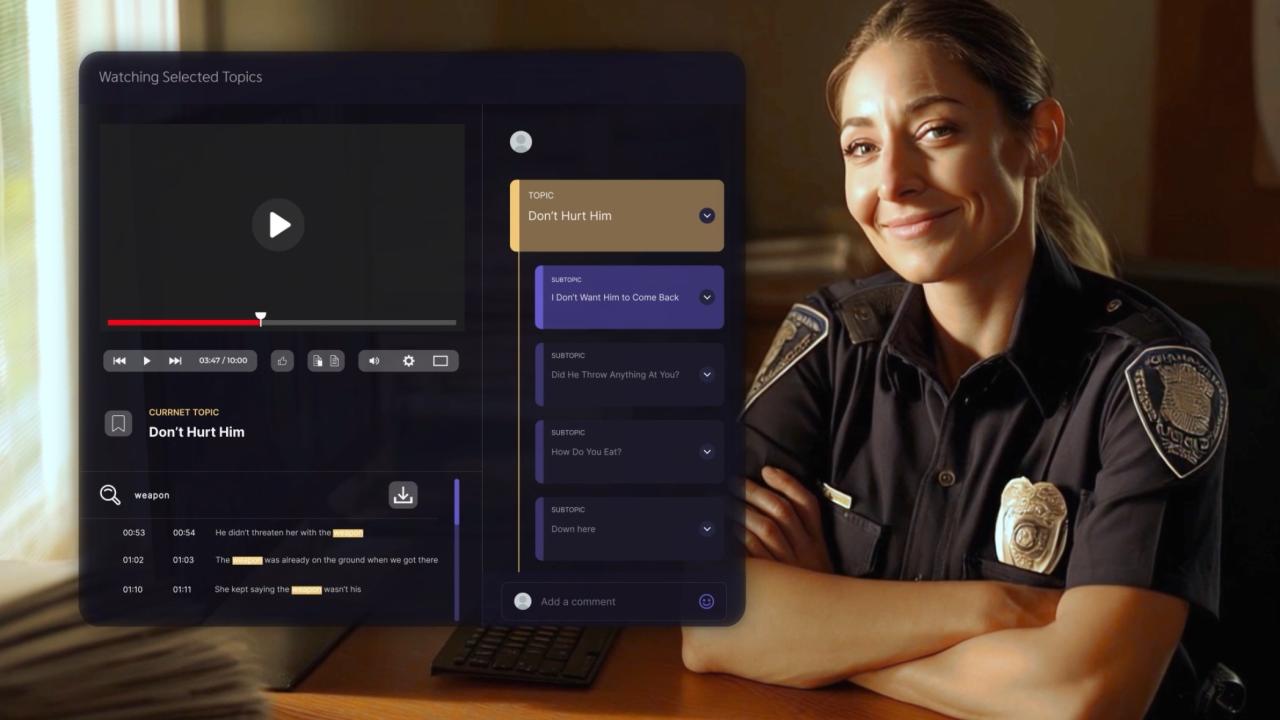
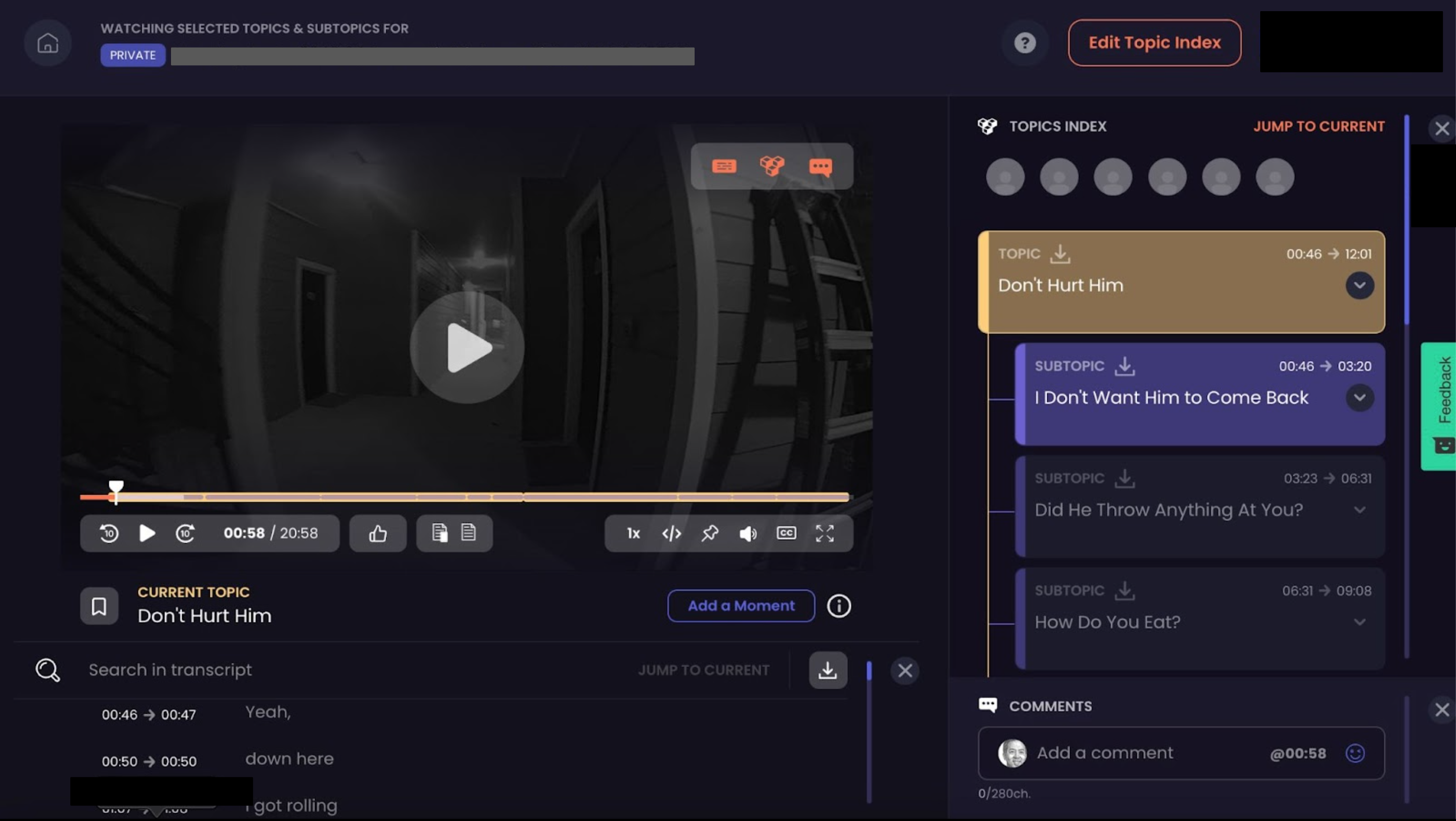
CLIPr turns BWC and dashcam audio into an AI-assisted first draft of the police report, alongside CLIPr Notes and searchable video review.
The CLIPr report-writing workflow page details the outputs and the report drafting from bodycam audio flow; throughout, the officer reviews, edits, and approves the draft and remains the author of record.
The drafting workflow is grounded in verified source material from the agency's uploaded recordings. It does not permit unsupported creative additions to fill gaps. Officers add observations or context that the source material does not capture, then review, edit, and approve the complete report.
Deployment is deliberately staged across three phases:
CLIPr is camera-agnostic in practice: agencies run footage from Axon, Motorola, Getac, i-PRO, and other platforms through it, subject to verifying the exact model and export path.
The staged workflow can start with a small department and expand to multi-precinct, county, state, or metropolitan use, subject to deployment scope and contract terms.
On security, CLIPr's public materials describe a SOC 2 compliant architecture and a CJIS Security Policy-aligned design; as with every vendor, request current deployment-specific materials and confirm scope in procurement.
For international deployments, CLIPr can support regional data residency and applicable regional privacy and security requirements where the selected hosting region, deployment architecture, and contract make that support available. Agencies should confirm the data region, cross-border transfer terms, subprocessors, retention, deletion, and local requirements in writing before deployment.
It can meet the following criteria without forcing a platform change:
Code Four is the sharper choice if source-linked verification is your single deciding factor, and the platform-native modules can be the lower-lift fit inside their own stacks. For agencies prioritizing mixed-fleet compatibility and staged adoption, CLIPr is a practical option to evaluate.
Your fleet is mixed or non-Axon, you want to pilot report drafting on real footage without changing your RMS, and you need a low-IT starting point that can expand to multi-team or larger-agency use.
Pricing: CLIPr publishes usage pricing of $0.21 per processed video minute at list, before discounts, per the CLIPr pricing FAQ, with unused minutes carrying forward to the next calendar year.
A 30-day agency pilot for up to 50 officers, subject to approval; confirm minimums, discounts, and audio versus video treatment in your quote.
CLIPr's public proof includes the National Sheriffs' Association customer story, Investigative Case Reports in Minutes Instead of Hours, and the Reasons We Serve video featuring CLIPr's work with law enforcement. Many agencies prefer nondisclosure, which limits the named deployment detail CLIPr can publish. Separately, Axon's 2025 Form 10-K, filed in 2026, names Clipr.ai in the report-drafting competitive landscape. That filing corroborates CLIPr's presence in the category; it is not an endorsement or customer result.
No IT or RMS Integration Required to Start. The Crawl phase begins with drag-and-drop upload, officer review, and copy into the current RMS. Dock automation and direct RMS handoff remain later-stage options subject to vendor, API, security, and contract availability.
Report-drafting and evidence-review overlay.
Code Four says REPORT builds a first draft from BWC video and transcripts, dispatch context, officer notes, and agency rules, checking report facts against source-linked timestamps.
Each draft statement points back to the moment that supports it, so a reviewer can check the claim against the evidence.
The officer verifies, edits, and approves before export; validate all of this on representative files.
Source-linked review is Code Four's signature. Where it is not the single deciding factor, a camera-agnostic overlay on a published per-minute rate covers the same first-draft job at a lower entry commitment.
Visual-plus-audio context and source-linked verification top the shortlist criteria.
There is real public deployment context:
Reported experience, not a controlled evaluation.
Pricing: $50 per officer per month, publicly listed (Maine Monitor, February 2026); confirm modules, minimums, and term.
Code Four states eligible deployments can run in AWS GovCloud; request deployment-specific evidence rather than generalizing.
Report drafting plus a broader patrol, investigation, and command assistant suite.
TRULEO's patrol product centers the officer's own recollection: talk or type what happened, answer tailored prompts, then attach BWC footage, audio, or CAD files as supporting inputs.
The vendor emphasizes that the user controls the final report. Vendor-reported; compare the report-writing function here, not the whole suite.
The provenance posture is notable. TRULEO says its report-writing logs retain prompts, responses, edits, intermediate drafts, and the final output for 90 days by default, with extended retention and export available.
Confirm deletion, legal hold, and export completeness in the agreement before relying on it.
The agency wants report drafting bundled with policy search, interviews, and broader patrol or command workflows rather than a single-purpose tool.
The DOJ COPS Office dispatch article cited earlier also described TRULEO's workflow, officer review, and governance practices as of January 2025.
Pricing: public per-user tiers plus connector fees; confirm current rates, tier scope, connector count, and term.
Standalone public-safety documentation and investigation workflow that sits alongside your RMS and CAD.
The vendor shows voice, audio, video and bodycam files, typed notes, and documents as inputs, with structured report outputs and a completeness and consistency checker.
The checker flags gaps; the officer still reviews, edits, and approves every draft and remains the author of record. The vendor positions it as working alongside existing systems, not replacing them; confirm which formats and outputs your workflows actually need.
Input flexibility beyond BWC audio matters, including document-heavy and forms-based documentation.
Public deployment evidence exists at the municipal level. The City of Lebanon, New Hampshire's AI registry lists PoliceReports.AI as an active report-generation system implemented in May 2024, with positive operational feedback recorded as of the registry's February 2026 update.
Agency-reported, not an independent outcome study.
On security, Policereports.ai publishes encryption language and states its own published SOC 2 claim; request the current report scope and architecture.
Pricing: not public; custom quote, with demos and pilots offered; confirm quote scope, supported formats, and connector costs.
AI-assisted report capability native to Motorola's CommandCentral records and evidence platform. Current Motorola pages use both "Narrative Assist" and "Assisted Narrative" for this capability.
Motorola says the officer:
Vendor-reported; confirm exact behavior in your environment.
CommandCentral is already, or is about to become, the agency's records and evidence stack.
The scope caution is the point: adopting a platform-native module is not an overlay pilot.
If you are not on CommandCentral, evaluating Narrative Assist really means evaluating the platform, DEMS and RMS workflows included. An overlay that leaves the current records stack in place is the lighter path to the same report draft.
Pricing: not public; contact sales, priced within the CommandCentral relationship.
AI report module embedded in Mark43's CAD and RMS platform.
Mark43 says ReportAI uses CAD data, BWC transcripts, location, and weather to populate report fields and draft text, and requires responders to review and refine before submission.
The company's April 28, 2026 release announced general availability to Mark43 customers and describes draft history and logged AI interactions. Vendor-reported; confirm production behavior.
Existing Mark43 agencies, or agencies already making a broader Mark43 platform decision.
One public context point: a Denton County, Texas agenda item from June 2026 records a combined BriefAI and ReportAI change order of $132,579 through 2027 on an existing platform agreement, negotiated and bundled, not list pricing.
For agencies not centered on Mark43, that native advantage does not apply, and a camera-agnostic overlay avoids the platform dependency entirely.
Pricing: not public; book a demo or contact sales. The Denton County order above is a negotiated bundle, not list pricing.
For agencies with mixed fleets that want to leave the current RMS in place, CLIPr may belong on the shortlist. Its 30-day agency pilot, subject to approval, lets the agency test its exact footage and handoff workflow. Other products may fit better in the following situations:
Whichever lane fits, run a short pilot before you expand scope:
For rollout order, template tuning, and review workflow beyond the pilot, the step-by-step guide to automate police reports covers the full sequence. The shortlist that survives measurement is the one worth defending in a council meeting.
No. Axon's current help documentation says Draft One can use any playable audio or video file supported by Axon Evidence, not just Axon camera footage.
The workflow still runs through Axon Evidence or Records, so confirm formats, ingestion, and entitlements for your fleet.
Not on the pages reviewed for this guide. The AI Era Plan is marketed at a fixed annual cost without a public number.
Public contract quotes, like College Station's $72.30 per unit per month over 74 months, are deal-specific examples, not list prices.
Several do, at different transparency levels:
Reverify every rate and what it includes before budgeting.
It depends on what "directly" means. Platform-native modules, clipboard or export flows, and production writeback connectors are three different things.
Confirm the exact RMS, connector, API rights, fees, and supervisor path in deployment, not from a features page.
The officer. Across every product in this guide, the officer or user must review, edit, approve, and take responsibility for the final report. Product signoff controls do not replace agency policy, prosecutor requirements, or legal review.
Test the full picture:
Baseline before launch so the results mean something.
The CLIPr Team writes about AI-assisted documentation for law enforcement.
CLIPr turns BodyCam and DashCam audio into AI-assisted first drafts of police reports that officers review, edit, and approve into their existing RMS, backed by a SOC 2 compliant architecture and a CJIS Security Policy-aligned design.
Demo environments are tuned to impress. Your camera exports, report types, reviewers, and RMS process are the real test.
If the overlay and mixed-fleet scenario fits, run a scoped CLIPr evaluation with your own footage, your own officers reviewing and approving every draft, and your own RMS copy step, with a 30-day agency pilot for up to 50 officers, subject to approval.