CLIPr Proudly Sponsors SRLEEA Conference in Orlando
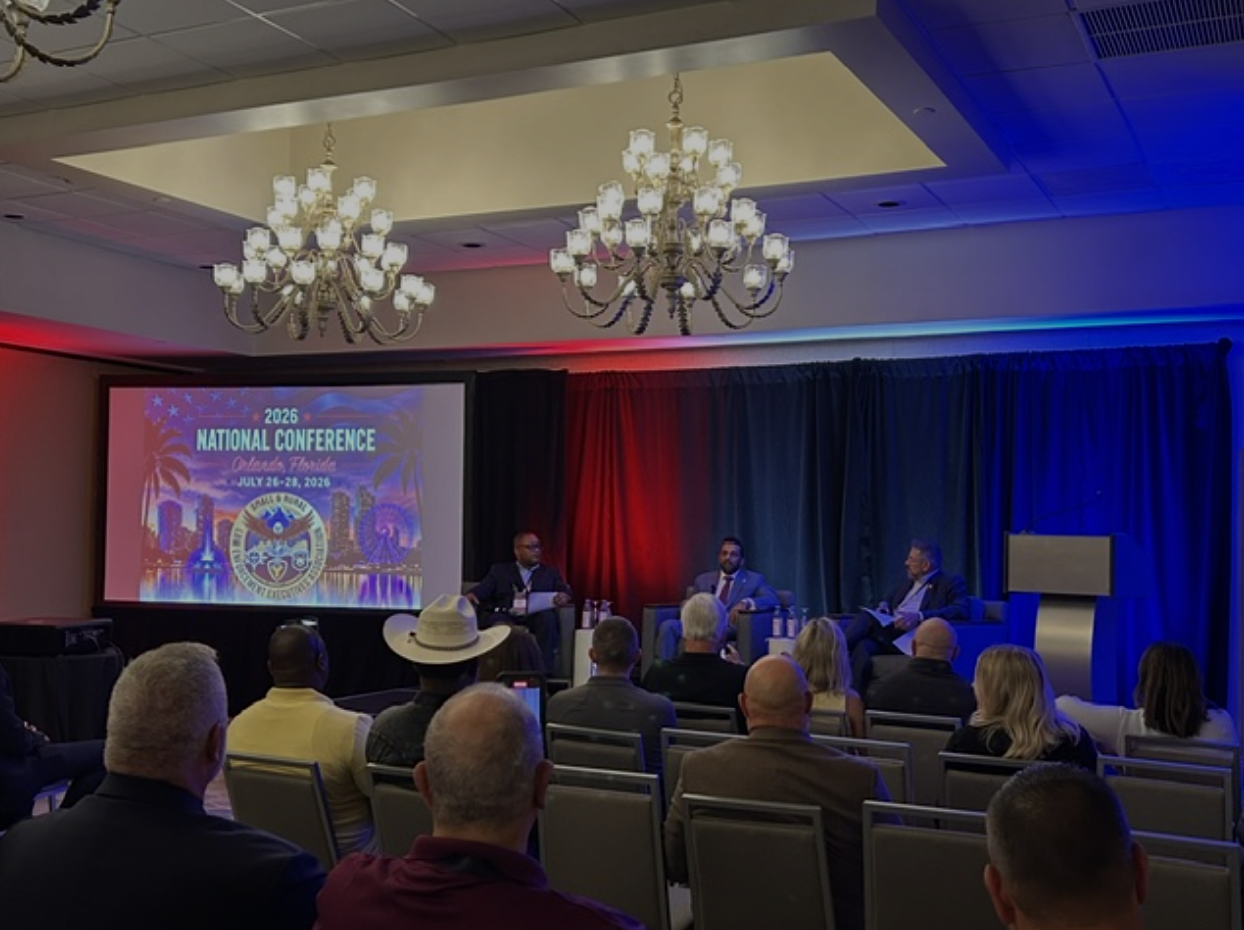
At SRLEEA, FBI Director Patel called AI essential for agencies of every size. See how CLIPr is helping small and rural departments do more with less.


Ten options across RMS, CAD, digital evidence, AI report writing, and digital forensics, scored against five explicit criteria and closed out with a decision framework you can take to your chief, council, or procurement office.
If you run a police department or its IT and records operation, law enforcement software is not one purchase. It is at least RMS, CAD, DEMS, AI report writing, and digital forensics.
Many buying guides treat those categories as interchangeable, but sequencing matters. CLIPr's government leadership page cites officers spending 3+ hours per shift on paperwork, and CLIPr's MDT pilot page notes that nearly 90% of local police departments have fewer than 50 sworn officers. Small agencies carry the same mandates with leaner IT staff.
This guide scores 10 options against five criteria. The goal is a defensible shortlist for leadership or procurement. Often, layering AI report drafting and evidence workflow improvements is more defensible than immediate RMS rip-and-replace. CLIPr publishes this guide, so scoring stays tied to explicit criteria.
Five criteria drove every entry on this list. They map to how agencies actually buy, not how vendors demo.
Pricing in this category is mostly custom and contract-based. Where a vendor publishes numbers, they are cited. Where they do not, the entry says "custom pricing" rather than inventing one.
Before reading a single product card, set up your scoring sheet. This matrix turns a vendor argument into arithmetic.
| Criterion | Weight | What a 5 looks like | What a 1 looks like |
|---|---|---|---|
| Compliance and data ownership | Gate + 0.25 | Baseline CJIS Security Policy-aware posture, audit trail, clear ownership terms | Pause shortlisting until resolved |
| Time-to-value | 0.20 | Pilot live this quarter, drafts in week one | Multi-year implementation before benefit |
| Integration fit | 0.20 | Works with current cameras, CAD/RMS, evidence | Forces rip-and-replace of working systems |
| Training burden | 0.15 | Fits existing workflows, minimal retraining | New processes for patrol, records, and command |
| Total cost posture | 0.20 | Public pricing, pilot, co-op, or grant path | Opaque quote, no budgeting reference points |
How to use it: first pause any vendor that cannot satisfy your baseline security and data-ownership requirements. Then rate each remaining vendor 1 to 5 per criterion, multiply by the weights, and rank the totals.
Take your top two, then pilot the leader before signing anything multi-year.
The matrix also answers the hardest sequencing question in this market: full RMS/CAD modernization versus layering AI report drafting and evidence tools on top of what you have.
Score both paths honestly and the time-to-value and integration rows usually decide it.
Here is the full field at a glance. Every cell reflects vendor-stated capabilities or public documents, not guesses.
| # | Product | Fit | Deployment | Key integrations | Pricing posture |
|---|---|---|---|---|---|
| 01 |  CLIPr Report automation fitAI report drafts + redaction
|
Report automation without replacing a working RMS | Cloud-based | Axon, Motorola, Getac, Digital Ally, Reveal Media, Hytera, HALOS, 10-8, i-PRO and other BWC/dashcam systems; copies into existing RMS | Free 30 to 90 day pilot; utilization-based pricing; published redaction rates |
| 02 |  Mark43RMS/CAD platform
|
Cloud-native RMS/CAD modernization | Cloud (FedRAMP marketplace listing) | Esri, RapidSOS | Custom; public contract examples exist |
| 03 |  Motorola CommandCentral RMSRMS within a suite
|
Agencies already in the Motorola ecosystem | Scoped per agency | CommandCentral suite, evidence and redaction pathway | Custom pricing |
| 04 |  Tyler Enterprise Public SafetyCAD/RMS suite
|
Multi-discipline municipal deployments | Cloud-hosted CAD available | New World CAD, records across police/fire/EMS | Custom pricing |
| 05 |  Hexagon HxGN OnCall RecordsRMS and analytics
|
Regional and multi-agency deployments | Cloud deployable | Multi-agency records sharing, analytics | Custom pricing |
| 06 |  Axon Records + Draft OneRMS + AI report writing
|
Agencies standardizing on the Axon suite | Cloud (Axon ecosystem) | Axon BWC, Axon Evidence | Custom; OMNIA co-op pricebook as reference |
| 07 |  Genetec ClearanceDigital evidence management
|
Evidence sharing across agencies and prosecutors | Scoped per agency | Cross-agency and prosecutor sharing | Custom pricing |
| 08 |  NICE Evidencentral InvestigateEvidence + case workflow
|
Investigation-heavy units centralizing digital evidence | Cloud and automation focus | Digital evidence sources, investigation workflow | Custom pricing |
| 09 |  Axon FususReal-time crime center
|
Agencies building or expanding an RTCC | Scoped per agency | Live video, sensors, location feeds | Custom pricing |
| 10 |  Cellebrite UFEDMobile forensics
|
Forensics-heavy caseloads needing in-house extraction | Lab and kit-based, per licensing | Mobile device extraction into evidence workflows | Custom; budget for training and licensing |
Pricing and pilot terms verified June 2026.
Good fit for report automation and layered deployment, not a CAD/RMS replacement.
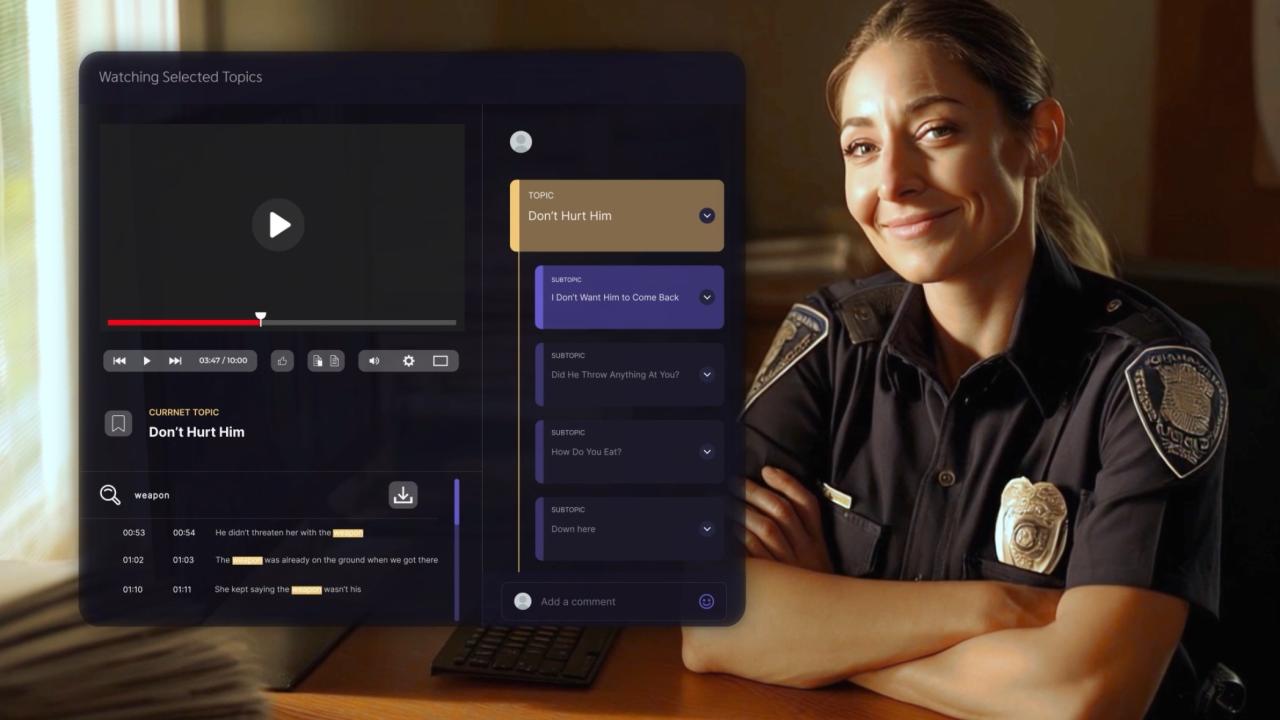
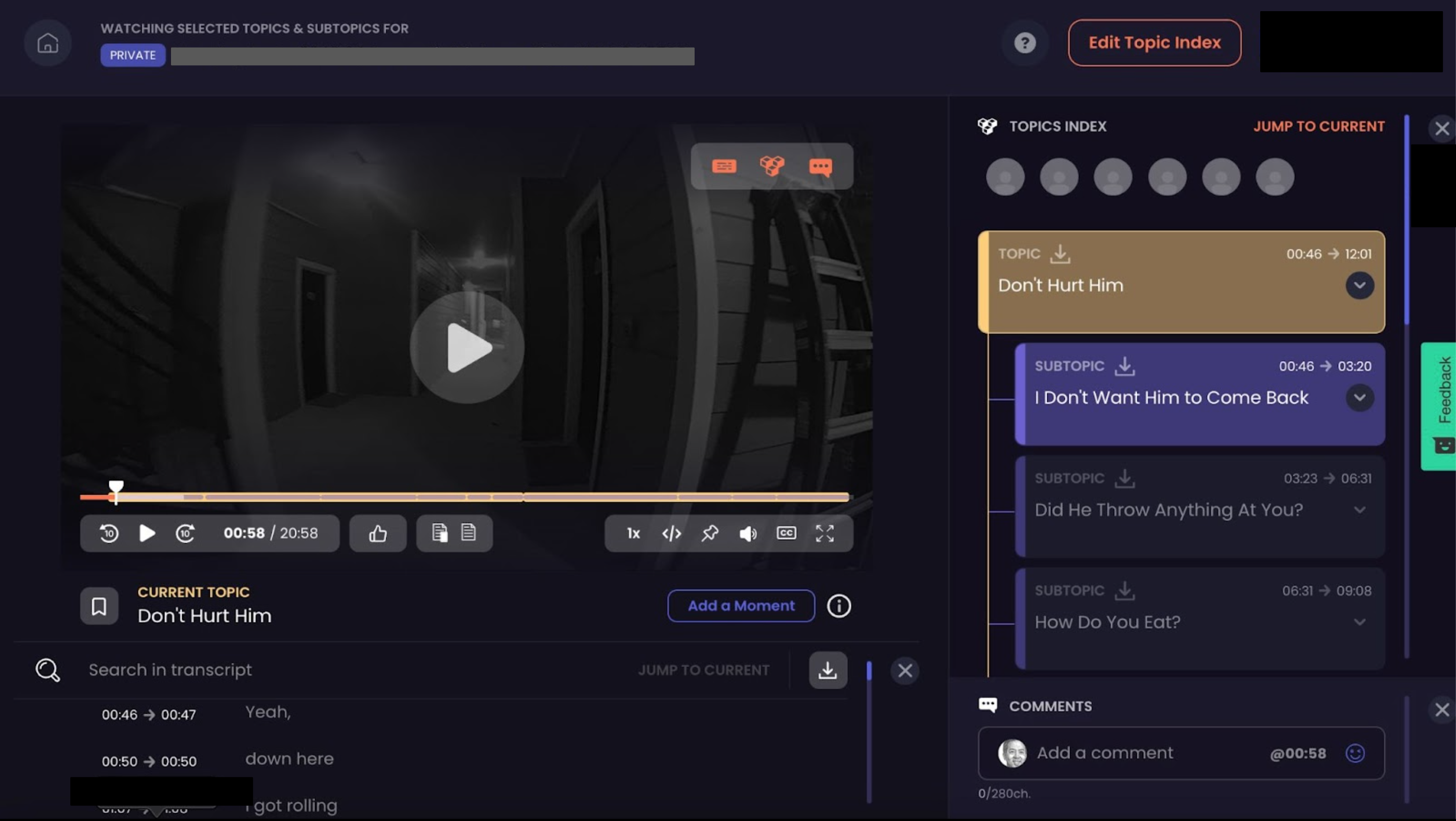
Why it is first in this guide: CLIPr fits when reporting speed and evidence-to-report workflow are the bottleneck, not a brand-new CAD or RMS. It turns BWC and dashcam audio into AI-assisted drafts that officers review, edit, and own.
The entry is practical: a free 30 to 90 day pilot for up to 50 officers, then drag-and-drop first and automation later. It layers onto existing cameras and RMS workflows, with security and data terms reviewed during procurement, so no rip-and-replace is required to start.
Pricing: Searchable Audio is $0.105/min and Searchable Video is $0.21/min; the free 30 to 90 day pilot has no credit card, subject to approval, and larger deployments can be scoped around utilization, architecture, sovereignty, and carry-forward capacity.
To see what the output looks like in practice, the breakdown of how an AI police report generator works covers the drafting mechanics, and these police report writing examples show the standard a finished report should meet.
Figures stated on the CLIPr homepage.
Good fit for agencies committed to cloud-native RMS/CAD modernization on a unified platform.
What it is: A cloud-native public safety platform spanning RMS and CAD, built for agencies replacing legacy on-prem records systems.
Pricing: Custom pricing, structured as modular contracts. Use public contract examples as structural reference for negotiations.
Good fit for agencies already invested in Motorola radios, cameras, or command center software.
What it is: A records management system inside Motorola's CommandCentral public safety software suite.
Pricing: Custom pricing through Motorola Solutions.
Good fit for cities consolidating police, fire, and EMS onto one municipal platform.
What it is: Tyler's Enterprise Public Safety line, including New World CAD, serving dispatch and records across multiple public safety disciplines.
Pricing: Custom pricing through Tyler Technologies.
Good fit for regional or multi-agency deployments that need scalable records and analytics.
What it is: Hexagon's HxGN OnCall Records, a cloud-deployable records management system with analytics aimed at larger and shared deployments.
Pricing: Custom pricing through Hexagon.
Good fit for agencies standardizing on the Axon suite that want AI report drafting tied to their evidence platform.
What it is: Axon Records is Axon's records platform; Draft One layers AI-assisted report writing on top, drafting narratives from Axon body camera audio. Police1 covered the Draft One launch as a milestone for AI report writing in policing.
Pricing: Custom pricing. The OMNIA Partners Axon pricebook, which lists Draft One as a line-item module under Axon Records, is a procurement structure reference, not a universal price list. Source: OMNIA Partners Axon pricebook, as published by the vendor - last checked July 2, 2026.
Good fit for digital evidence management shared across agencies, prosecutors, and partners.
What it is: Genetec Clearance is a digital evidence management system (DEMS) for centralizing, managing, and sharing case evidence.
Pricing: Custom pricing through Genetec.
For agencies whose evidence problem is mostly hours of unwatched footage, bodycam transcription software explains how transcription-to-report workflows turn that backlog into searchable text.
Good fit for investigation-heavy units centralizing digital evidence and case workflow.
What it is: NICE Evidencentral Investigate combines digital evidence management with investigation workflow, with cloud and automation positioning.
Pricing: Custom pricing through NICE.
Detective units comparing this category should also weigh dedicated detective case management software, which covers case-tracking needs that evidence platforms may not fully address.
Good fit for agencies building or expanding a real-time crime center (RTCC).
What it is: Axon Fusus is a real-time crime center platform that fuses live video, sensors, and location feeds into one operational picture.
Pricing: Custom pricing through Axon.
Good fit for forensics-heavy caseloads that need in-house mobile device extraction.
What it is: Cellebrite UFED is mobile device forensic software for lawfully extracting and preserving data from phones and other devices.
Pricing: Custom pricing. Plan for training and licensing on top of the software itself.
The matrix gives you scores. This section gives you the shortcuts for the four most common buyer profiles.
Small department, under 50 sworn, BWC in place, legacy RMS that still works.
Choose CLIPr for AI report drafting now, add Genetec Clearance if evidence sharing is the second bottleneck, and revisit the RMS decision in a later budget cycle.
The walkthrough on how to automate police reports covers rollout sequencing for exactly this situation.
Mid-size city consolidating police, fire, and EMS.
Choose Tyler, Hexagon, or Mark43 and accept the longer implementation when multi-discipline consolidation justifies platform modernization ahead of layering.
Consider CLIPr as a report-drafting layer from day one where police, fire, or EMS documentation is in scope: it can support police reports from BWC and dashcam audio and first-draft fire or EMS documentation from dispatch and responder audio.
For fire or EMS, scope NFIRS, billing, integration, and deployment details during the pilot, including CLIPr Mobile for field capture and integrations such as HigherGround, Eventide, CentralSquare, and Tyler.
The platform consolidation can run its multi-year course while teams test report-drafting value sooner.
Agency standardizing on Axon.
Choose Axon Records with Draft One, and add Fusus if an RTCC is on the roadmap. The ecosystem coherence is the value; commit to it deliberately rather than by default.
CLIPr is camera-agnostic and works with Axon BWC footage, so piloting it keeps report drafting independent of the ecosystem decision: drafts copy into whatever RMS the migration lands on, with no rip-and-replace.
Forensics-heavy caseload.
Choose Cellebrite UFED plus a DEMS such as Clearance or Evidencentral, because extraction without evidence management just moves the bottleneck downstream.
Pair them with CLIPr on the interview-room side where interview video is part of the workflow: detectives can build speaker-identified, timestamped, searchable evidence libraries plus first-draft investigation reports.
Q&A search and flagged key moments can be scoped for review workflows.
Avoid buying two overlapping platforms in the same budget year. Sequence purchases so each one shows value before the next contract lands on the council agenda.
If more than one profile fits, deploy the reporting layer first.
Report writing touches every officer every shift, which is why the AI police report generator path can be easier to test before a platform migration finishes discovery.
A few practical moves separate smooth deployments from stalled ones.
Redaction backlog math deserves its own line item. If FOIA requests are stacking up, outsourcing redaction may be easier to budget than overtime.
CLIPr's FOIA redaction service pricing is published
Per-minute rates, sold in $250 minimum blocks.
For market comparison, CaseGuard publishes per-seat redaction software pricing (its Doc, Media, and Ultimate suites list at $279 to $379 per user per month, billed annually, with custom Enterprise pricing at 50-plus seats), a rarity in this category. That is a per-user model, where CLIPr's redaction service is priced per minute on utilization, so the fit depends on how your redaction volume maps to seats versus minutes. Source: CaseGuard pricing page (caseguard.com/pricing) - last checked July 2, 2026.
A records management system (RMS) is the system of record for incidents, reports, and case files. Computer-aided dispatch (CAD) manages calls for service and unit dispatching in real time.
A digital evidence management system (DEMS) stores, organizes, and shares video, audio, and files as evidence, including with prosecutors.
Many agencies run all three, and chain-of-custody documentation spans them, which is where legal transcription software supports cross-agency collaboration on recorded evidence.
AI can generate first drafts from body camera audio, but every credible vendor requires human review before submission.
Axon's closer look at Draft One describes its human review requirements, and CLIPr's workflow has the officer review, edit, and copy the finalized report into the RMS. The officer who signs the report owns its accuracy, same as always.
A comparison of police report writing software breaks down the current options, and the fundamentals in how to write a police report still apply to every AI-assisted draft.
CJIS is a security policy, not a certification, so evaluate vendors on stated alignment and supporting documentation rather than badges alone. Look for documented CJIS Security Policy alignment, audit trails, encryption, and explicit ownership, retention, and deletion terms.
Vendors evidence cloud posture in different ways: some hold FedRAMP listings, such as Mark43's FedRAMP marketplace listing, and others publish CJIS Security Policy alignment and SOC 2 documentation, as CLIPr does on its pages. Ask each vendor which applies to the deployment you would run.
Compliance representations, controls, ownership, retention, and deletion terms are best captured in the contract rather than only in marketing pages.
Three paths show up repeatedly: phased purchases sequenced across budget years, cooperative purchasing contracts that skip parts of the RFP grind, and grant funding.
CLIPr's funding page for police departments covers identifying public technology grants plus private funding routes for departments that want to start before appropriations catch up.
The 10 tools above span five different jobs. A common mistake in this market is buying the right logo for the wrong job.
Score your shortlist against the Five-Box Matrix, sequence the purchase that removes your biggest bottleneck first, and pilot before you sign.
For many small and mid-size agencies, the biggest bottleneck is report writing, and the right AI report writing tool puts quantifiable time back in front of the patrol force, results you can measure on your own incidents during the pilot.
That is a 30 to 90 day pilot away from being tested on your own incidents: start with CLIPr, keep your cameras and RMS, and evaluate the results against your own reports.
The CLIPr team builds AI video and audio intelligence for public safety, turning BodyCam and DashCam audio into AI-assisted police report drafts that officers review, edit, and copy into their existing RMS.
CLIPr publishes CJIS Security Policy alignment, security architecture aligned to SOC 2 controls, and agency data ownership language. Deployment-specific controls, ownership, retention, and deletion terms are set during procurement.
Run it on your own bodycam footage. Free 30 to 90 day pilot for up to 50 officers, no credit card required, subject to approval.