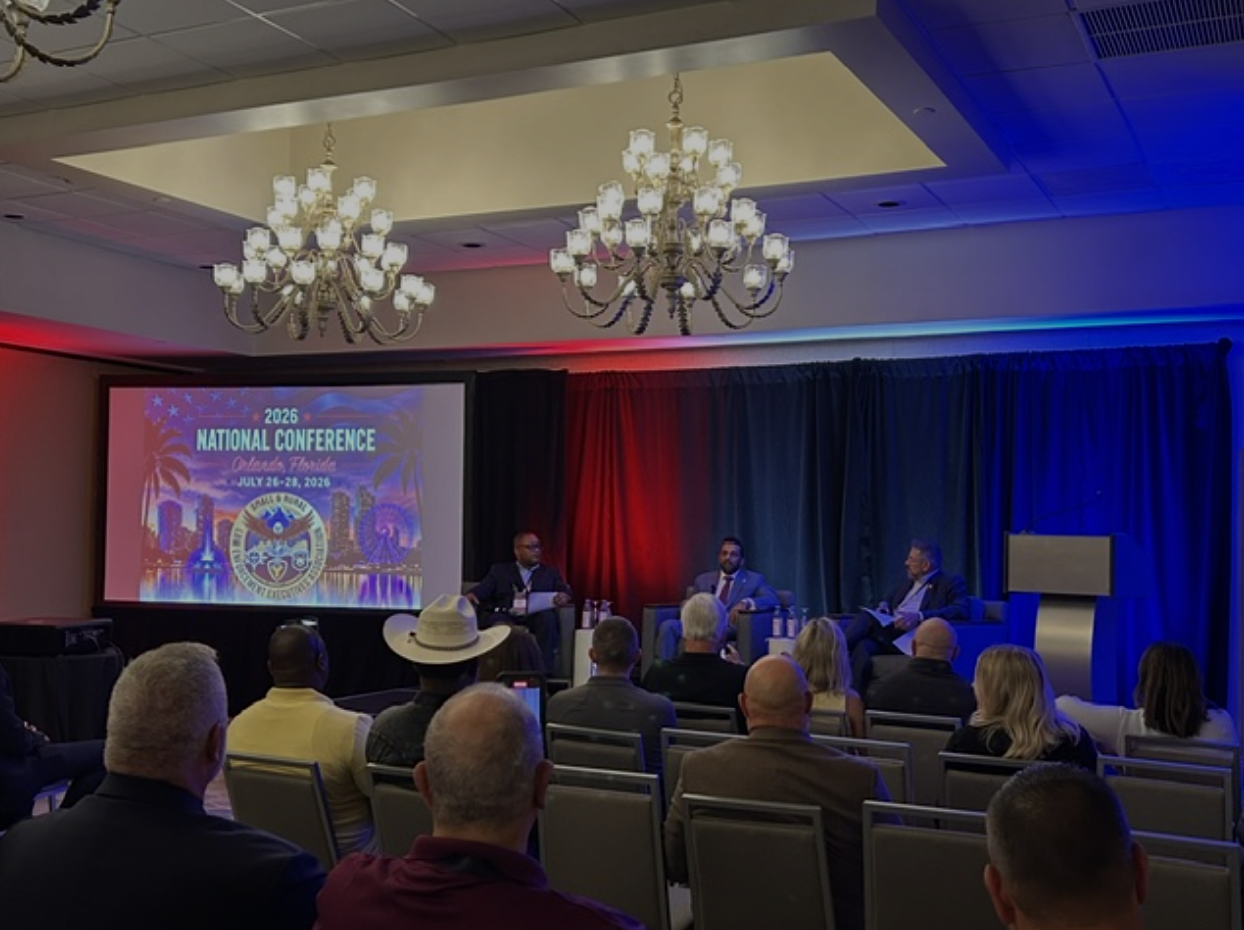
CLIPr Proudly Sponsors SRLEEA Conference in Orlando
At SRLEEA, FBI Director Patel called AI essential for agencies of every size. See how CLIPr is helping small and rural departments do more with less.


Six Code Four alternatives worth evaluating in 2026, and where each fits:
CLIPr is a practical fit to evaluate when an agency wants to keep its current cameras and records stack: a 30-day agency pilot for up to 50 officers, subject to approval, lets the agency test the workflow on its own footage.
| Option | Strong fit when | Primary draft inputs | Stack and deployment pattern | Public pricing status | One point to verify |
|---|---|---|---|---|---|
 CLIPrFocused drafting layer
|
Mixed camera fleet, staged manual-first pilot | BWC and dashcam audio | Focused drafting layer beside your stack | Utilization-based; 30-day agency pilot for up to 50 officers, subject to approval | Camera, export, RMS workflow fit |
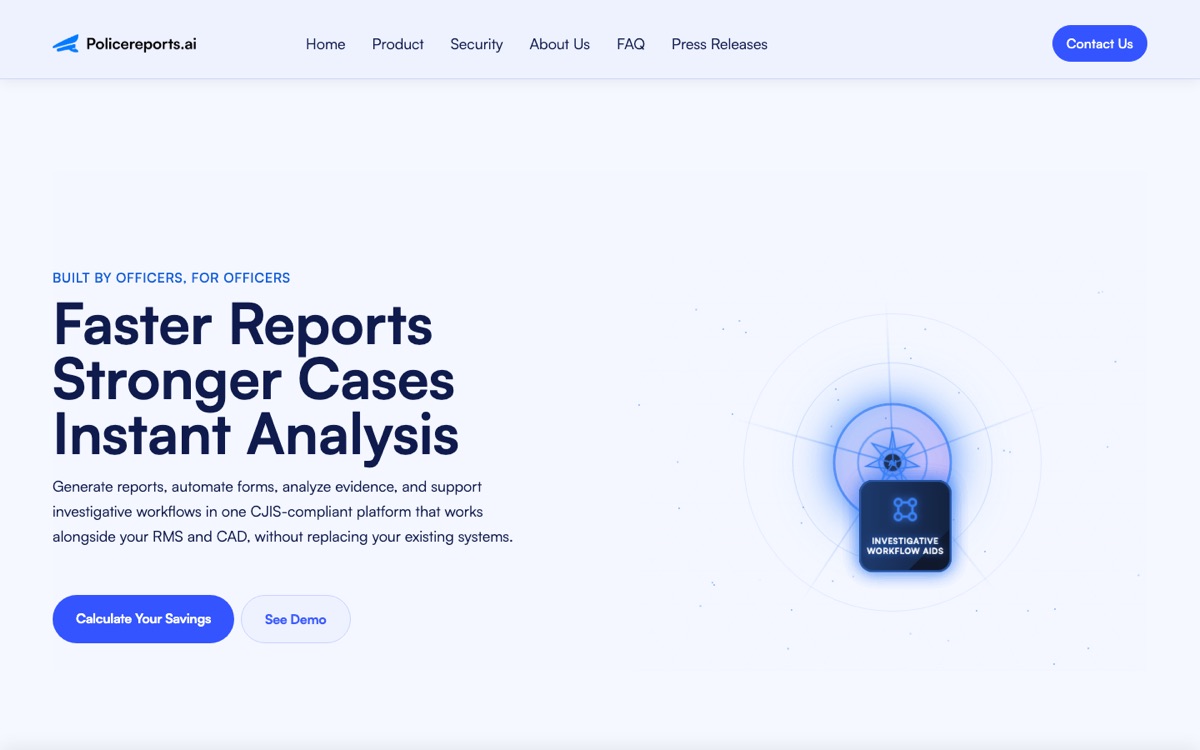 Policereports.aiBrowser-based workflow
|
Multi-input documentation beyond BWC audio | Voice, audio, video, notes, documents | Browser-based, mobile to desktop | Custom quote | Transcript vs visual processing; RMS connector |
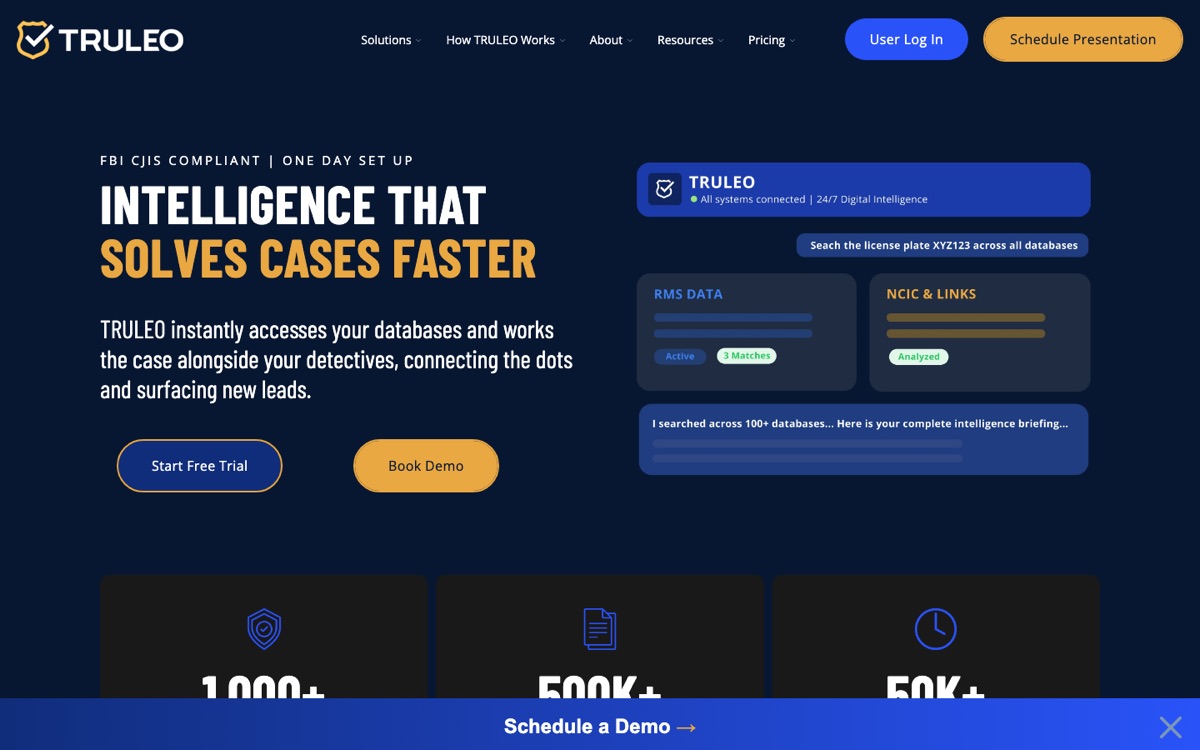 TRULEO TruAssistHybrid connector + GovCloud app
|
Officer-authored dictation plus role-based assistance | Officer dictation, plus BWC, audio, or CAD files | Hybrid connector plus AWS GovCloud app | Public role-based prices | Which license holds the report workflow |
 Axon Draft OneAxon-native module
|
Standardized on Axon Evidence or Records | BWC audio and transcripts, narration, notes | Module inside the Axon ecosystem | Custom, contact sales | Non-Axon media and third-party RMS handoff |
 CentralSquare Centerline AISuite-native; standalone claimed
|
Running CentralSquare 911, CAD, or RMS | BWC transcription, dictation, interviews | Suite-native; standalone claimed | Custom, demo | What "standalone" actually includes |
 Mark43 ReportAIMark43-native module
|
Centered on Mark43 RMS and CAD data | CAD data, BWC transcription, location, weather | Native module in the Mark43 platform | Custom, demo | Whether Mark43 RMS is required |
Order reflects breadth of fit across agencies, not a black-box score.
CLIPr publishes this guide and appears as a clearly labeled mixed-fleet option. The remaining products are grouped by deployment model. Editorial order is not a score or winner ranking, and current pricing and fit must be verified for the agency's deployment.
Code Four Labs sells an AI platform for law enforcement with three surfaces, REPORT, INSIGHTS, and Flash, so replacing one is not replacing all three.
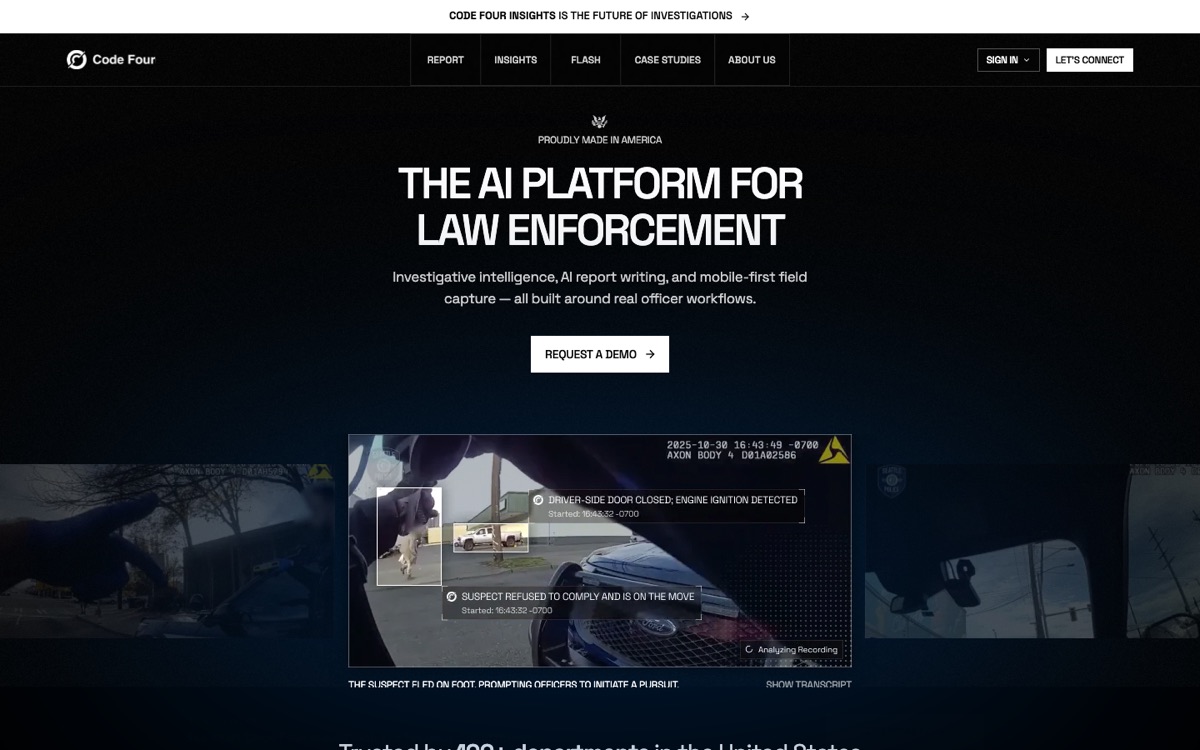
REPORT drafts from BWC footage, transcripts, CAD, notes, and photos, source-linked and officer-approved (visual-analysis claim vendor-reported). INSIGHTS is a separate investigation layer; Flash is a mobile field app (June 9, 2026 privacy notice).
Homepage lists $50 per officer per month. Confirm which of REPORT, INSIGHTS, and Flash it covers, plus minimums, usage and storage, connectors, and term.
Vendor cites implementation in days and names Axon Evidence, Motorola, Getac, Mark43, and Tyler paths plus a custom API. Treat exact compatibility, versions, and data direction as quote questions.
Trust pages cite TLS 1.2+, AES-256 at rest, multi-factor authentication (MFA), role-based access, AWS GovCloud eligibility, and a subprocessor list (vendor's own). Put storage, retention, deletion, export, and model-use terms in the signed agreement.
Code Four reports 100+ US departments and a 65% average reduction in report-writing time, both vendor-reported.
Keep those separate from independent records: City of Pocatello meeting minutes record a one-year $33,600 agreement in April 2026 after a trial, with an AI-use disclosure policy and officer review, correction, and sign-off.
Local reporting from the Maine Monitor and the Park Record covers pilots in Wilton, Maine and Heber City, Utah: useful context, not controlled evaluations, and a negotiated contract is not list pricing.
None of this argues for leaving. Code Four stays credible for agencies that value its visual-plus-audio claims, source-linked review, public per-officer price, and mobile workflows; the alternatives below fit a different stack, input model, or procurement package.
Every option documents a real law-enforcement report-writing workflow in first-party material, compared on inputs, human review, deployment, pricing, and security on equal terms. Tools leading with footage analytics rather than the drafting police report writing software buyers recognize were left out.
There is no weighted scorecard, on purpose: CJIS Security Policy alignment is a pass-or-fail, not a number to average. The guides to AI police report generators and bodycam transcription software go deeper, and the Federation of American Scientists (June 2026) recommends agency-owned evaluation and phased deployment, which shaped this pilot-first structure.
The cross-stack options come first, led by CLIPr, then the platform-native modules.
Focused AI-assisted report-drafting layer beside the existing evidence stack.
CLIPr publishes this guide, and this section is held to the same evidence standard as every other.
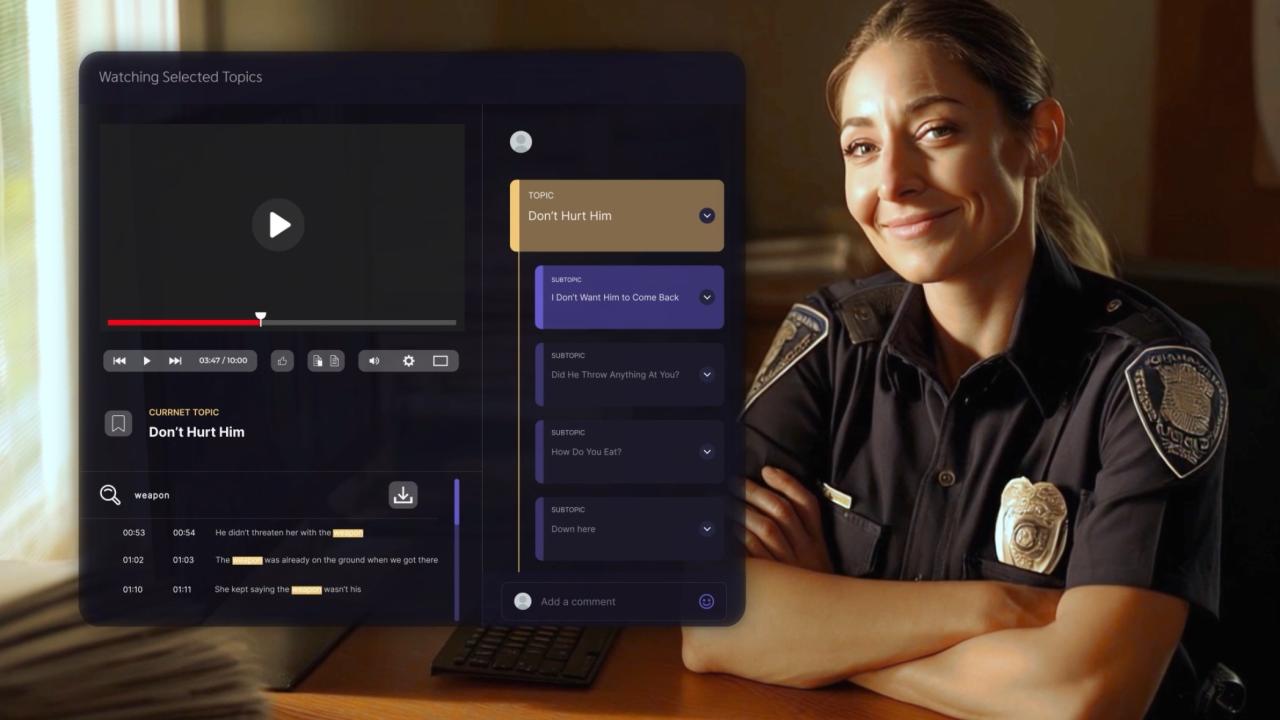
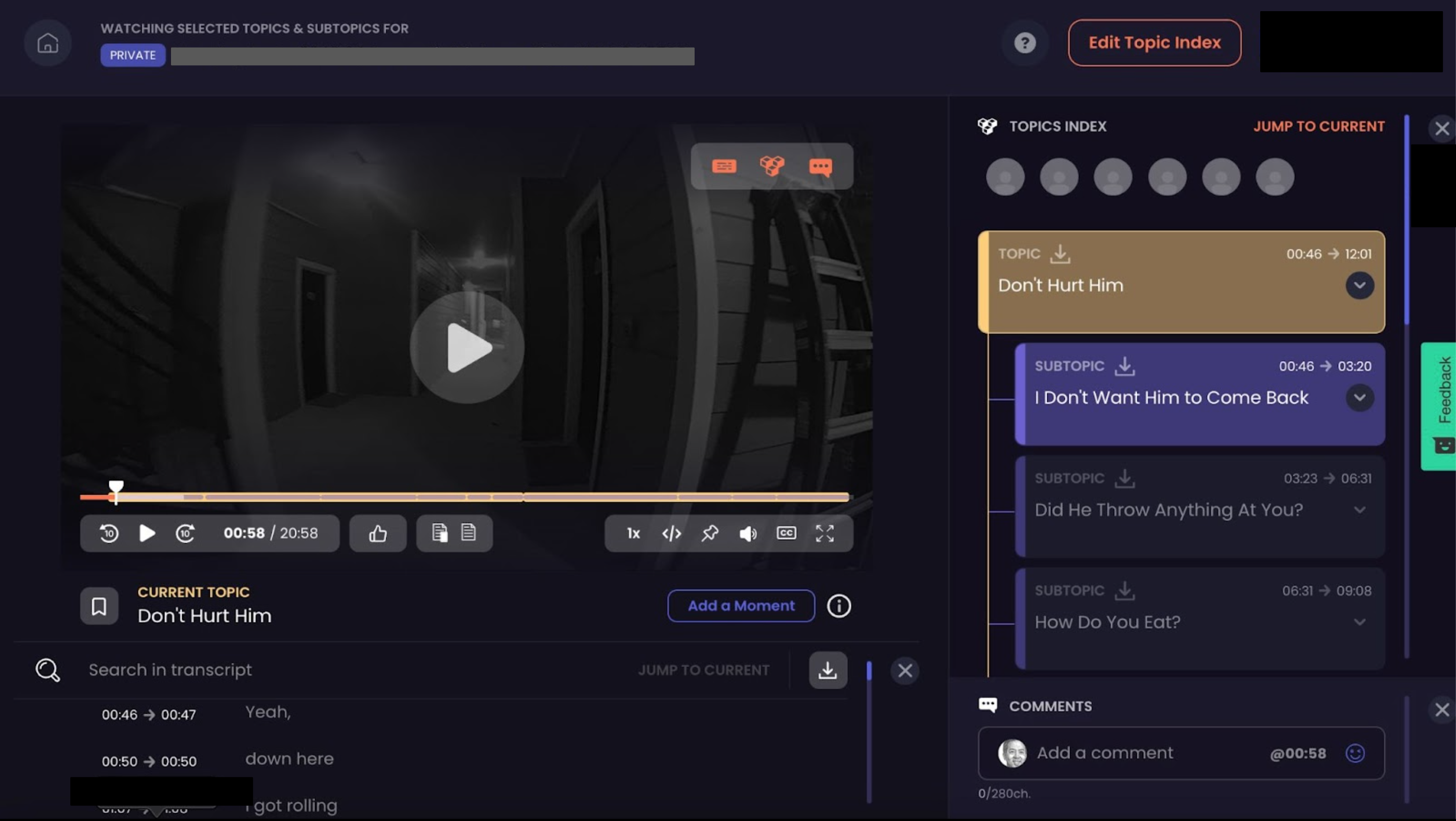
CLIPr turns BWC and dashcam audio into a first draft of the police report. The officer reviews, edits, and approves that draft and remains responsible for the final report; the current public workflow includes copying the finished report into the agency's RMS.
CLIPr's report-drafting path begins with audio and transcription, keeping the draft grounded in verified spoken facts and tying review back to the source recording. Compared with a workflow that depends on broader visual-scene interpretation, this narrower input path can reduce exposure to visual-model hallucinations, compute requirements, and processing latency. That does not mean all visual analysis is unsafe; visual review can remain useful when the use case requires it.
CLIPr's staged model is a rollout order, not a set of paid tiers:
The posture behind that sequence is what CLIPr calls "AI: Your Way": deployment bends around the agency's existing cameras, evidence platform, and approval workflow. That comes with hands-on implementation, template tuning against agency report formats, and a mobile app for field audio capture.
The low-IT starting point works for agencies without dedicated technical staff, while the staged deployment model can scale across multi-precinct, county, state, and metropolitan fleets, subject to deployment scope and contract terms.
For international deployments, CLIPr can support regional data residency and applicable regional privacy and security requirements where the selected hosting region, deployment architecture, and contract make that support available. Agencies should confirm the data region, cross-border transfer terms, subprocessors, retention, deletion, and local requirements in writing.
For category context rather than endorsement, Axon's most recent annual filing with the US Securities and Exchange Commission (SEC) lists Clipr.ai among AI-enabled report-narrative drafting providers.
It can meet the following criteria without forcing a platform change:
Axon Draft One is the lower-lift pick inside an Axon-centered stack, and the platform-native modules can be the lower-lift fit inside their own suites. For agencies prioritizing mixed-fleet compatibility and staged adoption, CLIPr is a practical option to evaluate.
The fleet is mixed or non-Axon, the agency wants to validate an AI-assisted first draft manually before adding automation, and it needs a low-IT starting point that can expand across teams or a larger fleet.
Pricing: custom and utilization-based; CLIPr's public page states unused utilization can carry forward to the next budget year. Get a written quote covering volume, carry-forward, implementation, support, and term.
Standalone, browser-based public-safety documentation workflow that sits alongside your RMS and CAD.
The vendor's product page describes structured report generation from voice, audio, video, notes, and file uploads, plus a report checker that prompts on completeness, consistency, and policy points. Access is browser-based from mobile, tablet, and desktop.
Drafts and checker output feed an officer-owned review; the officer still writes, corrects, and signs the final police report. Ask which drafts, prompts, and checks are logged and retained, and who can export them.
One public marker: the City of Lebanon, New Hampshire AI registry lists PoliceReports.AI as active in its police department since May 2024 with agency-reported positive feedback. A registry entry is adoption evidence, not an evaluation.
On security, Policereports.ai's page describes client-side encryption, 256-bit encryption, and its own published SOC 2 claim; request the current report, scope, exceptions, architecture, and subprocessors for the proposed deployment.
Input flexibility beyond BWC audio matters, including document-heavy and forms-based documentation.
Pricing: custom quote, no published rate; confirm modules, integrations, and support.
Officer-authored report drafting plus a broader patrol, investigation, and command assistant suite.
This is a different design from BWC-first drafting. TRULEO's pages center the officer's own recollection, entered by talking or typing with prompts, with the option to add BWC, audio, or CAD files.
The officer stays the author throughout, closest to traditional report writing; the guide on how to write a police report covers the elements every draft still needs.
A January 2025 explainer from the US Department of Justice (DOJ) Community Oriented Policing Services (COPS) Office describes TRULEO's review and sign-off workflow and general governance; it predates current versions, so use it for governance themes, not feature facts.
The agency prefers an officer-authored dictation workflow and wants role-based patrol, investigations, or command functions in the same platform.
Pricing: public role-based tiers; investor filings differ, so confirm rates and license scope. Role-based licenses and per-officer platform rates are not equivalent units; normalize the full quote before comparing.
Report drafting managed inside the Axon Evidence and Records ecosystem.
Axon's product and help pages describe report drafts powered by BWC audio and transcripts: one or more recordings, plus officer narration or typed notes for what the audio missed.
A nuance from the help documentation: any playable audio or video file in Axon Evidence can be used, not Axon-camera footage alone.
One boundary to keep straight: Axon describes Draft One as audio and transcript driven. Do not credit it with the visual-frame analysis Code Four claims for REPORT; test both claims the same way in a pilot.
The strongest fit is an Axon-centered agency, where evidence, transcription, and drafting stay in one place and workflow friction is genuinely lower.
For a mixed or non-Axon fleet, the tradeoff to weigh is that outside media must route into Axon Evidence first, which a camera-agnostic overlay avoids.
On security, request the standard package scoped to the proposed deployment: architecture, subprocessors, encryption, access controls, audit logs, retention and export terms, and current attestations.
The agency already runs Axon Evidence or Axon Records and wants report drafting managed inside that ecosystem.
Pricing: custom, contact sales; confirm the AI plan, Evidence and Records dependencies, and RMS workflow.
AI reporting connected to CentralSquare 911, CAD, and RMS products, with a stated standalone option.
CentralSquare's product pages describe BWC transcription, drafting for report narrative sections, customizable templates, forms, and workflows, voice dictation, and interview transcription.
The vendor describes built-in supervisor approval workflows. The officer still reviews, edits, and approves the draft; confirm which draft versions and approval events are retained as audit artifacts.
The agency wants AI reporting connected to CentralSquare 911, CAD, or RMS, or wants to evaluate the standalone option the vendor states it offers.
Pricing: custom, demo; no public rate shown, which is a page observation, not a cost conclusion. Confirm suite dependencies and scope.
AI report module embedded in Mark43's CAD and RMS platform.
Mark43's product page names CAD data, BWC footage transcription, notes, location, and weather as inputs that populate report fields and narrative sections.
An April 2026 vendor press release announced general availability to Mark43 customers, with logged AI interactions and configurable controls, and states that first responders review and refine drafts before submission; confirm which artifacts the agency can retain, export, and audit.
The agency wants AI-assisted report fields and narrative text inside a broader Mark43 RMS and CAD data model.
Pricing: custom, demo; no public rate shown. Confirm RMS and CAD dependencies and scope. The Denton County order above is a negotiated, combined-module contract, not list pricing.
For agencies with mixed fleets that want to leave the current RMS in place, CLIPr may belong on the shortlist. Its 30-day agency pilot, subject to approval, lets the agency test its exact footage and handoff workflow. Other products may fit better in the following situations:
Running the pilot well. Use the same baseline window and incident mix before and during the pilot, report medians and distributions rather than averages, and count review and correction time, not just generation speed.
Preserve a manual fallback throughout, and treat a suspiciously low correction rate in the first weeks as a supervision flag, not a win.
Capture officer feedback while it is fresh: a short questionnaire after each drafted report gives decision-makers adoption evidence instead of anecdotes. Track these raw measures for every vendor piloted:
Two governance notes before signing anything.
California agencies are covered by SB 524 (chaptered October 2025), which adds disclosure, signature, draft-retention, and audit requirements for AI-drafted police reports; other states' agencies should verify current law and local policy.
The approval question is also wider than the tech. AI in law enforcement covers the policy and oversight context, and technology and policing covers the stakeholder side that decides whether a pilot becomes production.
The six credible alternatives with documented law-enforcement report workflows are CLIPr, Policereports.ai, TRULEO TruAssist, Axon Draft One, CentralSquare Centerline AI, and Mark43 ReportAI.
Fit depends on which inputs drive the draft, the systems the agency already runs, how officers review and approve reports, what the quote covers, and which security evidence applies to the proposed deployment.
None of the six is a universal replacement.
Code Four's homepage states a public price of $50 per officer per month.
What that rate includes is a quote question: confirm which of REPORT, INSIGHTS, and Flash are covered, plus minimums, storage and usage, connectors, implementation, training, support, and contract term.
Usually not. REPORT drafts police reports, INSIGHTS is a separate investigation and data-fusion layer, and Flash is a mobile field product.
The alternatives in this guide compare against the report-writing workflow. An agency using INSIGHTS or Flash should run a module-by-module gap check before assuming any single alternative covers all three.
Every vendor here names supported systems, and none of those claims should close the question.
"Integrates with" can mean manual copy, one-way export, middleware, a connector fee, or a native module.
Confirm the exact camera or evidence platform, RMS vendor and version, method, data direction, and cost in writing, then test the path during the pilot.
Request the same package from every vendor:
Badges and cloud names are starting points, not evidence.
Run a pilot on representative incidents with a baseline measured the same way.
Compare drafts against source recordings, track median active writing and review time, material correction rates, supervisor returns, adoption, and the share of incidents routed to a manual fallback.
Report medians, not just averages, and keep officers responsible for reviewing, editing, and approving every report. CLIPr's 30-day agency pilot for up to 50 officers, subject to approval, is built to run exactly this test on your own reports.
The CLIPr Team writes about AI-assisted documentation for law enforcement.
CLIPr turns BodyCam and DashCam audio into AI-assisted first drafts of police reports that officers review, edit, and approve into their existing RMS, backed by a SOC 2 compliant architecture and a CJIS Security Policy-aligned design.
Code Four remains a credible option. This guide leads with CLIPr because it fits the most agencies without a stack change, then names exactly when each competitor is the better call.
The six alternatives exist because agencies differ in what should drive the draft, the systems already deployed, how officers prefer to author, and what a quote needs to cover.
Pick the two or three products that match your inputs and stack, run the same pilot measures on each, and let your own correction rates, review times, and officer feedback make the decision.
CLIPr currently advertises a 30-day agency pilot for up to 50 officers, subject to approval.