CLIPr Proudly Sponsors SRLEEA Conference in Orlando
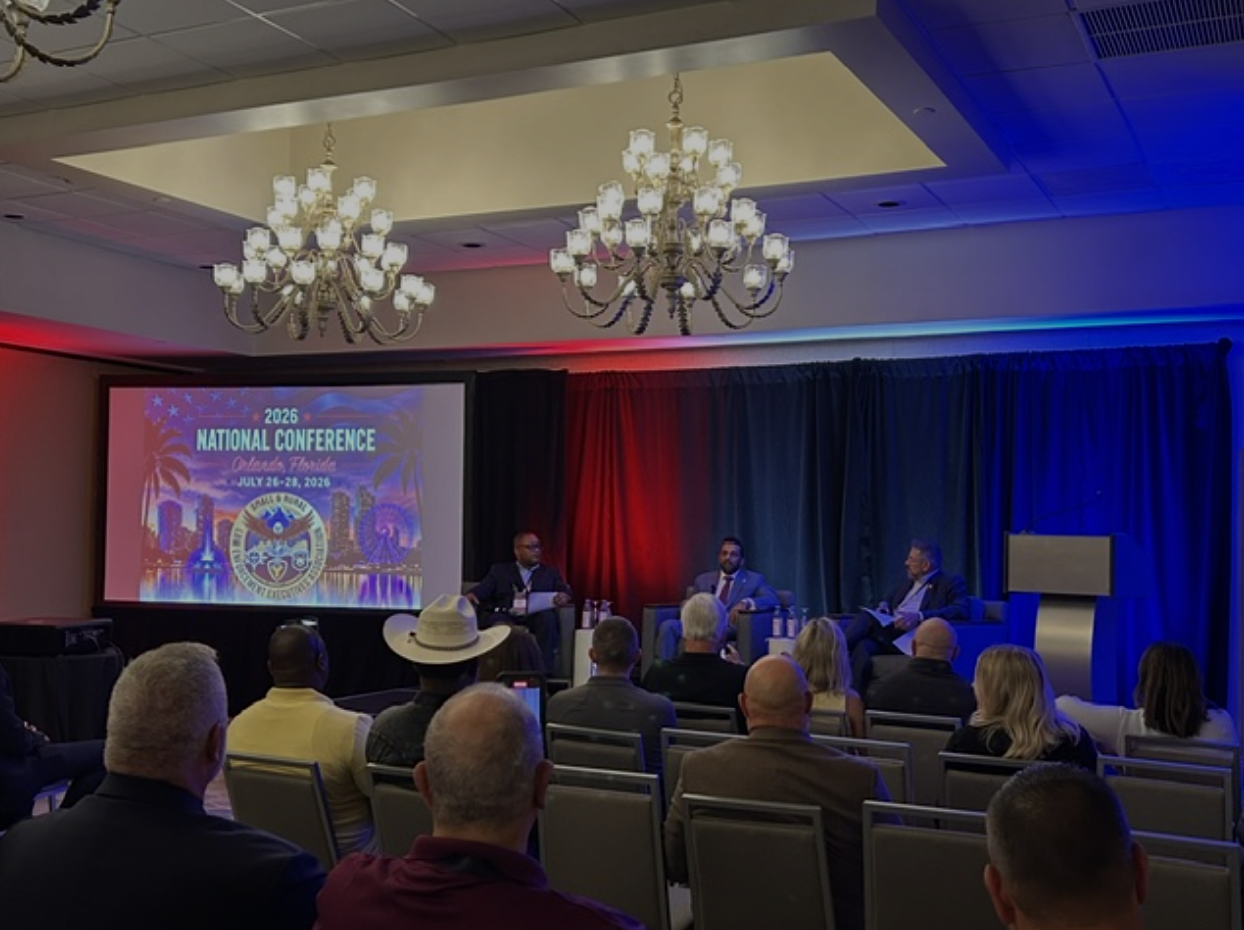
At SRLEEA, FBI Director Patel called AI essential for agencies of every size. See how CLIPr is helping small and rural departments do more with less.


What these tools actually do, the 4 categories on the market, the RMS-FIT scorecard, and the guardrails and 30-day pilot plan you can bring to your chief, your DA, and your union rep.
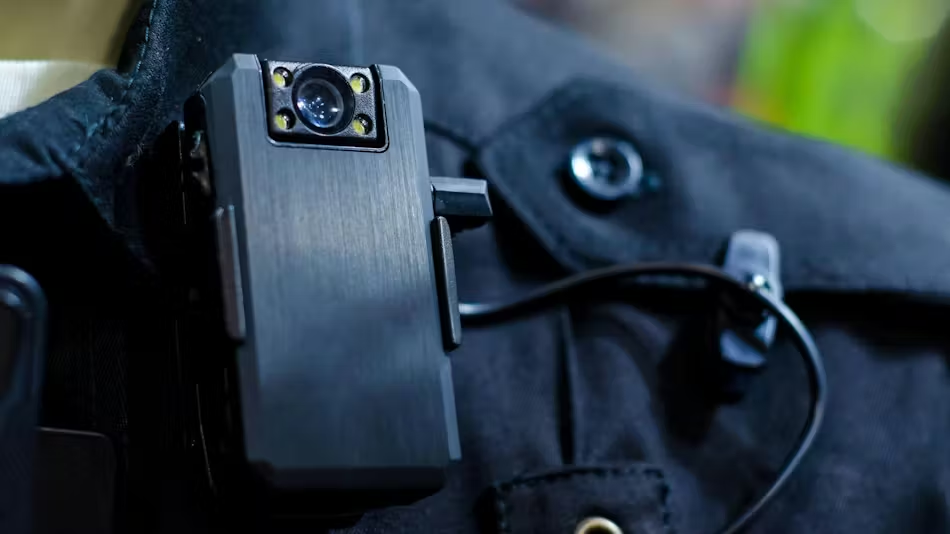
If you run a patrol division or sit on command staff, report writing pulls officers away from patrol, follow-up, and supervision. CLIPr's homepage cites 1.2M+ hours of BWC footage recorded daily in the US, and 50%+ of officer time going to drafting reports or skimming video.
AI police report generators reduce that burden by turning recorded audio into a first draft the officer reviews and signs. The risks are practical too: hallucinated details, weak audit trails, prosecutor questions, and tools without controls for official records.
This guide covers what these tools do, the 4 market categories, the RMS-FIT scorecard, defensibility guardrails, and a 30-day pilot plan for your chief, DA, and union rep.
The core function is narrow: the tool transcribes recorded audio, structures what was said into a narrative draft, and hands that draft to the officer for review, correction, and signature.
The DOJ COPS Office explainer on AI report writing describes the same loop: drafts are generated from audio, and the officer reviews, edits, and signs the final report as their own. The author is still the officer, not the model.
That distinction drives everything else in this guide. A draft is an input to the officer's judgment, not a substitute for it.
Transcript quality is the foundation under all of this, which is why it pays to understand how bodycam transcription software handles accuracy, timestamps, and speaker attribution before evaluating the drafting layer on top.
"AI police report generator" covers at least 4 different product categories, with different inputs, controls, and operational tradeoffs. Sorting your options by category first keeps demo calls focused.
The categories below are the AI-drafting corner of the broader law enforcement software market. If you are comparing against the full field of police report writing software, start there.
These tools generate the draft from the audio your BWC already captures.
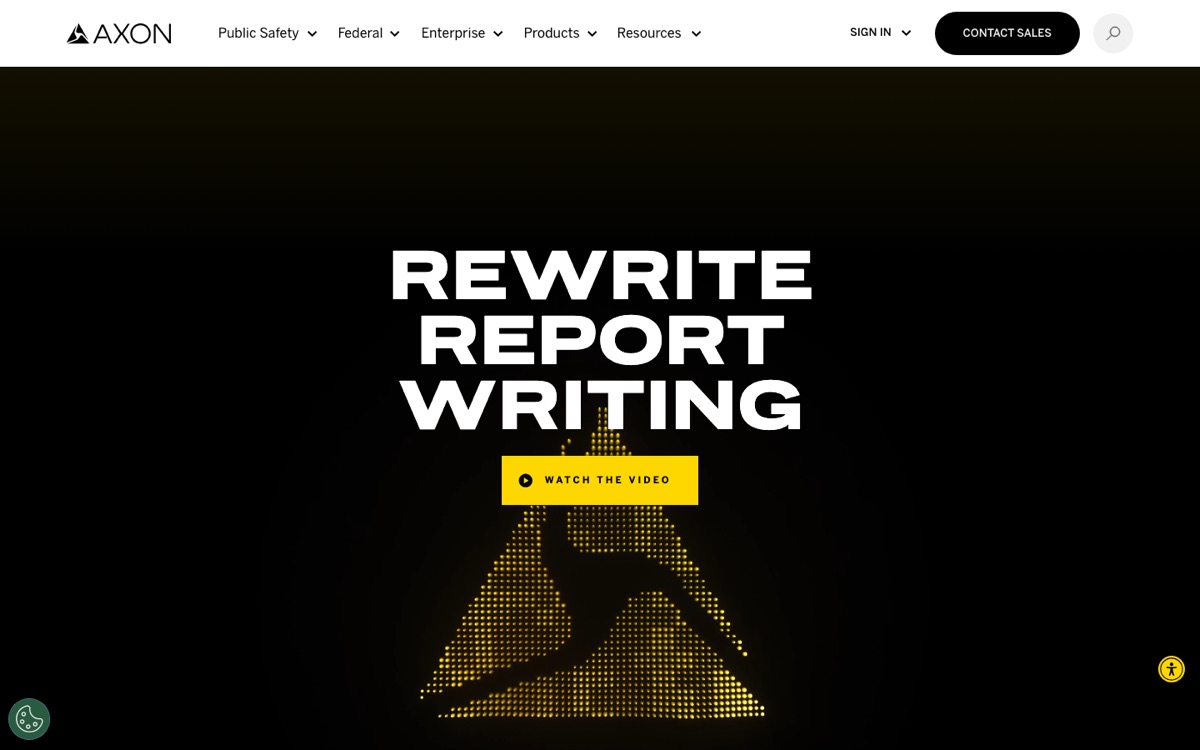
Axon Draft One is the most visible example: officer-in-the-loop by design, BWC audio uploads over LTE, a draft available within about 5 minutes, and an audit event history tracking the draft's lifecycle.
Axon states it works with non-Axon RMS platforms.
Code Four plays in the same category, advertising body camera to report in 60 seconds, any camera, and 40+ languages. Treat all speed and accuracy figures here as vendor-reported.
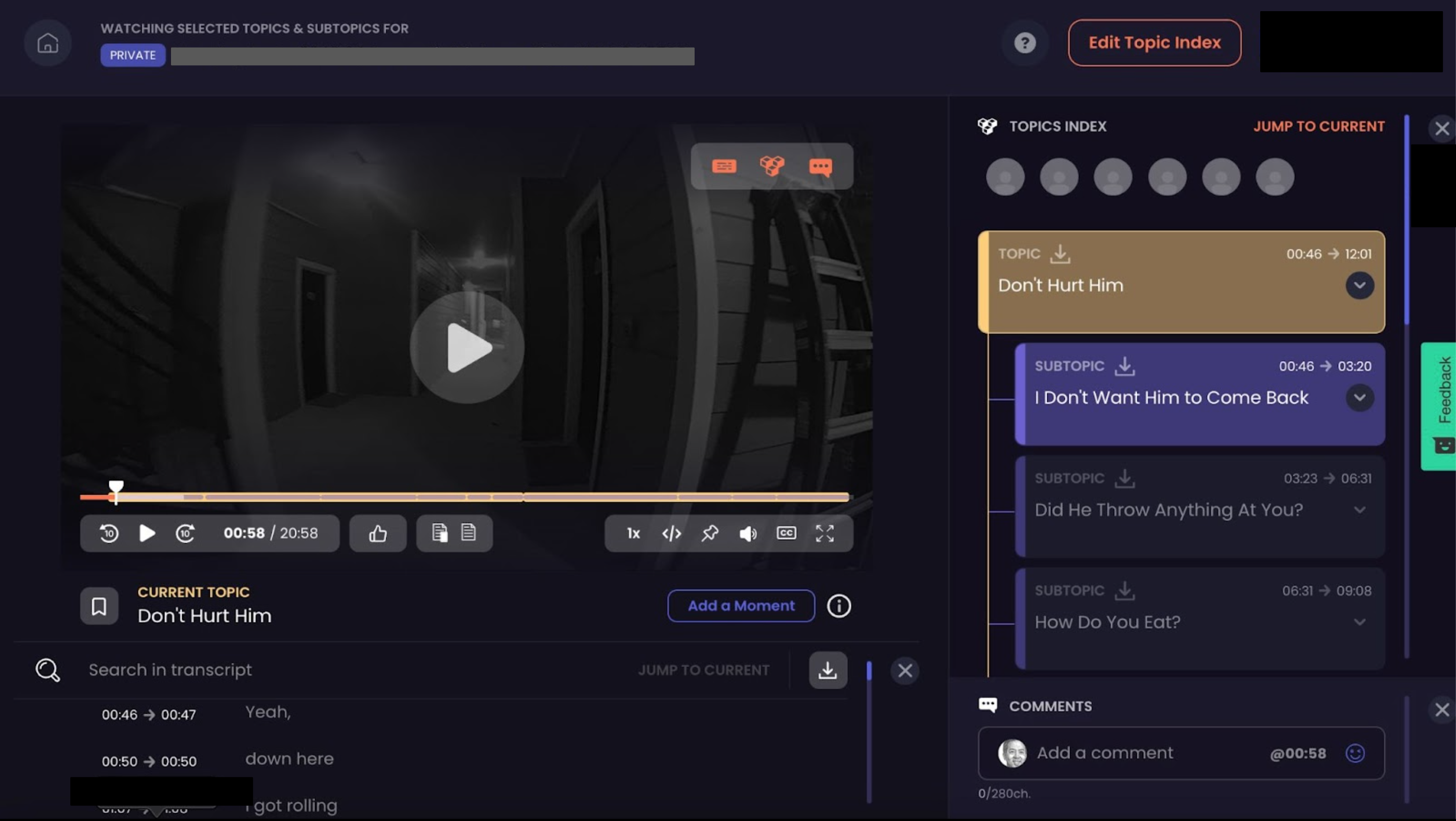
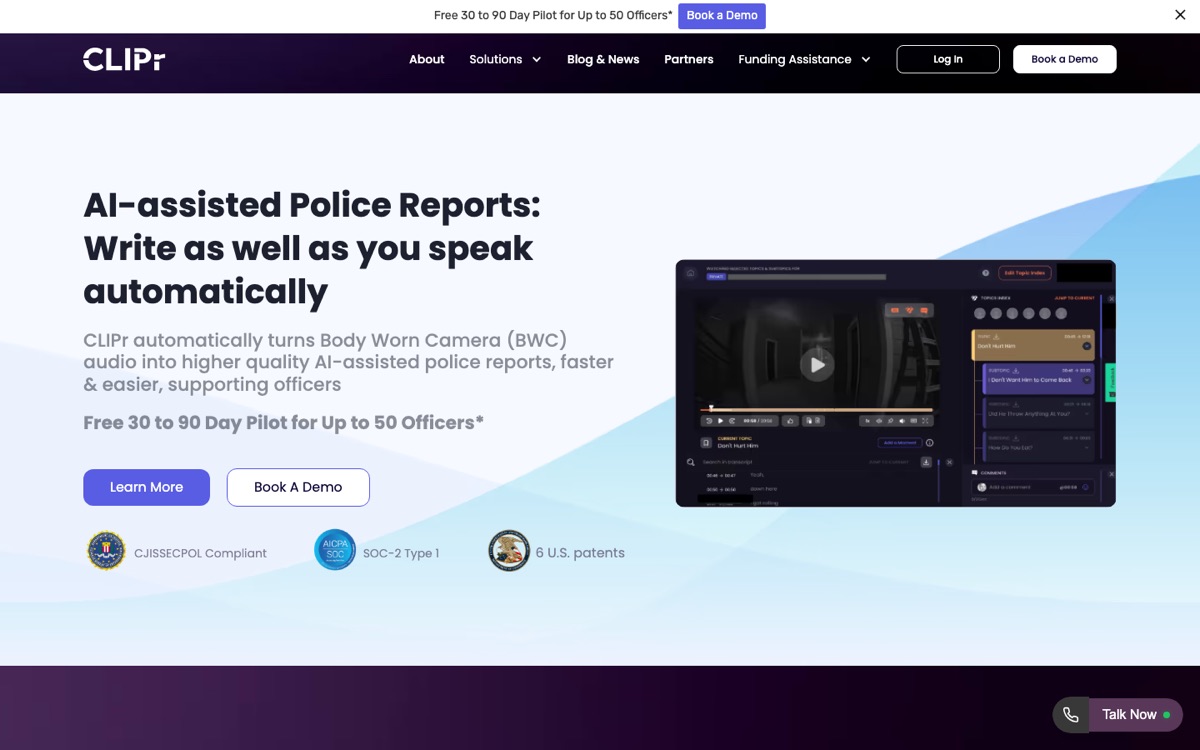
CLIPr sits in this category too: the agency drags BodyCam or DashCam footage from its existing evidence platform into CLIPr, and CLIPr returns an AI-assisted draft for officer review. No docking or new hardware is required to start.
As the workflow scales, CLIPr can add dock-to-auto-upload and a direct RMS push for officer-certified reports. Buyers should still confirm security controls, data ownership, retention, deletion, and integration terms in procurement, because officers review, edit, and own every final report.
Typical fit: agencies with an active BWC program and an RMS workflow. This category often gives reviewers a clearer audit link, because the draft traces back to evidence audio already in your chain of custody.
No BWC required. The officer narrates the incident and the tool structures the dictation into a report.
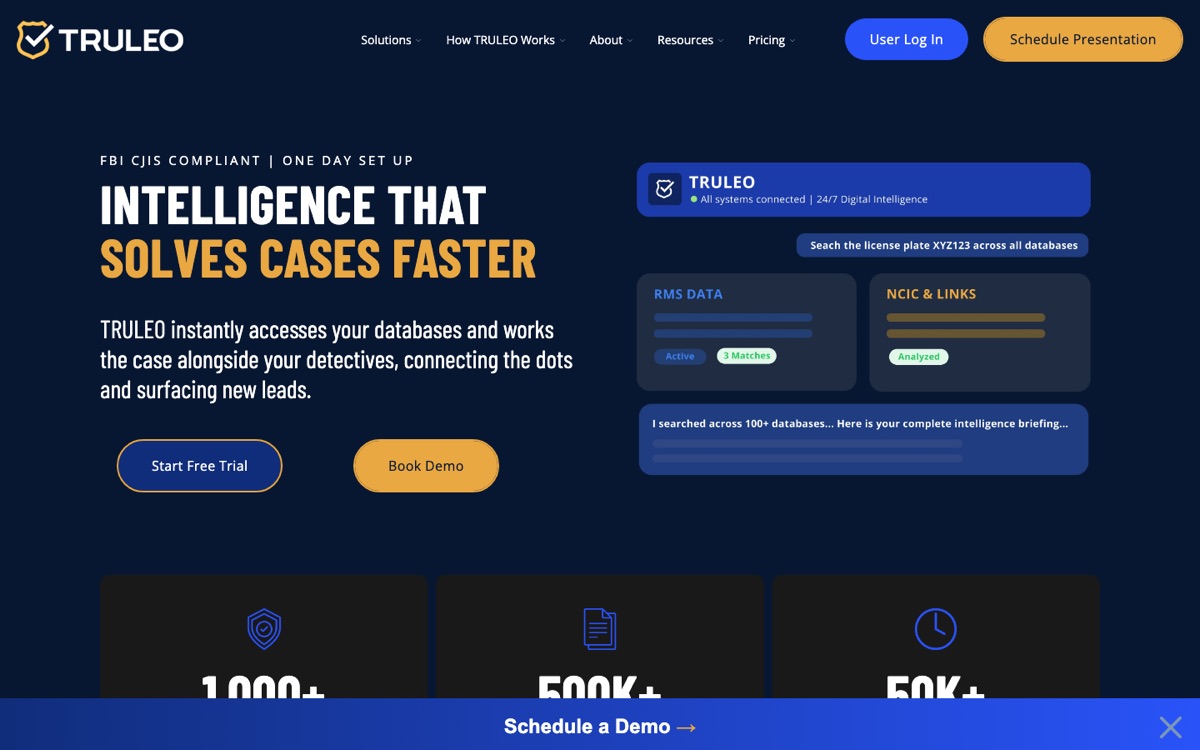
Truleo Field Notes, a companion product to Truleo's analytics-first platform, generates narratives from voice using Amazon Bedrock, with report checklists and templates.
Agencies weighing this category against bodycam-native options often end up reviewing Truleo alternatives to see how the approaches differ on audit linkage.
DraftX is dictation-first and in closed beta, with a "Virtual Sergeant" feature that prompts officers on legal gaps. It claims report content lives on the device rather than its servers, a claim worth verifying in procurement.
CopEntry publishes its pricing publicly: a per-user subscription of $9.99 to $19.99 per month with a free 7-day trial, plus DWI, affidavit, and DRE modules. Its own disclaimers describe outputs as drafts. Source: CopEntry pricing page (as published by the vendor) - last checked July 2, 2026.
Typical fit: agencies without BWC coverage, or units that work ahead of the camera. The tradeoff: the draft traces to the officer's narration, not to incident audio.
Searches for an ai police report generator free mostly land on consumer tools like Template.net's free AI police report generator. These are built for general writing tasks, not official records.
Agencies should verify documented CJIS Security Policy-aware data-handling controls, an audit trail, RMS fit, and limits on where pasted incident details go.
Typing real case information into a consumer text generator can itself create a data-handling problem. Keep these tools out of official workflows unless procurement, legal, and security reviews clear them.
BluelineAI offers free tools with a different pitch: drafts grounded in jurisdiction-specific legislation, with citations to primary sources.
Useful angle, but a free tool still has to pass the same security, audit, and policy bar before it touches an official record.
These are broader document-intelligence suites where drafting is one module.
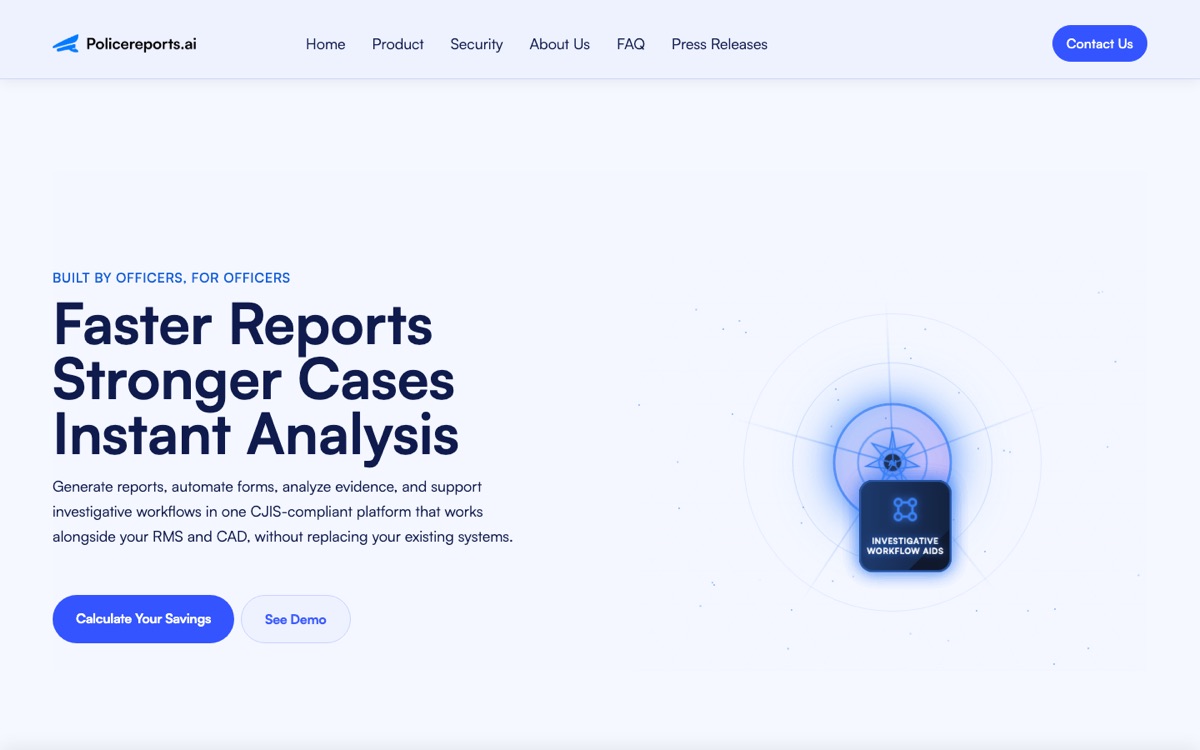
Policereports.ai covers report writing plus a report checker, with CJIS and SOC 2 language on its site and time-saved claims that should be treated as vendor-reported until your own pilot data confirms them.
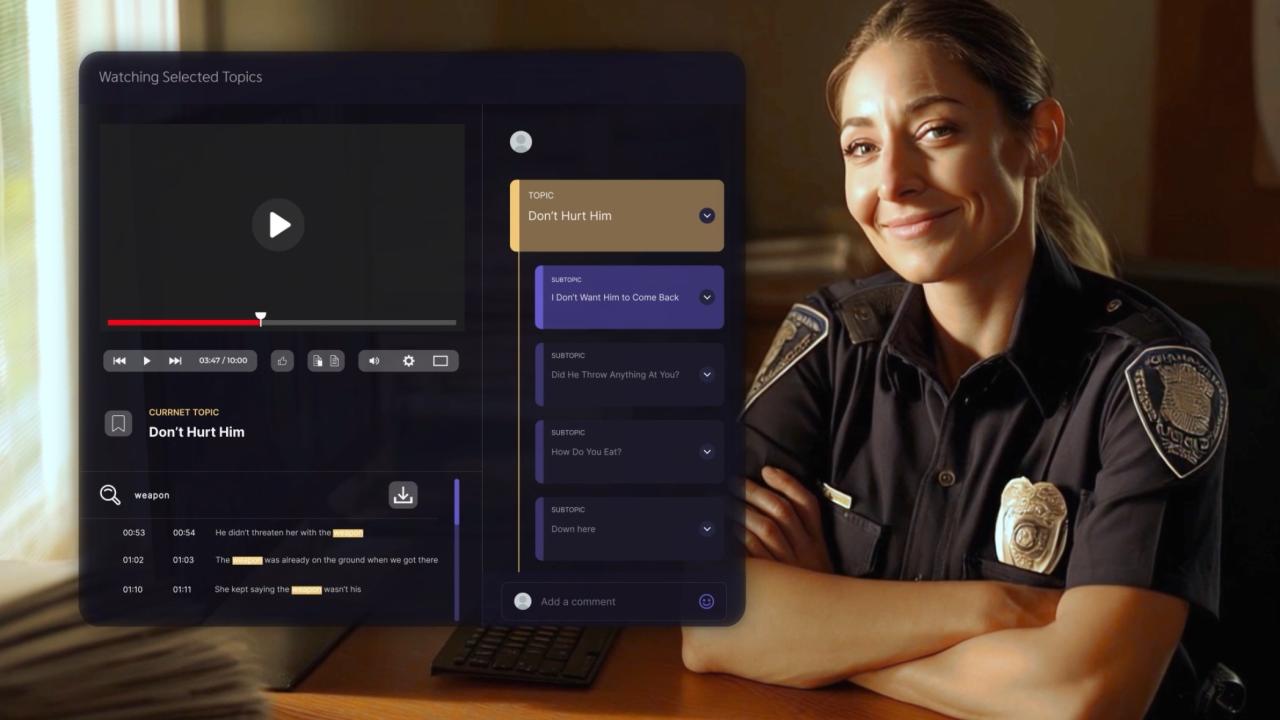
For investigative units, interview-room audio is its own workflow: CLIPr's detective interview-room reports turn suspect, witness, and victim interviews into speaker-identified, searchable first-draft reports with timestamps and Q&A browsing.
Typical fit: agencies that want drafting, checking, and multi-input review in one platform and can absorb a bigger implementation.
| Tool type | Typical input | Audit linkage | RMS friction | Risk level |
|---|---|---|---|---|
| Bodycam audio to draft | BWC/dashcam audio | Strong (ties to evidence audio) | Low to moderate | Lower, with review policy |
| Dictation-first assistant | Officer narration | Moderate (ties to dictation) | Moderate | Moderate |
| Template/consumer site | Typed prompts | None | High (manual re-entry) | High; unsuitable for official records |
| Investigation/report platform | Multiple (audio, documents) | Varies by module | Varies | Moderate; verify vendor claims |
Vendor demos can blur important differences. A weighted rubric forces the conversation back to your stack, your mandates, and your legal exposure. The right AI report-writing tool is the one that fits your agency's constraints after scoring.
RMS-FIT scores 6 criteria, weighted to total 100:
Drafts invent details or mangle names
Drafts track the transcript closely; errors rare and obvious
No security documentation; unclear where data lives
Security posture the vendor can explain in procurement: CJIS Security Policy-aware controls and a straightforward account of where data lives and how long it is kept
New hardware, rip-and-replace, manual re-entry
Works with current cameras and evidence platform; clean path into RMS
No record of what the AI drafted vs. what the officer changed
Full draft history, edit log, and sign-off metadata retained
Months of setup, dedicated admin staff
Officers productive within a shift or two; pilot support included
Opaque pricing, hidden processing fees
Vendor gives a clear, itemized quote in procurement; cost framed against documented time savings
How to score it: rate each criterion 0 to 5 from your own demo and reference checks, multiply by the weight, divide by 5, and sum.
A score around 75 out of 100 or better can be a reasonable pilot threshold if no legal, procurement, or data-handling issue remains unresolved. Below that, the gaps are likely to surface mid-pilot, where they cost more to address.
Seeing a real draft from real bodycam audio answers the Reliability row faster than any spec sheet. A CLIPr walkthrough of the drag-and-drop-to-draft workflow puts a live example in front of your evaluation team.
A tool that scores well on RMS-FIT can still create problems if the agency skips operational discipline. Three guardrails reduce the largest risks.
Audio-based tools work from what they hear. Clear officer narration usually produces more useful drafts.
Build narration habits around what the camera cannot infer:
The question a prosecutor or defense attorney will eventually ask is simple: what did the AI write, and what did the officer change?
The DOJ COPS Office flags district attorney concerns about AI-assisted reports and points to officer review and sign-off as the core safeguard.
Axon's audit event history on Draft One shows where the market is heading: per Axon, the draft, the edits, and the sign-off can all be retained as audit events. Retention is an agency policy decision to mandate, not a default to assume.
Set your own floor regardless of vendor:
Records and legal teams can vet the transcription layer with the same defensibility lens used for legal transcription software.
And since AI-drafted reports reference recordings that may become public, pairing the workflow with a redaction service for FOIA releases keeps disclosure from becoming its own backlog.
Write the policy before the first draft is generated. Agencies run into trouble when practice outruns policy.
For the wider governance picture beyond report writing, the deeper guide to AI in law enforcement covers the policy landscape.
The frog incident is a useful reminder. In January 2026, Axios reported that an AI-assisted police report in Heber City, Utah picked up background audio from a children's movie and pulled it into the narrative.
The error was caught, but the lesson generalizes: background audio can contaminate drafts, and agencies need review and narration discipline to catch it. Review every line against the recording, and narrate clearly over noisy scenes.
A pilot is not "give 5 officers logins and see what happens." Run it like an evidence-handling upgrade, with defined scope and measured outcomes.
Week 1Policy and scope
Finalize the draft policy: eligible incident types, review requirements, disclosure language, retention rules. Brief the union on what the tool does and does not change about workload and accountability. Get counsel's read on discovery implications.
Week 2Training and DA briefing
Run narration drills so officers practice stating times, injuries, advisements, and PC observations on scene. Brief the DA's office on the workflow and audit artifacts. Process 3 to 5 test incidents per participating officer.
Week 3Audit and measure
Spot-check every AI draft against the BWC audio. Track time per report against your pre-pilot baseline. Score draft quality with a fixed checklist: accuracy, completeness, elements of the offense, corrections required.
Week 4Decide
Compare results against the RMS-FIT threshold you set. Expand, adjust scope, or stop.
If expanding, phase the rollout rather than flipping a switch: validate results on real footage first, then layer in automation as the workflow settles, and map the procurement, funding, and integration work the pilot surfaced.
Once the pilot proves out, the operational build-out has its own playbook, covered in the guide to how to automate police reports.
For vendors, a pilot-first evaluation keeps the claims testable. CLIPr's law-enforcement offer is a free 30 to 90 day pilot for up to 50 officers, no credit card, subject to approval, which fits this 4-week structure with room to extend.
CLIPr is also built to scale in phases, so the pilot does not force a workflow change on day one. In this framing, Crawl is the pilot execution path. Walk and Run are the post-pilot scale paths if the agency decides the workflow is worth expanding:
The officer review and sign-off step holds constant across all three phases. What changes is how footage gets in and how the finished report gets out.
The recurring failure points, and what fixes them:
Here is the workflow on a routine traffic stop, using a simplified hypothetical.
On-scene narration
The officer verbalizes during the stop: time of stop, plate and vehicle description, reason for the stop (observed lane departures), odor of alcohol, the driver's statements, field sobriety results, time of arrest, and Miranda advisement.
AI draft
The tool returns a structured narrative within minutes: chronological account, quoted driver statements with timestamps, advisement noted. Two gaps are visible.
Officer edits
The officer then verifies every quoted statement against the recording and confirms the elements are covered. Edit time is minutes, not the better part of an hour.
RMS paste and sign-off
The officer copies the finalized narrative into the RMS, signs, and the draft history is retained for audit.
The fundamentals in that edit pass are the same ones covered in how to write a police report: elements, chronology, attribution, objective language. The generator changes how a first draft gets typed, not what a finished report owes the court.
For side-by-side reference on what finished narratives should look like, these police report writing examples make a useful benchmark against AI output.
Admissibility depends on jurisdiction, local policy, and how the report was produced, so no vendor can guarantee it.
The defensible pattern, reflected in DOJ COPS Office guidance, is that the officer reviews, edits, and signs the report as their own, with draft history retained and AI assistance disclosed per agency and DA policy.
No. Dictation-first tools like DraftX and CopEntry build drafts from officer narration with no BWC required.
The tradeoff is audit linkage: bodycam-audio tools tie the draft directly to evidence audio, while dictation tools tie it to the officer's account.
Three controls, layered.
Choose tools that draft strictly from the transcript rather than generating freely, require line-by-line officer review against the recording before sign-off, and audit a sample of drafts against BWC audio every week of the pilot.
Vendor safeguards such as Axon's constrained drafting and audit event history support this, but officer review catches what slips through.
At minimum: that AI produced the initial draft, that the officer reviewed and approved the final report, and that draft versions are retained.
The exact language belongs in policy and should be agreed with the DA's office, since prosecutor concerns center on knowing what the model wrote versus what the officer attested to.
Do not start with a vendor shortlist.
Run the RMS-FIT Scorecard against your current workflow first: score how your existing report process performs on each criterion, and you will see exactly where an AI drafting tool helps and where your policy gaps are.
Then put 30 minutes on the calendar with your chief, a patrol supervisor, your records lead, and counsel to walk the scorecard and the pilot plan. That single meeting turns "should we look at AI reports?" into a structured evaluation with owners and dates.
Report drafting is one piece of the broader modernization conversation, and the wider view of technology and policing is worth the read for command staff thinking past this one workflow.
When you are ready to put real bodycam audio through the loop, CLIPr's free 30 to 90 day pilot for up to 50 officers fits this kind of structured evaluation: drag and drop footage from your evidence platform, review the draft, retain audit materials according to policy, and measure the time impact against your baseline.
CLIPr turns BodyCam and DashCam audio into AI-assisted police report drafts that officers review, edit, and copy into their RMS.
The platform describes its architecture as designed around CJIS Security Policy alignment and references SOC 2; agencies should confirm controls, documentation, ownership, retention, deletion, and security terms in writing during procurement.
Run CLIPr with your own bodycam footage. Free 30 to 90 day pilot for up to 50 officers, no credit card required, subject to approval.